A child's smile can change quite a bit as baby teeth fall out and permanent teeth begin to appear. Sometimes, those new teeth come in neatly. Other times, they look crowded, overlap, or seem to stick out at odd angles. Parents may start wondering whether their child needs braces, especially when the dentist mentions that the upper and lower teeth do not fit together quite right.
Upper and lower braces may help straighten a child's teeth, improve the way the teeth meet, and make certain oral health problems easier to manage. But braces are not just about getting a picture-perfect smile. The position of the teeth and jaws can affect chewing, cleaning, and the way a child feels about their appearance. The important thing is to understand what braces can do, when treatment might be helpful, and why the right time to start is different for every child.
What Are Upper and Lower Braces for Kids?
Upper and lower braces are orthodontic appliances placed on the teeth in both the upper and lower jaws. They use small brackets, wires, and sometimes elastic bands to guide teeth toward better positions over time. Traditional metal braces are a familiar option, although ceramic braces and some other orthodontic appliances may also be suitable for certain children.
The upper braces work on the top teeth, while the lower braces work on the bottom teeth. Together, they can help address problems that involve both rows of teeth. For example, a child might have crowded upper front teeth and lower teeth that overlap. Another child may have teeth that look fairly straight but do not meet properly when biting down. In these situations, moving only one row of teeth may not be enough to achieve a healthy bite.
Still, wearing braces on both jaws is not automatically better for every child. Some children need treatment on just one arch, while others benefit from upper and lower braces together. An orthodontist looks at the whole mouth, including the position of the teeth, jaw growth, facial balance, and how the upper and lower teeth fit together, before recommending a plan.
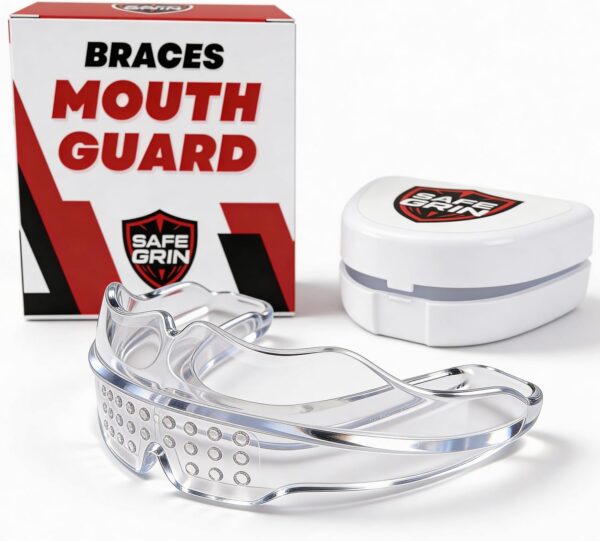
Safe Grin Mouth Guard for Braces - Kids Ages 7-11, Upper & Lower, No-Boil
How Do Braces Straighten a Child's Teeth?
Braces work by applying gentle, controlled pressure to teeth over time. This pressure triggers natural changes in the bone and tissues around the roots, allowing the teeth to move gradually into new positions. The process is slow for a reason. Teeth cannot safely jump from one position to another overnight, and pushing them too quickly can cause problems.
Think about a child whose front teeth overlap because there is not enough room in the dental arch. Braces may gradually move the teeth into better alignment, depending on the available space and the child's overall dental condition. Small adjustments are made during follow-up visits so the orthodontist can monitor progress and change the wires or other parts of the appliance when needed.
There is another important detail here: straight teeth and a healthy bite are not exactly the same thing. The upper teeth should fit around the lower teeth in a way that supports normal chewing and function. A child might have an attractive row of front teeth but still have an overbite, underbite, or crossbite that needs attention. Good orthodontic treatment considers both appearance and function, rather than focusing only on the smile.
When Should a Child Get Braces?
Many parents assume that braces should wait until all the baby teeth have fallen out. That is not always the case. The American Association of Orthodontists recommends that children have their first orthodontic check-up by age 7. By this age, a child usually has a mix of baby teeth and permanent teeth, which can help an orthodontist spot developing problems.
An early check-up does not mean a child will need braces at age 7. In fact, many children are simply monitored as their permanent teeth come in. However, some problems are easier to manage while the jaws are still growing. An orthodontist may recommend early treatment for certain bite problems, severe crowding, or other conditions where waiting could make treatment more complicated.
For many children, full braces are considered later, often around ages 11 to 14, when more permanent teeth have erupted. But age alone does not decide when treatment should begin. A child who is 10 may need an early intervention, while a 13-year-old may be better off waiting until more teeth have come in. The best timing depends on the child's growth, tooth development, and specific orthodontic needs.
Signs Your Child May Need Upper and Lower Braces
Crooked teeth are an obvious reason to schedule an orthodontic assessment, but they are not the only sign worth noticing. Some children have crowded teeth, gaps between teeth, or front teeth that stick out noticeably. Others may have an upper or lower jaw that seems to sit too far forward or backward. These differences can affect the way the teeth fit together.
Parents may also notice that a child bites the inside of the cheek often, struggles to bite into certain foods, or has teeth that do not meet evenly. Mouth breathing, speech concerns, or difficulty chewing can have many possible causes, so these signs do not automatically mean braces are needed. They are simply reasons to discuss the child's oral health with a dentist or orthodontist.
One common mistake is to wait until the permanent teeth look very crooked before asking for advice. Some bite problems are not easy to spot in a quick glance at the smile. A professional examination can reveal whether the teeth and jaws are developing as expected. It is also worth remembering that a little unevenness during the transition from baby teeth to permanent teeth is common and does not always require treatment.
Can Upper and Lower Braces Fix an Overbite or Underbite?
Yes, braces can help correct many types of bite problems, including some overbites and underbites. An overbite commonly refers to the upper front teeth overlapping the lower front teeth vertically, although people sometimes use the word to describe upper teeth that stick out too far. An underbite occurs when the lower front teeth sit in front of the upper front teeth when the jaws close.
The right treatment depends on what causes the problem. If the main issue is the position of the teeth, braces may be enough to improve the bite. If the jaws themselves are significantly out of alignment, a growing child may benefit from additional orthodontic appliances or a treatment plan that takes jaw growth into account. More severe jaw discrepancies may require a different approach later in life.
Crossbites are another concern. A crossbite happens when some upper teeth sit inside the lower teeth instead of outside them. Depending on the child's age and the cause, an orthodontist may recommend an expander, braces, or a combination of treatments. Parents should not assume that upper and lower braces alone can fix every bite problem. A proper examination helps identify what needs to move and whether the jaws need additional support.
Are Upper and Lower Braces Better Than Braces on One Arch?
It is natural to wonder whether braces on both rows of teeth will produce faster or better results. The answer depends on the child's mouth. When the upper and lower teeth need to work together in a new position, treating both arches may help the orthodontist coordinate the bite and create a more balanced result.
For instance, straightening the upper teeth without considering the lower teeth could leave the bite uneven. On the other hand, if a child has a small, isolated alignment problem and the bite is otherwise healthy, treatment on one arch might be appropriate. Even then, an orthodontist must consider whether moving one group of teeth could affect how the two arches meet.
There is no universal rule that every child should wear braces on both the upper and lower teeth. More appliances do not automatically mean better treatment. The goal is to correct the actual problem with a plan that is suitable for the child's development, oral health, and long-term bite stability.
What Types of Braces Are Available for Children?
Traditional metal braces are often used for children because they are sturdy and can treat many types of alignment problems. Small brackets are attached to the teeth and connected by a wire. During check-ups, the orthodontist adjusts the appliance to guide the teeth gradually. Metal braces are visible, but many children get used to them faster than their parents expect.
Ceramic braces work in a similar way but use tooth-colored or less noticeable brackets. Some older children prefer their appearance, although these braces may require extra care to keep them clean and can be more fragile. Clear aligners are another option for selected cases. They use removable trays to move teeth in stages, but they are not suitable for every child or every orthodontic problem.
Removable aligners also require a child to wear them for the recommended number of hours each day. A child who frequently forgets them at school, leaves them in a lunch bag, or takes them out for long periods may not get the expected results. Fixed braces do not depend on the child remembering to put them back in, although they still require good cleaning and careful eating habits. The best option is the one that fits the child's needs and the family's ability to follow the treatment plan.
How Long Do Kids Need to Wear Upper and Lower Braces?
Many children wear braces for roughly 18 to 24 months, but treatment can be shorter or longer. Mild alignment problems may need less time, while severe crowding, complex bite issues, or jaw-related concerns can require more. The number of months depends on how the teeth respond, how much movement is needed, and whether the child follows the orthodontist's instructions.
Regular appointments matter because braces need to be checked and adjusted as treatment progresses. Broken brackets, damaged wires, and missed visits can delay progress. Children who wear rubber bands as instructed, keep their teeth clean, and avoid foods that damage their braces may find it easier to stay on schedule. Even so, teeth move at different rates, so a treatment estimate is never an exact promise.
Parents should also plan for the stage after braces come off. Teeth can gradually drift toward their old positions, particularly during the first months after treatment. Retainers help keep them in their new places. Depending on the treatment plan, a child may need to wear a retainer full-time at first and then continue wearing it at night. Retention is not an optional extra; it is an important part of maintaining the result.
Do Braces Hurt Kids?
Braces can feel uncomfortable, especially during the first few days after they are fitted or adjusted. A child may notice pressure on the teeth, tender gums, or sore spots where the brackets rub against the inside of the cheeks. This discomfort usually settles as the mouth adjusts, although the experience varies from child to child.
Soft foods can make those first few days easier. Yogurt, scrambled eggs, oatmeal, soup that is not too hot, and soft pasta are often comfortable choices. Orthodontic wax may also help protect areas where brackets rub against the cheeks or lips. If a child has significant pain, a wire that is poking the mouth, or swelling that seems unusual, the orthodontist should be contacted for advice.
It helps to be honest with children before treatment starts. Promising that braces will not hurt at all may make a normal period of soreness feel frightening. A better approach is to explain that some pressure is expected, it usually improves, and adults can help if anything feels wrong. Children often handle treatment more confidently when they know what to expect.
How to Care for Upper and Lower Braces at Home
Keeping teeth clean becomes more important when a child wears braces. Food can collect around brackets and wires, making it easier for plaque to build up. If plaque stays on the teeth, white spots, cavities, and gum inflammation may develop. These marks can remain visible even after the braces are removed, which is why daily care matters so much.
Children should brush carefully with fluoride toothpaste, paying attention to the area around each bracket and along the gumline. Cleaning after meals is helpful when possible. A small interdental brush or another tool recommended by the dental team can help remove food trapped around wires. Flossing takes more effort with fixed braces, but special floss threaders or orthodontic flossing tools can make the job easier. Regular dental check-ups and professional cleanings should continue during orthodontic treatment.
Food choices matter, too. Hard candy, ice, popcorn kernels, and sticky sweets can damage braces or become trapped around them. Biting directly into a whole apple or a hard carrot may also put too much pressure on brackets, so cutting these foods into smaller pieces is a sensible habit. Sugary drinks and frequent snacking can increase the risk of tooth decay, especially when brushing is difficult. The aim is not to make a child afraid of food, but to help them develop habits that protect their teeth while treatment is underway.
What Are the Risks of Braces for Children?
Braces are commonly used and can be very effective, but they do require care. Poor brushing may lead to cavities, swollen gums, or permanent white marks on the teeth. In some cases, orthodontic treatment can also affect the roots of teeth, usually in the form of a small amount of root shortening. Significant root changes are less common, but the orthodontist monitors tooth health throughout treatment.
Some children may develop irritation from brackets or wires, while others experience temporary discomfort after adjustments. Treatment can also take longer than expected if appointments are missed or appliances are repeatedly damaged. These possibilities do not mean braces should be avoided. They are reasons to choose a qualified orthodontic professional, attend follow-up visits, and follow the care instructions.
Before treatment begins, parents should ask about the expected benefits, possible risks, alternative options, estimated cost, and likely duration. It is perfectly reasonable to ask how a proposed treatment will improve the child's bite or oral health, rather than focusing only on cosmetic changes. A clear explanation helps families make a decision that feels right for their child.
How Much Do Upper and Lower Braces Cost for Kids?
The cost of braces for children varies widely depending on where the family lives, the type of braces selected, how complex the case is, and how long treatment lasts. Treating both upper and lower arches may affect the overall fee, but pricing is not always calculated simply by counting the number of arches. Some orthodontic offices quote one fee for a complete treatment plan.
Dental insurance may cover part of the cost when orthodontic benefits are included, although age limits, lifetime maximums, waiting periods, and eligibility rules can apply. Some practices offer monthly payment plans or other financing options. Before agreeing to treatment, ask for a written estimate that explains what is included, such as appointments, retainers, repairs, and follow-up care.
If the cost feels overwhelming, ask the orthodontist whether treatment needs to start immediately or whether monitoring is reasonable for now. Not every crooked tooth needs urgent correction. On the other hand, a significant bite problem may benefit from timely attention. Understanding the reason for treatment helps families decide where it fits within their budget.
Helping Your Child Feel Confident About Braces
Children may worry about how braces look, whether classmates will notice, or whether eating lunch will become awkward. These concerns can feel huge to a child, even when adults see braces as a routine part of growing up. Rather than dismissing the worry, parents can listen and offer practical reassurance. Many children find that friends barely comment after the first few days.
It can also help to let children take part in age-appropriate choices, such as selecting the colors of elastic bands when that option is available. Small choices can make treatment feel less like something being done to them and more like a project they are managing. Praise their effort when they brush carefully, remember their appointments, or handle a difficult adjustment.
Most importantly, avoid making a child's smile sound like a problem that needs to be fixed to look acceptable. Braces are a health care choice, not a requirement for being attractive or worthy of confidence. If treatment is recommended, the message should be simple: the goal is to support healthy teeth and a comfortable bite, and the child's value has nothing to do with whether their teeth are perfectly straight.
The Bottom Line for Parents
Upper and lower braces can help many children with crooked teeth, crowding, and bite problems. The right treatment, however, depends on more than how a smile looks. Tooth development, jaw growth, oral hygiene, and the way the upper and lower teeth fit together all matter.
An orthodontic assessment by around age 7 can help identify problems early, but it does not mean braces must begin right away. Some children benefit from early treatment, while others do best when more permanent teeth have erupted. If a dentist raises concerns about your child's bite, ask what the problem is, why treatment may help, and when it should begin. A thoughtful plan, good daily care, and regular follow-up can make the experience much smoother for the whole family.
FAQ: Upper and Lower Braces for Kids
1. Can kids get braces on both upper and lower teeth?
Yes. Children can have braces on both arches when their teeth need coordinated movement or their bite needs correction. The orthodontist decides whether one or both arches should be treated.
2. What is the best age for braces for kids?
The American Association of Orthodontists recommends an initial orthodontic check-up by age 7. Many children start full braces between ages 11 and 14, but the best age depends on tooth development and the type of problem.
3. Do kids need upper and lower braces at the same time?
Not always. Some children need treatment on both arches, while others need only one arch or a different appliance. The decision depends on the alignment of the teeth and how the bite fits together.
4. How long do upper and lower braces take to straighten teeth?
Many children wear braces for about 18 to 24 months. Simple cases may take less time, while complex tooth or bite problems may take longer.
5. Are metal braces or clear aligners better for children?
Metal braces can treat many types of orthodontic problems and do not depend on the child remembering to wear them. Clear aligners may suit selected cases, but they must be worn as directed. An orthodontist can explain which option is appropriate.