When parents think about braces, the first thing that often comes to mind is a straighter smile. But braces do more than move crooked teeth into a neat row. They can also help the upper and lower teeth fit together more comfortably when a child bites, chews, and speaks.
Some children need braces on both their upper and lower teeth. Others may need a different orthodontic appliance first, followed by braces later. The treatment plan depends on the child's bite, tooth position, jaw growth, and other dental needs.
If your child's orthodontist has recommended upper and lower braces, you may have questions. Why are both sets needed? Will the treatment hurt? How long will it take? And what can your child eat once the braces are on?
Here's what parents should know about using upper and lower braces to help create a healthier bite.
What Are Upper and Lower Braces?
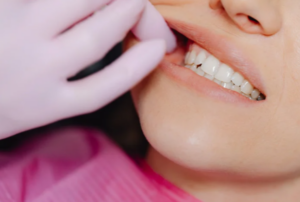
Upper braces are attached to the teeth in the upper jaw, while lower braces are attached to the teeth in the lower jaw. Traditional braces use small brackets connected by a wire. The orthodontist adjusts the system over time to guide the teeth toward their planned positions.
When braces are placed on both arches, the orthodontist can work on how the upper and lower teeth line up together, not just how each row looks on its own. For example, a child may have crowded upper teeth and lower teeth that tilt inward. Straightening both rows may help improve the overall fit of the bite.
However, wearing braces on both arches doesn't automatically mean the bite will become perfect. The treatment plan must account for how the teeth meet, the relationship between the jaws, and how the child is growing. Some children also need rubber bands, a palate expander, or another appliance as part of their treatment.
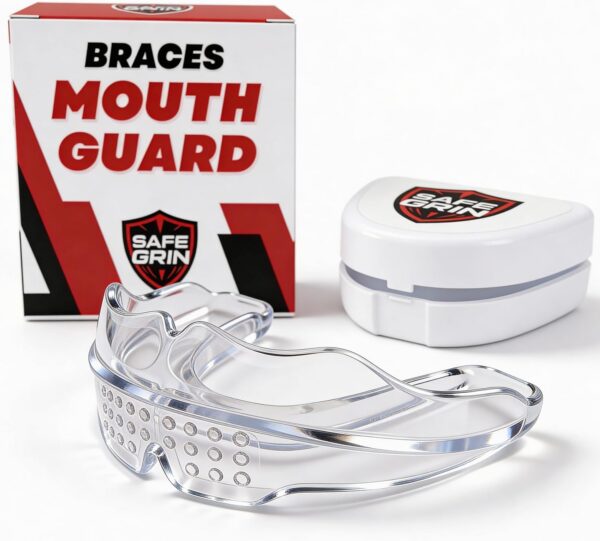
Safe Grin Mouth Guard for Braces
Why Does a Good Bite Matter?
A bite describes how the upper and lower teeth come together when the mouth closes. In a typical bite, the upper front teeth overlap the lower front teeth slightly, and the back teeth fit together in a way that supports comfortable chewing.
When the teeth don't meet properly, the problem is called a malocclusion. Some bite differences are mild and may not need treatment. Others can affect chewing, tooth wear, jaw alignment, or the risk of injury to prominent front teeth.
For example, a child with upper front teeth that stick out may be more likely to injure them during a fall or sports activity. A child whose teeth don't meet well may have difficulty biting into certain foods. These signs don't always mean braces are needed, but they are good reasons to ask a dentist for an assessment.
Common Bite Problems That Braces May Help Correct
Not every child who needs braces has the same problem. Understanding the basic types of bite issues can help parents make sense of the orthodontist's recommendation.
Overbite and Deep Bite
The term overbite is often used casually to describe upper front teeth that cover too much of the lower front teeth. Orthodontists may use more specific terms, such as a deep bite, depending on the exact problem.
A deep bite can cause the lower front teeth to bite into the gum tissue behind the upper teeth in some cases. Treatment may involve moving the front teeth, adjusting the back teeth, or using other orthodontic methods to improve how the bite fits together.
A small amount of vertical overlap is normal. The goal isn't to make the front teeth meet edge to edge, but to create a healthy and functional relationship between them.
Underbite
An underbite occurs when the lower front teeth sit in front of the upper front teeth when the child bites down. It can be related to tooth position, jaw position, or a combination of both.
Some underbites can be treated with orthodontic appliances, especially while a child is growing. More significant jaw differences may require a different treatment approach. Braces alone are not the right solution for every underbite, so an individual assessment matters.
Crossbite
A crossbite happens when one or more upper teeth bite inside the lower teeth instead of outside them in the expected way. It can affect the front or back teeth.
Depending on the cause, treatment may include braces, a palate expander, or another appliance. In some growing children, early treatment may be recommended to address a crossbite before it contributes to other problems with tooth position or jaw development.
Open Bite
An open bite occurs when some upper and lower teeth don't touch when the child closes their mouth. For example, the front teeth may remain apart even when the back teeth meet.
Long-term thumb-sucking or pacifier use can contribute to some open bites, although jaw growth and other factors may also play a role. Treatment depends on the child's age, the cause, and the severity of the problem.
In these cases, braces may be one part of treatment, but addressing a habit or another underlying issue may also be important.
Why Would a Child Need Braces on Both Arches?
It may seem logical to put braces only on the teeth that look crooked. But teeth work together as a system. Straightening just the upper or lower row may not be enough to create a comfortable, functional bite.
Imagine that the upper teeth are crowded and the lower teeth are positioned in a way that prevents them from meeting correctly. Moving only the upper teeth might improve their appearance, but the two rows could still fit together poorly. Treating both arches gives the orthodontist more control over the relationship between them.
Braces on both arches may be recommended to:
- Align crowded or crooked teeth in both rows.
- Improve the way the upper and lower teeth meet.
- Correct certain overbites, underbites, or other bite problems.
- Coordinate tooth positions after space has been created.
- Help achieve a stable result that can be maintained after treatment.
That doesn't mean every child needs upper and lower braces. The decision depends on the diagnosis and treatment goals. An orthodontist can explain why both arches are needed in your child's specific case.
When Should Children Be Evaluated for Braces?
Parents don't need to wait until all baby teeth have fallen out before seeking orthodontic advice. The American Association of Orthodontists recommends that children have their first orthodontic checkup by age 7. At this age, an orthodontist can often identify developing bite issues and decide whether monitoring or early treatment is appropriate. <Cite refs={["turn924198search5","turn924198search3"]} />
An early checkup doesn't mean a child will immediately get braces. Many children simply need to be monitored as permanent teeth come in. Others may benefit from early treatment to address a specific problem while their jaws are still growing.
If your child has difficulty biting or chewing, visibly protruding teeth, a jaw that shifts to one side, or an unusual bite, it's reasonable to ask the dentist whether an orthodontic assessment is needed. These signs don't confirm a problem on their own, but they shouldn't be ignored if they persist.
The best time to begin treatment varies. Some problems are easier to address during growth, while others are better treated after more permanent teeth have erupted. There isn't one ideal age for every child.
What Happens When Upper and Lower Braces Are Put On?
The first appointment usually starts with an examination and a review of the treatment plan. The orthodontist may use photographs, X-rays, digital scans, or dental impressions to understand the teeth and jaws.
For traditional braces, small brackets are attached to the teeth and connected with a wire. The process itself usually isn't painful, although keeping the mouth open for a while can feel tiring. The teeth may feel tight or sore afterward as they begin to respond to the gentle pressure.
Some children notice discomfort when biting into food for the first few days. Soft foods such as yogurt, eggs, oatmeal, pasta, and mashed potatoes can make eating easier during this period. The soreness usually settles, but the orthodontist should be contacted if pain is severe or doesn't improve as expected.
When braces are placed on both arches at once, the child may need a little time to get used to the feeling of having appliances on both rows of teeth. Eating and speaking can feel unfamiliar at first. Most children gradually adjust as the mouth becomes accustomed to the braces.
How Long Do Upper and Lower Braces Take to Work?
There isn't one treatment length that applies to every child. Some orthodontic plans take around 18 to 24 months, while more complex cases may take longer. The exact time depends on the type of bite problem, the amount of tooth movement needed, the child's growth, and how consistently treatment instructions are followed.
Regular orthodontic visits allow the provider to check progress and make adjustments. Missing appointments, broken brackets, or not wearing prescribed rubber bands can delay treatment.
It's also important not to judge progress by how quickly the front teeth look straight. The visible alignment may improve before the bite is fully corrected. Orthodontists need to consider both appearance and function when deciding whether treatment is complete.
Ask your child's orthodontist for an estimated timeline, but treat it as a guide rather than a guaranteed finish date.
Do Children Need Rubber Bands With Upper and Lower Braces?
Sometimes. Orthodontic elastics, often called rubber bands, may be used to help correct the relationship between the upper and lower teeth. They attach to small hooks on the braces and apply a specific force between the two arches.
Not every child needs them. When they are prescribed, wearing them as instructed is important because the elastics can only work when they are being used correctly. Some children are asked to wear them most of the day, while others have a different schedule.
Parents should follow the orthodontist's instructions about where the bands attach, when to remove them, and how often to replace them. Don't change the pattern or use extra bands to try to speed things up. More force isn't necessarily better and may interfere with the planned tooth movement.
If a child finds rubber bands uncomfortable or has trouble putting them on, ask the orthodontic team to demonstrate the process again.
Eating and Cleaning With Braces on Both Arches
Braces need extra care because food can get trapped around the brackets and wires. Plaque can also build up in places that are harder to reach, increasing the risk of cavities, gum inflammation, and permanent white marks on the teeth.
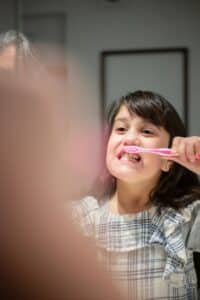
Children with braces should brush carefully at least twice a day with fluoride toothpaste and clean around the brackets and along the gumline. An orthodontic toothbrush, an interdental brush, or flossing tools designed for braces may help. Follow the dentist's advice about the best cleaning routine for your child.
Food choices matter, too. Hard, sticky, and chewy foods can damage brackets or wires. Whole apples and raw carrots may need to be cut into smaller pieces rather than bitten into directly. Sticky candy, hard sweets, chewing ice, and very chewy treats are best avoided.
Your child doesn't have to give up every favorite food. The goal is to make small changes that protect the braces and keep the teeth healthy throughout treatment. Continue regular dental checkups as well as orthodontic appointments.
What Happens After the Braces Come Off?
Getting braces removed is exciting, but it isn't the end of orthodontic care. Teeth can shift after treatment, especially while the surrounding tissues adjust to their new positions.
That's why retainers are usually part of the plan. A retainer helps hold the teeth in their corrected positions. Depending on the type, it may be removable or fixed behind the teeth.
The orthodontist will explain when and how long your child should wear the retainer. Following those instructions is important. A retainer that is rarely worn may not maintain the result as intended.
If a retainer becomes uncomfortable, breaks, or no longer fits, contact the orthodontist rather than forcing it into place. Regular dental care remains important even after the braces are gone.
Questions Parents Should Ask Before Treatment Begins
Starting orthodontic treatment is a commitment for both the child and the family. Before the braces go on, make sure you understand the reason for treatment and what the next several months may involve.
Useful questions include:
- What specific bite problem is being treated?
- Why are braces needed on both the upper and lower teeth?
- Will my child need rubber bands, an expander, or another appliance?
- How long might treatment take, and how often are appointments needed?
- Which foods should be avoided, and how should the teeth be cleaned?
- What should we do if a bracket breaks or a wire becomes uncomfortable?
- What kind of retainer will be needed after treatment?
A good treatment plan should make sense to both the parent and the child. Children are more likely to cooperate when they understand why braces are needed, what changes to expect, and how their daily habits affect the result.
FAsQ
1. Do you need upper and lower braces for a better bite?
Not everyone does. Braces on both arches may be recommended when the orthodontist needs to coordinate the upper and lower teeth to improve the bite. Some patients need treatment on one arch or a different appliance, depending on their individual problem.
2. Can upper braces alone fix an overbite?
It depends on the cause and severity of the overbite. Some bite problems require changes to both arches or the use of elastics or other appliances. An orthodontist needs to assess the teeth and jaws before recommending a treatment plan.
3. At what age can a child get upper and lower braces?
There is no single age that suits every child. The American Association of Orthodontists recommends an initial orthodontic checkup by age 7. Some children need early treatment, while others can wait until more permanent teeth have come in.
4. Do upper and lower braces hurt?
Putting braces on usually isn't painful, but the teeth may feel sore or tender for a few days afterward. Mild discomfort can also happen after adjustments. Soft foods may help during these periods. Contact the orthodontist if pain is severe or persistent.
5. How long does it take to correct a bite with braces?
Many orthodontic treatments last around 18 to 24 months, but some take less time and others take longer. The duration depends on the bite problem, the amount of movement needed, and how well the treatment plan is followed.
References
This article is for general educational purposes and does not replace advice from your child's dentist or orthodontist.