Why Iron Matters So Much for Teen Girls
Iron is easy to overlook. It does not get the same attention as protein, calcium, or vitamin D, yet it plays a very important role during the teen years.
The body uses iron to make hemoglobin, a protein in red blood cells that carries oxygen from the lungs to the rest of the body. Iron also supports muscle function, growth, development, and the production of some hormones. During puberty, the body is growing quickly, so its need for iron goes up.
For girls, there is another reason iron becomes especially important: menstruation. Once periods begin, some iron is lost with menstrual blood. A teen who has heavy periods may lose even more. This is one reason iron deficiency is more common among adolescent girls than many parents realize. The AAP's 2026 guidance specifically highlights menstrual blood loss as an important risk factor for iron deficiency in adolescents.
How Much Iron Does a Teen Girl Need?
For girls ages 14 to 18, the recommended amount is 15 milligrams of iron per day. For comparison, boys of the same age need 11 milligrams per day.
That number can sound surprisingly high when looking at a food label. But it does not mean a girl needs to eat one giant iron-rich food every day. Iron can come from several foods throughout the day.
For example, a teenager might get some iron from fortified cereal at breakfast, beans or chicken at lunch, nuts as a snack, and meat, tofu, or lentils at dinner. Small amounts add up.
Girls who follow a vegetarian or vegan diet may need extra attention because the body does not absorb plant-based iron as easily as the type found in meat and seafood. The NIH notes that people who eat mostly plant-based diets may need nearly twice as much dietary iron to account for lower absorption.
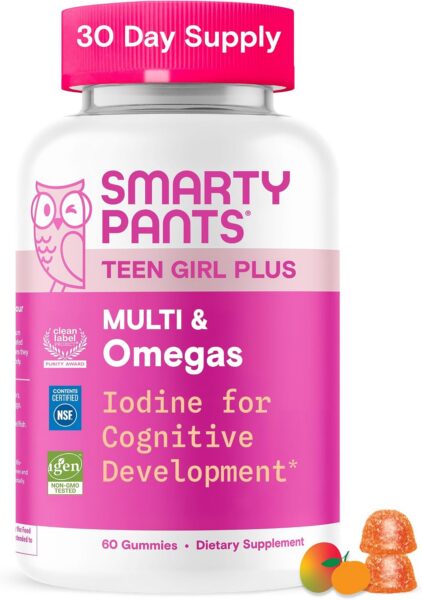
SmartyPants Teen Girl Multivitamin Gummies, Omega 3 (DHA/EPA), Vitamin C, D3, B12, Vitamin A, K & Zinc
The Two Types of Iron in Food
Iron in food comes in two main forms: heme iron and nonheme iron.
Heme iron is found in animal foods such as meat, poultry, and seafood. The body generally absorbs this form more easily.
Nonheme iron is found mainly in plant foods and fortified foods. Beans, lentils, spinach, nuts, seeds, and iron-fortified cereals are good examples. The body does not absorb nonheme iron as efficiently, but that does not mean plant foods are poor sources of iron. They can still make a valuable contribution to a teenager's diet.
This distinction becomes especially useful for vegetarian and vegan teens. They do not need to eat meat to get iron. They simply need to pay a little more attention to food combinations and overall intake.
Lean Red Meat Is a Strong Source of Iron
Beef and other lean red meats are among the easiest foods for the body to use for iron.
A small serving can provide a useful amount of heme iron, along with protein, zinc, vitamin B12, and other nutrients. For a teenager who eats meat, including lean beef occasionally can be an easy way to add iron to meals.
But there is no need to eat steak every day.
A varied diet is healthier than relying on one food. Chicken, turkey, seafood, beans, lentils, fortified grains, and other foods can all contribute iron.
Chicken and Turkey Can Help Too
Poultry usually contains less iron than red meat, but it can still contribute to a teen girl's daily intake.
Dark meat, such as chicken or turkey thighs, generally contains more iron than very lean white meat. Pairing poultry with vegetables, beans, or iron-fortified grains can make the meal even more useful.
A chicken-and-bean burrito, for example, can provide both animal and plant sources of iron in one meal.
That is often more realistic than expecting a teenager to eat a specific “iron food” every day.
Seafood Is Another Good Choice
Seafood can be a useful source of iron, especially shellfish and some fish.
Clams and oysters are particularly rich in iron. Sardines, tuna, and other seafood can also contribute iron while providing protein and, depending on the type of fish, healthy omega-3 fats.
The exact amount varies widely between seafood choices, so seafood should be viewed as one part of a varied diet rather than a single solution for iron needs.
For families who eat seafood regularly, adding fish or shellfish to meals can be an easy way to increase overall nutrient variety.
Beans Are an Excellent Plant-Based Iron Food
Beans are one of the most useful foods for teen girls who do not eat much meat.
Black beans, kidney beans, white beans, chickpeas, and other beans provide iron along with protein and fiber.
They are also inexpensive and easy to add to everyday meals. Beans can go into tacos, burritos, soups, chili, salads, pasta dishes, or rice bowls.
For a teenager who dislikes the taste of beans by themselves, mixing them into familiar foods can make them much easier to eat.
Lentils Are Small but Mighty
Lentils are another simple source of plant-based iron.
They cook relatively quickly and can be added to soups, curries, salads, pasta sauces, or rice dishes. They also provide protein and fiber, which can help make a meal more filling.
A lentil soup with tomatoes is a particularly useful combination because the tomatoes provide vitamin C, which can help the body absorb nonheme iron from the lentils.
That small pairing illustrates an important point: what is eaten with an iron-rich food can matter.
Tofu Can Be a Good Choice
Tofu is another useful option for vegetarian and vegan teen girls.
Depending on how it is made, tofu can provide iron, protein, and other nutrients. It can be stir-fried with vegetables, added to noodle dishes, baked, or used in many other meals.
Soy foods can be especially helpful for teens who are trying to get enough protein and iron without eating meat.
Again, variety matters. Tofu does not need to replace every other protein source. It is simply another useful option.
Spinach and Leafy Greens Have Iron
Spinach is often one of the first foods people mention when talking about iron.
It does contain iron, but there is an important detail: the iron in spinach is nonheme iron, so the body does not absorb all of it.
That does not make spinach pointless. Far from it. Leafy greens provide folate, vitamin K, carotenoids, and other nutrients. The trick is to eat them as part of a varied meal.
Spinach with eggs and tomatoes, for example, gives a teenager several useful nutrients at once.
Iron-Fortified Breakfast Cereal Can Be Surprisingly Useful
Some breakfast cereals are fortified with iron.
For a teenager who eats cereal, this can be one of the easiest ways to add iron to breakfast. The amount varies greatly between brands, so checking the Nutrition Facts label is worthwhile.
An iron-fortified cereal paired with milk, yogurt, or fruit can become a quick breakfast on busy school mornings.
This is a good example of why healthy eating does not have to mean making everything from scratch. A fortified food can be genuinely useful when it fits into an overall balanced diet.
Eggs Can Contribute Iron
Eggs contain some iron, although they are not among the richest sources.
They can still be part of an iron-friendly breakfast or meal. An egg sandwich with an iron-fortified whole-grain bread and a side of strawberries, for example, brings together several useful nutrients.
Eggs are also convenient. For teenagers who do not have much time in the morning, a boiled egg prepared ahead of time can be an easy snack or breakfast addition.
Nuts and Seeds Can Add Iron
Nuts and seeds are another small but useful source of iron.
Pumpkin seeds, cashews, sesame seeds, and some other seeds and nuts contain iron. They also provide protein, healthy fats, and other minerals.
A teenager does not need to eat a huge handful. A small serving added to oatmeal, yogurt, a salad, or trail mix can contribute to the day's total.
Nut-free school rules may limit some options, of course. Seeds or other iron-rich foods can fill the gap when needed.
Dried Fruit Contains Iron, Too
Raisins, dried apricots, and some other dried fruits contain iron.
They are convenient because they can be packed into a school lunch or carried as a snack. But dried fruit is concentrated, so portions are usually smaller than with fresh fruit.
It works especially well when combined with other foods. A small amount of dried fruit with nuts and seeds can make a simple trail mix.
Fresh fruit should still be part of the diet, but dried fruit can be a useful addition.
Vitamin C Helps the Body Absorb Plant Iron
This is one of the most useful tricks for a teen who gets much of her iron from plant foods.
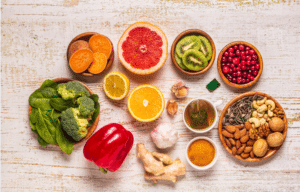
Vitamin C helps improve the absorption of nonheme iron. Good vitamin C sources include oranges, strawberries, kiwi, tomatoes, bell peppers, broccoli, and other fruits and vegetables.
That means an iron-rich meal does not need to be complicated.
Try:
- Lentils + tomatoes
- Beans + bell peppers
- Spinach + strawberries
- Tofu + broccoli
- Iron-fortified cereal + strawberries
- Hummus + red peppers
The idea is simple: pair plant-based iron with a vitamin C-rich food whenever it is easy to do so.
What Can Make Iron Harder to Absorb?
Some foods and drinks can affect how much nonheme iron the body absorbs.
Calcium can interfere with iron absorption in some situations, while compounds in tea and coffee can also reduce absorption of nonheme iron. This does not mean teenagers need to avoid dairy, tea, or coffee completely. It simply means that when iron deficiency is a concern, meal timing and food combinations may matter.
For most healthy teenagers, there is no need to become overly strict about this.
A better approach is to regularly include iron-rich foods and vitamin C-rich foods rather than worrying about every single food interaction.
A Simple Iron-Rich Breakfast
Breakfast can be an easy place to add iron.
For example:
Option 1: Iron-fortified cereal + strawberries + milk
Option 2: Eggs + whole-grain toast + orange
Option 3: Oatmeal + pumpkin seeds + raisins + sliced kiwi
Option 4: Tofu breakfast wrap + tomatoes
None of these needs to be perfect. The point is to start the day with something that provides useful nutrients instead of relying only on a sugary drink or skipping breakfast altogether.
Iron-Rich Lunch Ideas for Teen Girls
School lunches can make nutrition tricky. Convenience usually wins.
Some simple options include:
- Chicken and bean burrito with tomatoes
- Lentil soup with whole-grain bread
- Turkey sandwich with bell peppers
- Tofu and vegetable rice bowl
- Tuna sandwich with fruit
- Bean and cheese tacos with salsa
- Hummus wrap with spinach and peppers
Packing an orange, strawberries, kiwi, or another vitamin C-rich fruit can be a simple way to support iron absorption from plant foods.
Easy Iron-Rich Snacks
Iron does not have to come only from large meals.
Some snack ideas include:
- Pumpkin seeds + dried fruit
- Hummus + bell peppers
- Trail mix with nuts and raisins
- Whole-grain crackers + hummus
- Roasted chickpeas
- Fortified cereal as a dry snack
- Peanut or seed butter on whole-grain toast
For a teenager who is constantly hungry after school, an iron-containing snack can be a useful addition rather than relying only on chips, cookies, or candy.
What About Vegetarian and Vegan Teen Girls?
A vegetarian or vegan teen can absolutely get enough iron from food, but planning matters.
Plant-based sources include beans, lentils, tofu, peas, nuts, seeds, spinach, fortified cereals, and fortified grain products. Because nonheme iron is absorbed less efficiently, the overall diet should include enough iron-rich foods, and pairing them with vitamin C is especially helpful.
A vegan teenager should also pay attention to other nutrients, including vitamin B12, calcium, vitamin D, and protein.
There is no need to assume that a plant-based teen is automatically low in iron. But there is also no reason to assume she is getting enough just because she eats plenty of vegetables. The quality and variety of the whole diet matter.
Teen Girls With Heavy Periods Need Extra Attention
This is perhaps the most important part of the topic.
A girl who has very heavy periods may lose more iron than she can easily replace through food. Over time, iron stores can become low, and iron-deficiency anemia may develop.
Warning signs can include unusual tiredness, weakness, pale skin, headaches, dizziness, shortness of breath, or difficulty keeping up with normal activities. Some people with iron deficiency also develop pica, such as craving or chewing ice or other non-food items.
Heavy periods should not simply be accepted as “normal teenage periods.” The AAP recommends attention to heavy menstrual bleeding as a risk factor for iron deficiency, and its updated 2026 guidance recommends screening adolescent girls for iron deficiency within a year of starting periods, and no later than age 14.
If periods regularly last more than seven days, require very frequent pad or tampon changes, or interfere with school and normal activities, a healthcare professional should evaluate the situation.
Can Food Alone Fix Iron Deficiency?
Sometimes diet can help prevent low iron. But once a teenager has actual iron deficiency or iron-deficiency anemia, food may not be enough to restore iron stores quickly.
A doctor can check iron status with blood tests such as a complete blood count and ferritin. If treatment is needed, an iron supplement may be recommended. The AAP's updated guidance notes that oral iron therapy is effective for most children and adolescents when treatment is indicated.
This distinction is important.
Eating more spinach is a healthy idea. Taking high-dose iron without knowing whether it is needed is a different matter.
Should Teen Girls Take Iron Supplements?
Not automatically.
Iron is an essential nutrient, but too much iron can be harmful. High doses can cause nausea, stomach pain, constipation, vomiting, and other problems. Very large amounts can be dangerous, especially for children.
A teenager should not start a high-dose iron supplement simply because she feels tired.
Tiredness can have many causes, including lack of sleep, stress, not eating enough, iron deficiency, illness, or other health problems. If iron deficiency is suspected, testing and professional advice are much safer than guessing.
Does Drinking Milk Cause Low Iron?
Milk itself is not something teen girls need to avoid.
Milk provides calcium, protein, and often vitamin D. The bigger concern is when a teenager drinks large amounts of a low-iron food and becomes too full to eat a varied diet.
For older children and teens, the focus should be on overall dietary variety rather than blaming one food.
A teen who enjoys milk can keep drinking it while also eating iron-rich foods such as meat, beans, lentils, fortified cereals, or tofu.
What About Iron and Acne?
Teen girls sometimes worry that changing their diet for iron will make acne worse.
There is no reason to avoid nutritious iron-rich foods simply because of acne concerns. Foods such as beans, lentils, leafy greens, seafood, lean meats, and fruits can all fit into a balanced diet.
If a teenager is taking an iron supplement and notices stomach problems or other side effects, that should be discussed with her healthcare provider rather than stopping needed treatment without advice.
A Simple Weekly Approach to Iron-Rich Eating
There is no need to eat the same iron-rich food every day.
A week might include:
Monday: Lentil soup and tomatoes
Tuesday: Chicken and bean tacos
Wednesday: Iron-fortified cereal with fruit
Thursday: Tofu and vegetable stir-fry
Friday: Lean beef with vegetables
Saturday: Eggs, whole-grain toast, and fruit
Sunday: Salmon with beans and vegetables
Snacks can add nuts, seeds, hummus, dried fruit, or fortified foods.
This kind of variety is easier to maintain than a rigid meal plan.
The Bigger Picture
Iron is important, but it should not become another number that makes a teenager anxious about food.
A healthy diet does not require counting every milligram. It is much more practical to regularly include a mix of iron-rich foods, eat fruits and vegetables that provide vitamin C, and pay attention to signs that something may be wrong.
For teen girls who have periods, iron deserves a regular place in the conversation about nutrition. And when periods are very heavy or symptoms of anemia appear, the answer should go beyond food.
Good nutrition supports a growing body. Medical care is there when nutrition alone is not enough.
FAQ
Can heavy periods cause iron deficiency?
Yes. Heavy menstrual bleeding can cause significant iron loss and increase the risk of iron deficiency and iron-deficiency anemia. Teen girls with very heavy or prolonged periods should talk with a healthcare professional.
When should a teen girl be tested for iron deficiency?
The AAP's updated 2026 guidance recommends screening adolescent girls for iron deficiency within a year of starting menstruation, and no later than age 14. Girls with heavy periods or other risk factors may need closer attention.
Can a teen girl take iron supplements without seeing a doctor?
It is better not to take high-dose iron without medical advice. Too much iron can cause side effects and can be harmful. If iron deficiency is suspected, a healthcare professional can decide whether blood tests or supplements are needed.
Are iron supplements better than iron-rich foods?
Supplements can be important when a teen has confirmed iron deficiency or anemia, but they are not a replacement for a balanced diet. For healthy teens, food is generally the preferred source of nutrients. When treatment is needed, the supplement and dose should be guided by a healthcare professional.
Can iron deficiency make a teen girl tired?
Yes. Iron deficiency and iron-deficiency anemia can cause fatigue, weakness, and low energy. But tiredness has many possible causes, so it should not automatically be blamed on low iron.