Summer break is wonderful for children. There are late nights watching movies, sleeping a little longer in the morning, family trips, and fewer rules about schedules. After several weeks of relaxed routines, many children naturally develop a later sleep pattern.
Then school starts getting closer.
Suddenly, waking up at 6:30 or 7:00 a.m. feels impossible. A child who happily stayed awake until 10:30 p.m. during summer may now struggle to get out of bed, complain about being tired, or feel grumpy before breakfast.
This situation is very common. It does not mean a child is lazy or refusing to cooperate. The child’s internal clock has simply adjusted to a different routine. The body became used to later nights and later mornings.
Resetting a child’s sleep schedule before school is not about forcing a child to sleep earlier overnight. Sleep is controlled by the body’s natural rhythm, and changing that rhythm takes time. Small, steady changes usually work much better than sudden rules.
A healthy sleep routine before school can help children feel more energetic, focus better in class, manage emotions, and enjoy their school day more.
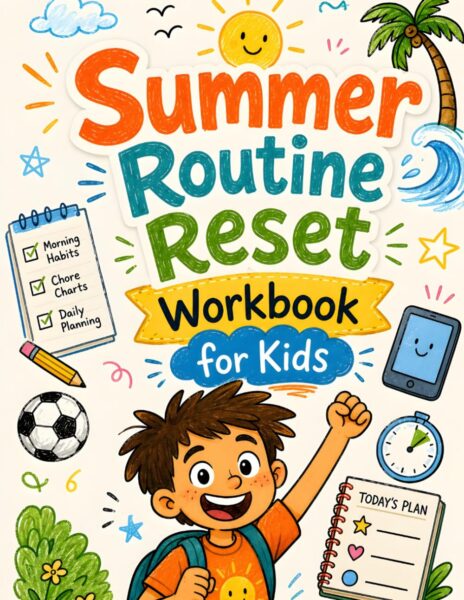
Summer Routine Reset Workbook for Kids: Morning Habits, Screen-Time Balance
Why Children’s Sleep Schedule Changes During School Breaks
Children’s sleep patterns are strongly influenced by daily habits. During the school year, many things naturally keep their schedule regular. They wake up at the same time, go to school, eat meals at certain hours, finish homework, and follow a bedtime routine.
During vacations, many of those signals disappear.
Children may:
- Stay up later because there is no school the next morning
- Sleep in until late morning
- Spend more time using tablets, phones, or watching TV
- Have irregular meal times
- Spend less time outside during the day
These changes can slowly move the body clock later.
The body has an internal timing system called the circadian rhythm. It helps control when children feel awake and when they feel sleepy. When children stay up late for many days, their bodies begin expecting sleep at a later time.
This explains why telling a child, “Go to bed early tonight because school starts tomorrow,” often does not work. The child may lie in bed but still feel wide awake because the body has not adjusted yet.
Parents sometimes worry when their child cannot sleep before school starts. In most cases, this is a normal response to a big schedule change.
Start Resetting Sleep Two to Three Weeks Before School
The easiest time to fix a child’s sleep schedule is before school begins. Waiting until the last few days can make mornings stressful.
Most children need several days to adjust. Some children may need two or three weeks, especially if their summer schedule was very different.
A gradual approach works well.
Instead of changing bedtime by two hours at once, try moving bedtime earlier by 15 to 30 minutes every few nights.
For example:
Week 1
- Move bedtime 15–30 minutes earlier
- Wake up slightly earlier each morning
Week 2
- Continue moving bedtime earlier
- Keep wake-up time consistent
Final days before school
- Follow the school morning schedule
- Practice the full morning routine
The wake-up time is often more important than bedtime. When children wake up at the same time every day, their bodies begin becoming sleepy at the right time in the evening.
Even on weekends, try not to let children sleep several hours later than their school wake-up time. Large changes between weekdays and weekends can make the body clock confused.
Create a Consistent Bedtime Routine
Children’s brains respond well to routines. A predictable bedtime routine tells the body that it is time to slow down.
A good bedtime routine does not need to be complicated. It can be simple and repeatable.
For example:
- Take a bath or shower
- Put on pajamas
- Brush teeth
- Pack the school bag
- Read a book
- Talk quietly about the day
- Turn off the lights
The order matters more than the length.
A child who follows the same steps every night begins to recognize these signals. Over time, these habits help the brain prepare for sleep.
Many bedtime struggles happen because children move directly from exciting activities into sleep. Going from video games or active play to “close your eyes now” is a big jump.
A calmer transition helps children relax.
Limit Screens Before Bed
Screens are one of the biggest challenges for children’s sleep today. Tablets, smartphones, computers, and televisions are often part of children’s daily lives, but using them too close to bedtime can make falling asleep harder.
Screen activities are usually stimulating. Games, videos, and social media keep the brain active when it should be slowing down.
Bright screen light may also affect melatonin, a hormone involved in sleep timing.
A helpful goal is stopping screen use about one hour before bedtime.
Instead of only removing screens, replace them with relaxing activities:
- Reading together
- Drawing
- Listening to calm music
- Doing puzzles
- Preparing clothes and school items
Children often resist changes when something enjoyable is taken away. Giving them another pleasant activity makes the transition easier.
Use Morning Light to Help Reset Sleep
Morning sunlight is one of the simplest ways to help reset a child’s sleep schedule.
When children see bright natural light after waking up, the brain receives a message that the day has started. This helps adjust the body clock.
Helpful morning habits include:
- Opening curtains after waking
- Eating breakfast near a window
- Playing outside
- Taking a short morning walk
On the other hand, keeping evenings darker and calmer helps the body prepare for sleep.
A child who spends the whole morning in a dark room and then stays under bright lights late at night may have a harder time adjusting.
Natural light is a simple tool that does not cost anything and can make a real difference.
Make the Morning Routine Easier
Sometimes children are not only tired. They are overwhelmed by everything that happens in the morning.
A smoother morning starts the night before.
Helpful habits include:
- Choosing clothes before bedtime
- Packing backpacks early
- Preparing lunch items
- Checking school schedules
- Putting shoes and school items in the same place
When mornings feel rushed, children may start the school day feeling stressed.
A calm morning sends a different message: “The day is manageable.”
This is especially important for children who already feel nervous about returning to school.
Encourage Physical Activity During the Day
Children who move their bodies during the day often sleep better at night.
Physical activity helps release energy and supports healthy sleep patterns.
Good options include:
- Playing outside
- Riding a bike
- Swimming
- Walking
- Sports activities
However, very active play right before bedtime may make some children more excited instead of relaxed. Earlier in the day is usually better.
Exercise, sunlight, and regular meals all work together to support a healthy body clock.
Be Careful With Late Naps
Naps can be helpful for younger children, but late afternoon naps may make bedtime difficult.
A child who sleeps for a long time in the late afternoon may not feel tired at night.
If a child still needs naps:
- Keep naps earlier in the day
- Avoid very long naps
- Watch how naps affect bedtime
Older children usually do not need regular naps. They often benefit more from a consistent nighttime sleep schedule.
What If Your Child Refuses to Sleep Earlier?
Some children will say, “I’m not tired,” when bedtime arrives. This can be frustrating, especially when school is approaching.
Arguing usually does not help. Sleep cannot be forced.
Instead:
- Keep the bedtime routine consistent
- Keep wake-up time steady
- Make evenings calmer
- Avoid long discussions in bed
The goal is teaching the body a new rhythm.
Children may not adjust immediately, but consistency matters. A few difficult nights are normal during a schedule change.
How Much Sleep Do Children Need Before School?
Sleep needs depend on age.
General recommendations:
- Preschool children: about 10–13 hours per day
- School-age children: about 9–12 hours per day
- Teenagers: about 8–10 hours per day
Children who do not get enough sleep may show signs such as:
- Trouble concentrating
- Mood changes
- Low energy
- More emotional reactions
- Difficulty controlling behavior
Sometimes tired children look like they have attention problems because their brains are struggling to stay focused.
Good sleep is not just about avoiding tiredness. It supports learning, growth, immune health, and emotional balance.
FAQ
How long does it take to reset a child’s sleep schedule?
Most children need several days to a few weeks. A gradual adjustment of 15–30 minutes every few nights is usually easier than changing bedtime suddenly.
When should parents start fixing sleep before school?
Ideally, begin about two to three weeks before school starts. This gives children enough time to adjust without feeling pressured.
Should parents wake children up earlier to fix sleep?
Yes. A consistent wake-up time helps reset the body clock. Even if bedtime is not perfect at first, waking earlier helps children become sleepy earlier at night.
How can I help my child fall asleep earlier?
Create a calm bedtime routine, reduce screen time before bed, use morning sunlight, and keep daily schedules consistent.
Why is my child tired after sleeping enough hours?
Sleep quality matters too. Stress, irregular schedules, screen use, breathing problems during sleep, or frequent waking can affect how rested a child feels.
Should kids sleep later on weekends?
Occasionally sleeping a little later is fine, but large differences between weekday and weekend schedules can make it harder to maintain a healthy sleep rhythm.