Teaching kids to brush their teeth can feel harder than it should be. Some children refuse. Some rush through it. Some just bite the toothbrush and call it a day.
But here’s the good news. This phase is normal.
Brushing teeth is not just a skill. It’s a habit. And like any habit, it takes time, repetition, and a bit of creativity. The goal is not perfection right away. The goal is to make brushing something kids accept, and eventually enjoy.
What is the best way to teach kids to brush their teeth?
The best way to teach kids to brush their teeth is to keep things simple, consistent, and a little fun. Children respond better to routine and positive experiences than strict rules.
Here are the basics that work for most families:
- Brush twice a day at the same time
- Use a timer or song to guide brushing
- Let kids copy adults
- Keep the mood light and encouraging
It may sound simple, but these small habits build strong routines over time.
Build a Consistent Brushing Routine (This Matters More Than You Think)
Kids feel safer when they know what comes next. A predictable routine removes resistance before it even starts.
Brushing should happen at the same time every morning and night. Not “whenever it fits,” but part of the daily flow. Like pajamas. Like bedtime stories.
Pair brushing with something they already enjoy. For example, brushing right before storytime works surprisingly well. It becomes part of a sequence, not a separate task.
A simple reward chart can also help. Nothing fancy. Just a small visual tracker where kids can see their progress. For some children, that alone is enough motivation.
Use a Timer (Because Two Minutes Feels Like Forever to Kids)
Two minutes is longer than most kids think.
The American Dental Association recommends brushing for two minutes. But young children don’t understand time in that way. Without help, they’ll stop after 20 seconds and think they did a great job.
A timer makes things clear.
It can be a simple countdown timer, a sand timer, or even a favorite song that lasts about two minutes. Music works especially well. It turns brushing into something predictable and even enjoyable.
Some parents notice that once the timer becomes part of the routine, kids stop asking “Are we done yet?” every few seconds. That alone is a win.
Proper Positioning Makes a Big Difference
This is something many parents figure out the hard way.
Young children don’t have the hand control to brush properly. Even if they try, they often miss most areas. That’s completely normal.
For toddlers and preschoolers, parents still need to do the actual brushing.
A few positions tend to work better:
- Let the child lie down with their head slightly tilted back
- Sit behind the child and gently support their head
- Keep it calm and steady, not rushed
It might feel awkward at first, but once a comfortable position is found, brushing becomes much easier and faster.
Letting kids hold a toothbrush at the same time can help. They feel involved, even if the real cleaning is still done by an adult.
Kids Learn by Watching (More Than by Listening)
Telling a child to brush rarely works on its own.
Showing them works much better.
When kids see parents brushing their teeth every day, something clicks. It becomes normal. Not a rule. Not a chore. Just something people do.
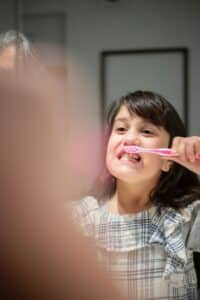
Brushing together can be surprisingly effective. Stand side by side in front of the mirror. Make it a shared activity instead of a task you assign to them.
Older siblings can also help. Kids often copy siblings faster than they copy adults. It feels more relatable.
Even short videos or cartoons about brushing can make a difference. Sometimes a favorite character saying “Let’s brush our teeth” works better than a parent saying it ten times.
Make Brushing Fun (Without Turning It Into a Battle)
Fun doesn’t mean complicated.
It can be as simple as letting a child choose their own toothbrush. A favorite color. A character they like. That small choice can change their attitude.
Some families use songs. Others use silly games. One child might pretend they are brushing sugar bugs away. Another might laugh at making funny faces in the mirror.
The key is this. The mood matters more than the method.
If brushing always feels like a fight, kids will resist it. If it feels light and predictable, resistance fades over time.
That doesn’t mean every night will be perfect. Some nights will still be messy. That’s part of the process.
Choosing the Right Toothbrush and Toothpaste
Small details matter more than they seem.
A toothbrush that is too big or too hard can make brushing uncomfortable. Kids notice that quickly and may resist.
Look for a soft bristle brush with a small head. It should fit easily in the child’s mouth.
Toothpaste matters too. Once a child can spit reliably, a fluoride toothpaste is recommended.
General guideline:
- Under age 3: a tiny rice-sized amount
- Age 3 and older: a pea-sized amount
Flavor can also make a difference. Some kids dislike strong mint. A mild or fruity flavor may work better in the beginning.
Positive Reinforcement Works Better Than Pressure
Kids respond to encouragement more than correction.
Instead of pointing out what they missed, notice what they did well. Even small things count. Holding the toothbrush correctly. Staying still. Brushing longer than yesterday.
Simple praise goes a long way.
Some parents use small rewards, like stickers. Others just use verbal encouragement. Both can work.
The goal is to build confidence, not perfection.
Don’t Skip Regular Dental Visits
Routine check-ups support everything you do at home.
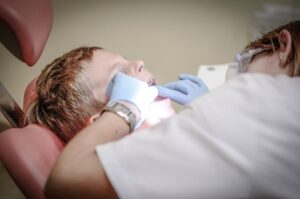
Dentists reinforce the importance of brushing in a different way. Kids often listen differently in that setting. It feels official.
The Centers for Disease Control and Prevention notes that early dental care helps prevent cavities and builds lifelong habits.
Regular visits also catch small problems before they become bigger ones.
A Realistic Expectation (This Helps More Than Any Tip)
Teaching brushing is not a one-week project.
Some children get it quickly. Others take months. That does not mean something is wrong.
Progress often comes in small steps. A little less resistance. A little more cooperation. A slightly longer brushing time.
Those small shifts matter.
Over time, brushing becomes automatic. Not perfect. Not exciting. Just part of life.
And that’s actually the goal.
FAQ: Teaching Kids to Brush Their Teeth
1. When should children start brushing their teeth?
Begin as soon as the first tooth appears. Use a small, rice-sized amount of toothpaste for infants.
2. How much toothpaste should children use?
- Under 3 years old: rice grain size
- Age 3 and above: pea size
3. Should parents brush for their children?
Yes. Children often miss spots, so parents should supervise or brush until kids are around 7–8 years old and show good brushing skills.
4. How can I make brushing less stressful?
Keep routines consistent, use songs or timers, and allow children to participate in choosing toothbrushes or toothpaste flavors.
5. Can children brush by themselves?
They can start practicing independence around age 3–4, but parents should still supervise until they can brush effectively without missing areas.