Getting a first period is one of the biggest changes during puberty. It can feel exciting, strange, embarrassing, or even a little scary. There is no single “right” age, though. Most girls get their first period between about 12 and 13, while some start earlier or later. ACOG says a period usually begins about 2 to 3 years after the breasts first start developing.
That means the body usually gives several clues before the first period arrives. The tricky part is that these signs do not come with a countdown clock. A girl may notice breast development, body hair, a growth spurt, acne, body odor, or vaginal discharge, but none of these can tell exactly which day the first period will begin. Puberty is a process, not a schedule.
Breast Development Is Often the First Big Sign
For many girls, breast development is the first noticeable sign that puberty has started. It may begin with small, firm breast buds underneath the nipples. One side may develop before the other, and the breasts may feel sore or sensitive at times. This is usually a normal part of growing up.
The first period generally comes around 2 to 3 years after breast development begins. So if a girl has recently noticed breast changes, there is usually still plenty of time to get comfortable with the idea of menstruation. It does not mean a period is coming next week—or even next month.
Pubic and Underarm Hair May Appear
Hair growth is another common part of puberty. Hair may first appear around the pubic area and later under the arms. At first, the hair can be light and soft. Over time, it often becomes darker, thicker, and more noticeable.
These changes happen because hormones are becoming more active during puberty. A first period usually happens later in the puberty process, rather than being the very first change. MedlinePlus notes that breast development generally comes first, followed by pubic and underarm hair, with menstruation usually happening later.

My First Period Kit for Girls 9-12
A Growth Spurt Can Happen Before the First Period
Many girls grow quickly during puberty. Clothes and shoes can suddenly seem too small, sometimes much sooner than expected. Arms and legs may grow first, and the body gradually becomes more adult-shaped.
The biggest height growth usually happens before the first period. After menstruation begins, most girls still grow some more, but the fastest part of the growth spurt has usually already happened.
This is worth knowing because some girls worry that getting their period means they have stopped growing. That is not quite true. Height growth usually slows after the first period, but it does not suddenly stop.
Vaginal Discharge Can Be a Sign Puberty Is Moving Along
Some girls notice clear, white, or slightly cloudy discharge in their underwear before their first period. This can be completely normal. During puberty, hormone changes cause the vagina to produce more discharge.
Normal discharge is usually clear to white and does not have a strong or unpleasant smell. The amount can change over time and may be different from one day to another.
This can surprise girls who have never heard about it before. It may look like a small wet or white mark in the underwear. There is no need to feel embarrassed. It is simply one of the ways the body changes during puberty.
If discharge has a strong odor or a very unusual color, or comes with itching, burning, or pain, that is different. A health professional can help determine whether there is an infection or another problem.
Acne and Oily Skin May Show Up
Puberty hormones can also affect the skin. Oil glands become more active, which can lead to oily skin, blackheads, whiteheads, or pimples.
Acne does not mean that a period is about to start immediately. It is simply another common part of puberty. Some girls have acne before their first period, while others develop it later.
A gentle cleanser and simple skin-care routine are usually enough for mild acne. Scrubbing the skin hard or constantly washing the face can actually make irritation worse. If acne becomes painful, severe, or leaves scars, it is worth talking with a doctor.
Body Odor May Become Stronger
Another easy-to-notice change is body odor. A girl who never needed deodorant before may suddenly notice stronger underarm odor, especially after sports or on hot days.
Again, this is not a sign that the first period is about to happen tomorrow. It is simply another sign that puberty hormones are changing how the body works. Regular bathing, clean clothes, and deodorant or antiperspirant can help.
These changes can seem like a lot when they happen around the same time. But they are all part of the same bigger process: the body is moving through puberty.
Mood Changes Do Not Predict the Exact Timing
Mood changes can happen during puberty. A girl may feel more emotional, easily annoyed, worried, or sensitive at times. School pressure, friendships, family life, sleep, and hormones can all play a role.
Some girls also notice mood or body changes before their periods. Premenstrual symptoms can include bloating, breast tenderness, headaches, food cravings, tiredness, and mood changes.
Still, mood changes are not a reliable way to predict a first period. A bad mood does not mean menstruation is about to start. It is better to look at the overall pattern of puberty rather than one single symptom.
The First Period May Start With Just A Few Spots
One thing that often surprises girls is how little blood there may be at first.
A first period does not always look like the heavy bleeding shown in movies or on television. It may begin with just a few reddish, pink, or brown spots on underwear. The bleeding may become heavier later, or the entire first period may stay quite light.
ACOG notes that early periods can be very light and may last anywhere from 2 to 7 days.
Brown blood can also be normal. Blood that takes longer to leave the uterus can look darker or brown. So seeing a small brown stain does not automatically mean something is wrong.
There Is No Perfect Way to Predict the First Period
This is probably the most important point for parents and girls: there is no exact test that can tell when the first period will start.
The body can show many signs, but the timing varies from person to person. Most girls in the United States start between ages 12 and 14, although periods can begin outside that range as well.
Family history can sometimes give a rough clue. If a mother or older sister started relatively early or late, that may offer some context, but it is not a guarantee.
So instead of trying to predict the exact date, preparation makes more sense.
How to Prepare for a First Period
A little preparation can make the first period much less stressful. There is no need to wait until bleeding starts.
A girl can keep a small period kit in her backpack, school bag, or bedroom. It does not have to be complicated.
A simple kit might include:
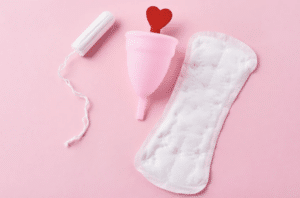
- 2 or 3 sanitary pads
- A spare pair of underwear
- A small plastic or zip bag for stained clothing
- Tissues or wipes
- A small pain-relief item if recommended by a parent or doctor
Pads are often an easy starting choice because they do not need to be inserted into the body. They attach to the inside of the underwear and absorb menstrual blood.
It is also helpful to know where the school bathroom is and whether the school has pads available. A trusted teacher, school nurse, counselor, or other adult can usually help if a period starts unexpectedly.
What Should a Girl Do If Her First Period Starts At School?
First, take a breath. A first period at school can feel embarrassing, but it is not an emergency.
If a pad is available, use it and change it when it becomes wet or full. If there is no pad, ask the school nurse or another trusted adult for help. A temporary layer of folded toilet paper can be used while getting proper menstrual protection, but it should not replace a pad for long.
It can also help to keep a sweater or jacket available if there is a stain on clothing. Most importantly, there is no reason to feel ashamed. Menstruation is a normal body function.
ACOG recommends changing pads at least every 4 to 8 hours, or sooner if the pad becomes full or uncomfortable.
What Are Normal Periods Like At First?
The first few periods can be unpredictable. One month may bring a period, and the next one may come much later. The amount of bleeding can change too.
ACOG notes that cycles of about 21 to 45 days can be normal during adolescence, and it can take time for periods to become regular.
This is one reason period tracking can be useful. Marking the first day of each period on a calendar gives a simple picture of the pattern. There is no need to obsess over the exact number of days. The goal is simply to notice major changes.
When Should Parents Talk With a Doctor?
Most puberty changes are normal, but certain situations deserve medical attention.
A doctor should evaluate a girl who has not had her first period by age 15, or who has not started menstruating within about 3 years after breast development began.
It is also worth getting medical advice if periods become extremely heavy, last longer than 7 days, repeatedly occur less than 21 days apart or more than 45 days apart, or stop for 3 months or longer after having started.
Very heavy bleeding should not simply be dismissed as “normal teenage periods.” If a girl is soaking through a pad or tampon every 1 to 2 hours, especially with dizziness, weakness, shortness of breath, or a racing heartbeat, she needs prompt medical attention.
A Calm Conversation Can Make a Big Difference
Girls do not need a long lecture about puberty. In many families, a short and relaxed conversation works better.
It can be as simple as explaining that breasts, body hair, skin, body shape, and periods are all normal parts of growing up. A girl should know that she can ask questions without being laughed at or made to feel embarrassed.
It also helps to explain that everyone's body follows a slightly different timetable. One classmate may already have a period while another has not even started puberty. Neither is “ahead” or “behind” simply because of that difference.
The practical goal is not to predict the exact day. It is to make sure a girl knows what is happening when it happens—and knows where to turn if something feels unusual.
FAQ: First Period Signs
What are the first signs of a first period?
Common signs of puberty before a first period include breast development, pubic or underarm hair, a growth spurt, acne, stronger body odor, and vaginal discharge. A first period usually happens about 2 to 3 years after breast development begins.
How can you tell your first period is coming soon?
There is no reliable way to predict the exact day. Breast development, vaginal discharge, body hair, and other puberty changes show that the body is progressing toward menstruation, but they do not provide an exact countdown.
Does white discharge mean the first period is coming?
It can be one sign that puberty is progressing. Normal vaginal discharge often becomes more noticeable during puberty. However, discharge alone cannot predict when the first period will arrive.
How long after breast development does the first period come?
For many girls, the first period comes about 2 to 3 years after breast development begins. There is plenty of individual variation, so this should be treated as a general pattern rather than a deadline.
Can a girl still grow after her first period?
Yes. Girls usually continue to grow after their first period, but the fastest height growth typically happens before menstruation begins.