Your daughter’s first period, also called menarche, is a big milestone. It means her body is growing and developing like it should. Most girls get their first period between ages 8 and 15, with the average around 11 or 12 years old. Every girl is different, so some may start earlier or later than others.
Knowing the signs can help both you and your daughter feel ready and less nervous. Here are 10 common signs that her first period may be approaching.
1. Rapid Growth
A growth spurt often happens early in puberty. Your daughter may seem taller almost overnight. Her hips and thighs may widen too. Usually, the first period comes about two years after these growth changes begin, though the timing can vary.
2. Hair Growth
Puberty brings hair in new places, including underarms and the pubic area. You might notice thicker leg hair or hair in her armpits. Hair growth is a normal part of the body preparing for adulthood.
3. Mood Changes
Emotional swings are common before the first period. Your daughter may feel irritable, anxious, or more sensitive. These changes are due to hormones shifting in her body. It’s important to stay calm and listen, letting her know it’s normal to feel this way.
4. Headaches
Some girls get headaches before their first period. Hormone levels, especially estrogen, can drop, causing tension or mild pain in the head. Offering rest, water, and quiet time can help.
5. Acne
Hormonal changes often cause pimples or oily skin. Acne can appear before and during the early months of menstruation. Regular gentle washing and healthy skincare can reduce breakouts.
6. Increased Sweating
Sweat glands become more active during puberty. You might notice your daughter sweating more, especially after playing or exercising. Body odor may appear as well, which is normal.
7. Breast Development
Breast growth usually starts 2 years before the first period. Your daughter may begin wearing a sports bra or regular bra to feel more comfortable. Breast development is a key sign that puberty is underway.
8. Cramps, Bloating, and Back Pain
Hormones like estrogen and progesterone can cause bloating, cramps, or lower back pain before the first period. These symptoms may appear a few days or a week ahead of menarche. Warm baths, gentle exercise, or a warm compress can help relieve discomfort.
9. Vaginal Discharge
Many girls notice thin, white discharge in the months before their first period. This discharge is normal and healthy. It should not have a strong smell or unusual color. Green or foul-smelling discharge needs a doctor’s check.
10. Digestive Changes
Some girls experience diarrhea or more frequent bowel movements due to hormonal changes. Chemicals called prostaglandins help the uterus shed its lining, which can also affect the intestines.
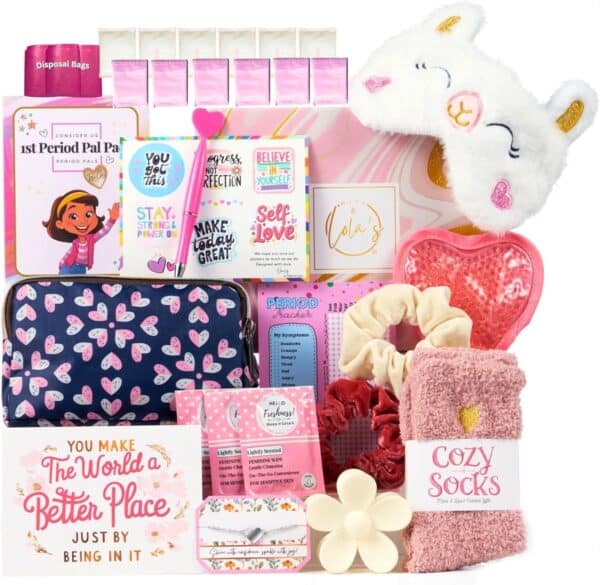
Mark and Lola’s First Period Pal Pack Gift Box
How to Support Your Daughter
Starting periods can feel confusing. Here’s how parents can help:
- Talk openly about puberty and menstruation. Let your daughter ask questions.
- Explain that periods are normal and part of growing up.
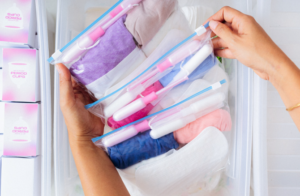
- Prepare a period kit with pads, tampons, or period underwear, plus an extra pair of underwear.
- Teach her how often to change products to stay comfortable and avoid leaks.
- Offer relief for cramps or discomfort: warm baths, gentle walks, or over-the-counter pain relievers like ibuprofen if approved by a healthcare provider.
FAQ
Q1: At what age do girls usually start their periods?
Most girls start between 8 and 15 years old, with the average age around 11 or 12.
Q2: Is it normal for periods to be irregular at first?
Yes, the first few periods can be light, heavy, or irregular. It’s normal while the body adjusts.
Q3: What can I do if my daughter hasn’t started by age 15?
Consult a pediatrician or gynecologist for guidance. Delayed menarche may need evaluation.
Q4: Are mood swings normal before the first period?
Yes, hormonal changes can make emotions fluctuate. Support and patience are key.
Q5: What products are safe for a first period?
Pads, tampons, menstrual cups, and period underwear are safe. Choose what feels comfortable for your child.