Dyshidrotic eczema in kids is one of those conditions that can puzzle parents at first. It often shows up as tiny blisters on little hands or feet. Some children complain about itching before the bumps are even visible. Others scratch so much that the skin cracks and becomes sore. Parents may wonder if it’s an allergy, an infection, or something else entirely.
This form of eczema is tricky because it looks different from the more common atopic eczema. Instead of dry patches on elbows or cheeks, it comes as small, fluid-filled blisters that itch like crazy. The blisters can last for weeks, sometimes clearing up only to come back again. For children, this cycle can be frustrating. For parents, it can feel confusing and worrying.
Knowing what dyshidrotic eczema looks like, why it happens, and how to manage it can make a big difference. It doesn’t just help the skin — it helps the whole family feel more at ease.
What Is Dyshidrotic Eczema in Children?
Dyshidrotic eczema, also called pompholyx, is a type of eczema that mainly affects the hands and feet. Instead of the dry patches most people expect, it creates clusters of tiny blisters. These blisters can be clear or filled with fluid.
The blisters usually appear on:
- Palms of the hands
- Sides of the fingers
- Soles of the feet
- Edges of the toes
In kids, the blisters may look small, but the discomfort feels big. The skin itches, stings, and sometimes burns. When blisters pop, the skin can peel, crack, and even become infected if bacteria get in.
Early Symptoms Parents Might Notice
At the start, dyshidrotic eczema may not look serious. A child might just say their hands feel itchy. Parents might see faint redness or a little swelling. But within days, those tiny blisters appear.
Common early signs include:
- Itchy, tingling skin on hands or feet
- Small, deep blisters that look like beads of water under the skin
- Skin that feels hot or tender in the affected spots
- Clusters of blisters that spread over time
Some kids scratch so much that the skin breaks open. Others may peel the skin once blisters dry, leaving tender raw areas behind. These signs can come and go, making it harder for parents to spot patterns at first.
How Dyshidrotic Eczema Looks Different From Other Rashes
One reason parents often feel confused is because dyshidrotic eczema doesn’t look like “typical eczema.” Instead of flat, scaly patches, it looks like blisters. These blisters are usually very small — like pinheads — but they can group together in clusters.
Other rashes, like hand-foot-mouth disease, can also cause blisters. But dyshidrotic eczema blisters are not usually painful at first. They mainly itch. Another clue is that dyshidrotic eczema tends to come back in the same spots again and again, especially during stress, seasonal changes, or after contact with certain triggers.
Common Triggers for Dyshidrotic Eczema in Kids
Triggers play a huge role in this condition. For some children, flare-ups seem random. For others, the same things set it off each time. Spotting these patterns can help parents prevent new outbreaks.
Common triggers include:
- Heat and sweating (common in summer or with sports shoes)
- Stress and emotional upset
- Seasonal allergies like pollen or dust mites
- Nickel or cobalt (found in some jewelry, coins, or metal snaps)
- Harsh soaps, detergents, or hand sanitizers
- Long exposure to water (frequent hand washing, swimming)
Some children flare up in spring due to allergies. Others break out after wearing plastic gloves or sweaty socks for too long.
The Itch-Scratch Cycle
Dyshidrotic eczema has one feature parents hear again and again: the unbearable itch. The itching often starts before the blisters are visible. Kids may rub their hands on furniture, scratch their feet on carpet, or wake up scratching at night.
Scratching brings temporary relief but makes the skin worse. Blisters can burst, leading to raw, painful skin. Open skin is more likely to get infected, which adds another layer of trouble. Parents often describe this as the hardest part — watching their child stuck in a cycle of itching and scratching.
How Long Do Dyshidrotic Eczema Flare-Ups Last?
Flare-ups can last anywhere from two to four weeks. The blisters start small, grow, and then dry up or peel. Sometimes the skin heals smoothly. Other times, it stays dry, cracked, and thick.
For many children, flare-ups return again and again, sometimes every few months. In some cases, they may appear in the same season each year. Parents often notice patterns tied to weather, stress, or allergies.
Everyday Impact on Children
Eczema isn’t just skin deep. For kids, it can affect school, play, and confidence. Children with dyshidrotic eczema on their hands may avoid art projects, ball games, or even shaking hands. Kids with blisters on their feet may struggle with sports shoes or refuse to walk barefoot.
The itching at night can be especially disruptive. Lack of sleep affects mood, focus, and energy. Some children even hide their hands or feet out of embarrassment. Parents sometimes worry others will mistake it for something contagious, which it’s not.
Treatment Options for Dyshidrotic Eczema in Kids
There is no one-size-fits-all cure, but treatments can manage symptoms and reduce flare-ups.
Common approaches include:
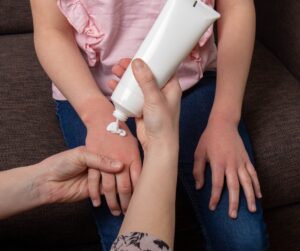
- Moisturizers: Thick creams or ointments help keep skin hydrated.
- Topical steroids: Doctors may prescribe mild to moderate steroid creams to calm inflammation.
- Cold compresses: Cool packs help relieve itching during flare-ups.
- Antihistamines: Sometimes used to ease itching, especially at night.
- Avoiding triggers: Identifying and reducing exposure to things that set off flare-ups.
In severe cases, doctors may suggest other treatments like light therapy or special ointments. But for most children, daily skin care and avoiding triggers are the foundation.
Practical Tips Parents Find Helpful
Real-world strategies often make the biggest difference:
- Keep nails short to reduce damage from scratching.
- Use cotton gloves or socks at night to protect skin.
- Choose fragrance-free soaps and detergents.
- Apply moisturizer right after handwashing.
- Rotate shoes and keep feet dry with cotton socks.
- Use lukewarm water for baths, not hot.
Parents often find a daily routine works best. Small habits — like always carrying a travel-sized cream — can prevent flare-ups from getting worse.
When to See a Doctor
Parents should seek medical advice if:
- Blisters spread quickly or cover large areas.
- The child has pain, swelling, or yellow crust (possible infection).
- Over-the-counter treatments don’t help.
- The child can’t sleep or function because of itching.
Doctors may run allergy tests or patch tests to see if nickel or another allergen is involved. In some cases, they may refer the child to a dermatologist.
Emotional Support for Kids with Dyshidrotic Eczema
It’s easy to focus only on the skin, but emotional care matters too. Kids may feel different, frustrated, or embarrassed. Encouraging open talks helps them feel supported. Some parents use stories or characters to explain that sensitive skin is just one part of who they are.
Simple reminders that eczema is not their fault can go a long way. Parents can also talk with teachers, so the child feels safe asking for breaks if itching gets intense at school.
FAQ
1. What does dyshidrotic eczema look like in kids?
It looks like small, itchy blisters on the hands, fingers, feet, or toes. The blisters can be filled with fluid and may peel or crack as they heal.
2. How long does dyshidrotic eczema last in children?
Flare-ups usually last 2–4 weeks but can return over and over, sometimes linked to triggers like sweating, allergies, or stress.
3. What causes dyshidrotic eczema in children?
The exact cause isn’t clear, but it’s linked to allergies, sensitive skin, sweating, stress, and sometimes contact with metals like nickel.
4. Is dyshidrotic eczema contagious?
No. The blisters may look like an infection, but they cannot spread to others.
5. What helps dyshidrotic eczema heal faster in kids?
Moisturizing, avoiding triggers, cool compresses, and doctor-recommended creams help calm flare-ups and prevent infections.