Does a Teen Girl Really Need Deodorant?
Puberty has a way of changing things almost overnight. A girl who never seemed to smell sweaty before may suddenly notice odor under her arms after school. PE class becomes more obvious. A favorite shirt may not smell quite as fresh by the end of the day.
That is usually normal. During puberty, sweat glands become more active, and some glands begin producing sweat that can create a stronger smell when it mixes with bacteria on the skin. Body odor often starts around the beginning of puberty. The American Academy of Pediatrics says it may begin as early as ages 8 or 9.
Not every girl needs deodorant right away. If regular bathing, clean clothes, and good hygiene are enough, there is no need to add another product just because advertisements say she should. But once body odor becomes noticeable, deodorant or antiperspirant can make daily life much easier.
Deodorant and Antiperspirant Are Not the Same
This is probably the first thing parents should understand before choosing a product.
Deodorant mainly deals with odor. It may contain ingredients that help control odor or fragrance that masks the smell. It does not necessarily stop sweating.
Antiperspirant is designed to reduce sweating. It uses certain active ingredients, commonly aluminum compounds, to temporarily reduce the amount of sweat reaching the skin. Some products combine deodorant and antiperspirant, so they help with both odor and sweating.
So the choice is actually pretty simple:
- Mostly odor, not much sweating: deodorant may be enough.
- A lot of underarm sweating: an antiperspirant may be more useful.
- Both odor and sweating: a deodorant-antiperspirant combination may make sense.
- Sensitive skin: start with a gentle, fragrance-free option.
There is no need to automatically choose the strongest product.
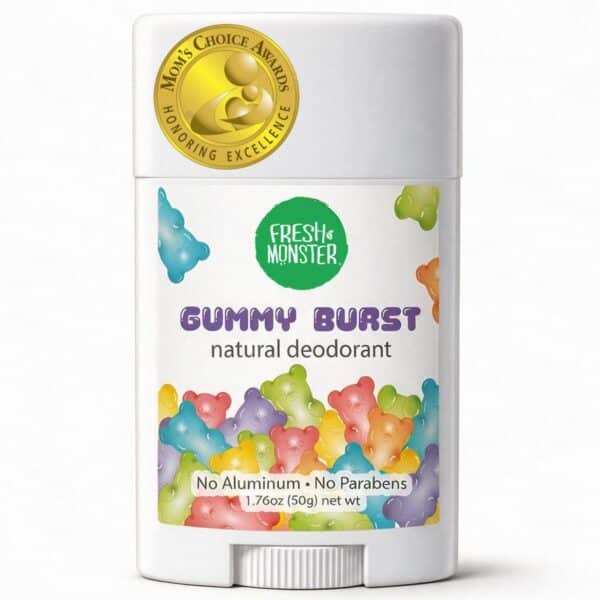
Fresh Monster Kids Natural Deodorant, Gummy Burst, 1.76 oz
What Should Parents Look for on the Label?
Walking down the personal-care aisle can be surprisingly confusing. There are sticks, sprays, gels, creams, roll-ons, “natural” products, clinical formulas, sport formulas, sensitive-skin formulas, and products with names that sound like perfume.
The label matters more than the marketing.
First, check whether the product is labeled deodorant, antiperspirant, or both. If sweat reduction is the goal, look for an antiperspirant rather than a product that only adds fragrance.
Next, look for directions and warnings. Teenagers should use the product as directed instead of assuming that more will work better. Some antiperspirants are intended for nighttime use, while others are designed for morning application.
Is Aluminum in Antiperspirant Safe for Teen Girls?
This is one of the questions parents often have, especially after seeing social media posts warning about aluminum.
Aluminum compounds are commonly used as the active ingredients in antiperspirants because they reduce sweating. The FDA regulates antiperspirants as over-the-counter drug products, and antiperspirant-deodorant products can fall under both cosmetic and drug regulations.
The American Academy of Pediatrics notes that aluminum-containing antiperspirants can be used to help control body odor and sweating in children and teens.
There is no need to avoid every product containing aluminum simply because the word appears on the label. At the same time, parents who prefer an aluminum-free deodorant can choose one. The important distinction is that an aluminum-free deodorant generally will not work as an antiperspirant, so it may not reduce sweating.
What Does “Aluminum-Free” Really Mean?
An aluminum-free product can be a perfectly reasonable choice, especially when the main problem is odor rather than heavy sweating.
But the name can create unrealistic expectations. If a product is aluminum-free and marketed as a deodorant, it generally does not work by blocking sweat glands. It is mainly designed to control odor.
That means a teen girl might still have wet underarms while the odor is reduced.
This is not a product failure. It is simply doing a different job.
The American Academy of Pediatrics specifically notes that there are many aluminum-free options and that they can be considered for people who prefer them or have sensitivity to certain antiperspirant ingredients.
Should Teen Girls Choose Fragrance-Free Deodorant?
For many girls, fragrance is the fun part. A deodorant that smells like vanilla, coconut, flowers, or fresh laundry can feel much more appealing than a plain product.
But fragrance is also one of the ingredients most likely to cause skin irritation or allergic contact dermatitis in some people. The American Academy of Dermatology recommends fragrance-free products for people with sensitive skin and points out that fragrance can trigger contact dermatitis.
If a girl has eczema, easily irritated skin, or a history of reactions to personal-care products, fragrance-free is a sensible place to start.
There is another useful label detail here: “fragrance-free” is not always the same as “unscented.” The AAD notes that unscented products can still contain ingredients that mask odors and may irritate sensitive skin.
What Is the Best Deodorant for Sensitive Skin?
There is no single brand that is best for every teenager.
For sensitive skin, look for products labeled:
- Fragrance-free
- For sensitive skin
- Hypoallergenic
A simple ingredient list can also be helpful. There is no need for a product to contain ten different fragrances or a long list of extras just to control ordinary underarm odor.
If a girl develops redness, itching, burning, swelling, or a rash after using deodorant, stop using the product. Contact dermatitis can occur when the skin reacts to an ingredient, and fragrance is a common trigger.
If the rash does not settle after stopping the product, or keeps coming back, a pediatrician or dermatologist can help figure out what is causing it.
Stick, Roll-On, Gel, Cream, or Spray?
The type of deodorant matters less than whether the product works well and feels comfortable.
For many younger teens, a stick is probably the easiest option. It is simple, quick, and does not require much mess.
Roll-ons can also work well but may feel wet when first applied.
Gels and creams are another option, although some teenagers simply prefer the feel of a stick.
Sprays can be convenient, but they need a little more care. A teen should not spray an aerosol product near the face or breathe it in. Nemours KidsHealth recommends stick, roll-on, or cream products for younger children rather than aerosol sprays until they are old enough to use sprays safely.
For a teenager, the simplest product is often the one she will actually remember to use.
Does a Teen Girl Need “Natural” Deodorant?
“Natural” sounds reassuring, but it does not automatically mean better.
Natural deodorants can contain plant oils, fragrances, baking soda, or other ingredients. Some people tolerate them well. Others develop irritation.
Nemours KidsHealth notes that products labeled “natural” are not necessarily healthier than regular deodorants. The more useful question is whether the product works and whether the skin tolerates it.
This is worth remembering because teenagers are heavily influenced by product marketing. A pretty package with words like “clean,” “natural,” or “pure” does not tell the whole story.
For a parent choosing a first deodorant, skin comfort is a much better guide.
What About Baking Soda in Deodorant?
Baking soda appears in many natural deodorants because it can help with odor. But some people find it irritating, especially when used on sensitive underarm skin.
If a teen has tried a baking-soda deodorant and develops burning, itching, or redness, there is no reason to push through it. The product may simply not suit her skin.
A different formula, particularly a fragrance-free sensitive-skin product, may be more comfortable.
Underarm skin is not a place where “stronger” automatically means “better.”
Should Teen Girls Use Whole-Body Deodorant?
Whole-body deodorant has become increasingly visible in stores and on social media. That does not mean a teenager needs to put deodorant everywhere.
The American Academy of Dermatology says whole-body deodorants do not reduce sweating unless they contain antiperspirant ingredients. It also warns that deodorant products containing fragrance should not be applied to the groin because the skin there is sensitive and may become irritated.
For most teen girls, underarm deodorant is enough.
Feet can have their own odor problems, especially after sports, but that does not mean an underarm deodorant should automatically be used all over the body. Products should be used only on areas and in ways allowed by the label.
Should Deodorant Be Put on After Showering?
Usually, yes. Clean and completely dry underarms provide a good starting point.
After showering, dry the underarms well and then apply the product according to the label. Putting deodorant over heavy sweat, dirt, or yesterday's deodorant is not a substitute for washing.
Some antiperspirants work better when applied at night because there is less sweating while sleeping. But this depends on the specific product, so the label instructions should come first.
The routine does not need to become complicated: shower, dry, apply, get dressed.
Can Deodorant Be Used Right After Shaving?
This is where some girls discover that their underarms suddenly sting.
Freshly shaved skin can be more sensitive. Deodorant, fragrance, alcohol, or other ingredients may cause burning or irritation.
If shaving makes deodorant uncomfortable, wait until the skin has settled before applying it. A fragrance-free product may also be easier to tolerate.
There is no medical need to shave underarm hair, either. If a teen chooses to shave, the goal should be comfortable skin, not forcing a particular beauty standard.
What If the Deodorant Stops Working?
This happens.
Sometimes puberty progresses and sweating increases. A deodorant that worked perfectly at age 11 may not be enough at 13.
That does not necessarily mean the product was bad. The body may simply have changed. Nemours KidsHealth notes that as puberty progresses and sweating increases, a teen may benefit from switching from deodorant to a product that also controls perspiration.
Before buying something much stronger, check the basics. Is she showering regularly? Is she changing sweaty clothes? Are sports shirts being washed properly? Is she applying the product correctly?
Sometimes the deodorant is not the real problem.
Body Odor Can Come From Clothes Too
A teenager may shower every morning and still smell by lunchtime. That can be frustrating.
But look at the clothes.
A sports shirt that stayed in a backpack overnight may still hold sweat and odor. The same goes for bras, socks, PE clothes, and jackets worn repeatedly.
Clean underwear and socks should be worn each day. Clothing that becomes sweaty during sports should be changed and washed regularly. The AAP recommends clean clothes, socks, and breathable fabrics as part of managing body odor.
This is why deodorant should not be treated as a magic eraser. It is one small part of a larger hygiene routine.
What Should a Teen Girl Do Every Day?
A simple routine is usually enough:
Morning
- Shower or wash as needed.
- Dry the underarms completely.
- Apply deodorant or antiperspirant.
- Put on clean underwear and clothes.
- Use clean socks.
- Brush teeth.
After sports or heavy sweating
- Change out of sweaty clothes.
- Shower when possible.
- Reapply deodorant or antiperspirant according to the product directions.
At night
- Follow the product instructions. Some antiperspirants work best at bedtime.
- Wash the skin if needed.
- Give irritated skin a break from products that cause discomfort.
There is no need for a teenager to carry five different body sprays in her backpack. One product that works is enough.
What If a Teen Girl Does Not Want to Use Deodorant?
That is okay.
If there is little or no body odor, she may not need it yet. Regular bathing and clean clothes may be enough. Nemours KidsHealth specifically notes that some teens do not need deodorant or antiperspirant.
If odor is becoming noticeable but she refuses deodorant because she dislikes the smell or texture, let her try another type. Maybe she hates sprays but likes a stick. Maybe she dislikes perfume but is fine with fragrance-free deodorant.
Giving a teenager some control can make the routine much easier.
What If a Girl Is Embarrassed About Body Odor?
This part matters more than the product.
Body odor can feel huge to a teenager. Adults may see it as a small hygiene issue, but a middle school girl may worry that everyone around her can smell it.
Parents should avoid teasing or making comments in front of siblings and friends. A private, calm conversation is much kinder.
The message can be simple: “This happens to almost everyone during puberty. It does not mean anything is wrong. Let's find something that works for you.”
That turns deodorant from a source of shame into a normal self-care habit.
When Is Heavy Sweating More Than a Hygiene Problem?
Most sweating during puberty is normal. But occasionally, a teenager sweats much more than expected.
If sweating is constant, happens even when she is not hot or exercising, soaks through clothing, happens during sleep, or starts interfering with school and social activities, it is worth talking with a healthcare professional.
The AAP notes that excessive sweating can sometimes be related to hyperhidrosis and recommends discussing persistent or excessive sweating with a pediatrician.
A stronger deodorant is not always the answer. If the sweating itself is the problem, a doctor can discuss treatment options.
When Should Parents Talk to a Doctor About Body Odor?
Body odor is usually just another part of puberty. But unusually early body odor deserves a little more attention.
For a girl, parents should talk with a pediatrician if body odor or other puberty changes appear before about age 8. Early body odor by itself does not necessarily mean something serious is happening, but a doctor can check the overall pattern of development.
Medical advice is also appropriate if body odor suddenly changes in a very unusual way, if there is a persistent rash, or if sweating becomes excessive enough to interfere with everyday life.
A Simple Way to Choose the Right Deodorant
When standing in the store, it helps to ignore most of the advertising and ask four questions:
1. Is the main problem odor or sweating?
Choose deodorant for odor. Consider antiperspirant when sweating is the bigger issue.
2. Is the skin sensitive?
If yes, start with fragrance-free and sensitive-skin options.
3. Does she like the product?
A product she enjoys using is more useful than an expensive product that sits untouched in a bathroom drawer.
4. Does it actually work?
Give it a fair try according to the label. If odor or sweating remains a problem, consider another formula.
That is really the whole process.
There is no need to find the most powerful deodorant, the most expensive deodorant, or the deodorant with the most impressive packaging. The right product is the one that fits the teenager's actual needs and does not irritate her skin.
FAQ
What is the best deodorant for teen girls?
There is no single best deodorant for every teen girl. For ordinary body odor, a mild deodorant may be enough. If sweating is the bigger problem, an antiperspirant may work better. For sensitive skin, fragrance-free products are often a good starting point.
What age should a girl start using deodorant?
There is no set age. A girl can start using deodorant when body odor becomes noticeable and she wants help managing it. Body odor commonly begins around puberty.
Should teen girls use deodorant or antiperspirant?
It depends on the problem. Deodorant is mainly for body odor, while antiperspirant is designed to reduce sweating. Combination products can address both.
What is the best deodorant for a teen girl with sensitive skin?
Look for a fragrance-free product labeled for sensitive skin or hypoallergenic. If a deodorant causes itching, burning, redness, or a rash, stop using it and try a different formula.
Are natural deodorants safer for teenage girls?
Not automatically. “Natural” does not guarantee that a product will be gentler or less irritating. Some natural deodorants contain fragrances or other ingredients that sensitive skin may not tolerate.