Six-year-old Tim woke up in the middle of the night with a nosebleed. His mother noticed bloodstains on his pillow and panicked. Tim said he had rubbed his nose in his sleep and suddenly felt warm liquid dripping out. His mother quickly sat him up and pinched his nose, but the bleeding didn’t stop completely after a few minutes. Worried, they decided to take him to the hospital. The doctor explained that Tim’s nosebleed was likely caused by dry air, allergies, and rubbing his nose while sleeping. He provided some preventive measures to help reduce the risk of future nosebleeds.
This story is familiar to many parents. A child suddenly gets a nosebleed at night, and the sight of blood feels alarming, even though most cases are harmless. So why do kids often get nosebleeds while sleeping, and what can parents do to help?
Why Do Nosebleeds Happen at Night?
Nosebleeds at night are very common in children and are usually not a sign of anything serious. Children have delicate blood vessels in the nose, especially in the front part called Kiesselbach’s area, which is rich in tiny capillaries. These capillaries can break easily from minor irritation. When kids are asleep, they may not notice dryness, congestion, or rubbing, which makes nosebleeds more likely to show up suddenly.
Some common reasons include:
Dry Air – Bedrooms with heaters, air conditioning, or low humidity can dry out the nasal lining. A dry nose is more likely to crack, and when it cracks, those little vessels bleed. This is especially common in winter or in areas with very dry climates.
Colds or Allergies – If a child has a stuffy or runny nose, constant blowing or sneezing can irritate the lining. Allergies also cause itching, which leads to rubbing. Both increase the risk of nighttime nosebleeds.
Nasal Irritation – Many kids unconsciously rub or even pick their nose in their sleep. The fingernails, even short ones, can scratch delicate vessels inside the nostrils and trigger bleeding.
Medications – Certain nasal sprays for allergies or congestion can cause dryness if used often. Even some oral medicines may thin blood slightly, making bleeding easier.
Sleeping Position – Some children sleep face-down or roll onto their side, putting pressure on the nose. This can make already-irritated vessels more likely to burst.
What to Do When Your Child Has a Nosebleed at Night
The first thing to remember is to stay calm. Nosebleeds almost always look scarier than they really are because even a small amount of blood spreads quickly on bedding or clothing. Here’s what parents can do at home:
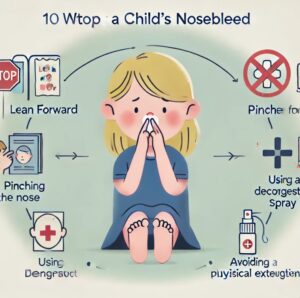
- Sit your child upright – Don’t let them lie down. Sitting up helps reduce blood pressure in the nose and slows bleeding.
- Lean forward slightly – This prevents blood from going down the throat, which can cause coughing, gagging, or vomiting.
- Pinch the soft part of the nose – Use your thumb and index finger to gently squeeze the soft, lower half of the nose. Hold steady pressure for 5–10 minutes without letting go too soon.
- Stay calm and distract – Children may get frightened seeing blood. Reading, talking softly, or even watching a short video can help keep them relaxed.
- Use a cold compress – A cool cloth or ice pack on the bridge of the nose may help shrink blood vessels and slow bleeding.
- Avoid lying flat or tilting the head back – This old advice actually makes things worse because blood can flow backward into the throat.
Most nosebleeds stop within 10 minutes. If it doesn’t, repeat the pinching step for another 10 minutes before seeking medical care.
When Should Parents See a Doctor?
Most nighttime nosebleeds are harmless, but sometimes they signal something more. Call a doctor if:
- The bleeding lasts longer than 20 minutes even after proper pressure.
- Nosebleeds are very frequent, happening several times a week.
- The bleeding is heavy, soaking tissues quickly or waking the child often.
- Your child also has bruising, gum bleeding, or prolonged bleeding from small cuts. This could suggest a bleeding disorder.
- Your child feels dizzy, weak, or unusually pale after a nosebleed.
Doctors may check for underlying conditions such as severe allergies, chronic sinus problems, or rare issues with blood clotting.
How to Prevent Nighttime Nosebleeds
Prevention is often easier than dealing with repeated nighttime nosebleeds. Some practical steps include:
- Use a humidifier – Adding moisture to the air helps prevent dryness, especially in heated rooms.
- Keep the nose moist – A thin layer of petroleum jelly or saline gel inside the nostrils before bedtime protects the lining.
- Trim fingernails short – This lowers the risk of scratching inside the nose.
- Encourage gentle blowing – Teach children not to blow too hard when they have a cold.
- Manage allergies – Treat allergy symptoms to reduce itching and rubbing at night.
- Stay hydrated – Drinking enough water during the day helps keep mucous membranes moist.
Parents should also check bedroom conditions. If the child’s room is too warm or dry, slightly lowering the heat and adding a humidifier can make a big difference.
Are Nosebleeds at Night Dangerous?
For most kids, nosebleeds are not dangerous. They can be messy, frightening, and inconvenient, but they rarely mean something serious. However, frequent or severe bleeding should always be checked by a doctor to rule out other causes. In very rare cases, repeated nosebleeds can be linked to conditions like clotting disorders or structural issues inside the nose.
Helping Kids Feel Less Scared
Children often get anxious after waking up with blood on their pillow. Parents can comfort them by explaining that nosebleeds are common and not a sign of serious illness. Using calm words like, “Your nose just got a little dry and bled, but you’re okay,” helps reduce fear. Some families keep a small “nosebleed kit” by the bed—tissues, wipes, and a washcloth—so that both parents and kids feel prepared if it happens again.
Final Thoughts
Nosebleeds at night are a common childhood problem. Most are caused by dryness, minor irritation, or allergies, and they usually stop on their own with simple care. The key is knowing how to manage them calmly and how to prevent them from happening too often. While it’s natural for parents to feel alarmed when they see blood, most nighttime nosebleeds are not dangerous. If bleeding becomes frequent, very heavy, or doesn’t stop, it’s best to seek medical advice to make sure nothing more serious is going on.