Why do so many teens get acne?
A few pimples can seem to appear almost overnight during puberty. One day, a teenager has fairly clear skin. Then suddenly there are blackheads around the nose, small bumps on the forehead, or painful pimples along the cheeks and chin. It can be frustrating, especially when it seems like everyone has an opinion about what caused it.
The good news is that teen acne is not a sign that something is wrong with a teenager or that the skin is dirty. Acne is extremely common during the teen years. The American Academy of Pediatrics says about 85% of people have acne during their teenage years. The American Academy of Dermatology also reports that acne affects about 85% of adolescents.
So why does puberty have such a big effect on the skin? The short answer is hormones. But there is more going on than just hormones.
What actually causes teen acne?
Acne starts inside the tiny hair follicles, or pores, in the skin. Each follicle has an oil-producing gland called a sebaceous gland. These glands make sebum, an oily substance that normally helps keep the skin and hair from becoming too dry.
During puberty, hormone levels change. Hormones called androgens, including testosterone, stimulate the oil glands. The glands become more active and produce more sebum. At the same time, dead skin cells can build up inside the follicle. When extra oil and dead skin cells mix together, the pore can become blocked.
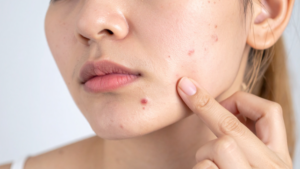
That blocked pore is where acne can begin. If the blockage stays close to the surface, it may become a whitehead or blackhead. If inflammation develops deeper inside the skin, a red or pus-filled pimple may form. Larger, deeper bumps called nodules or cysts can be painful and have a greater chance of leaving scars.
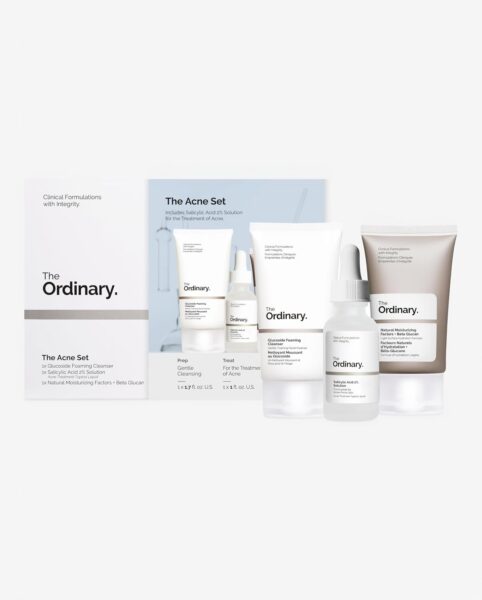
The Ordinary The Acne Set, 3-Step Skin Regimen with Glucoside Foaming Cleanser
Puberty hormones are a major reason
Puberty changes almost everything about a teenager's body, and the skin is no exception.
As androgen levels rise, the sebaceous glands make more oil. This is why a teenager who never had oily skin before may suddenly need to wash the face more often. The forehead, nose, and chin may become especially shiny. Some teens also notice oily skin on the back, chest, or shoulders.
Hormones can also affect acne around a girl's menstrual cycle. Some teens notice that pimples appear or become worse in the days before a period. That is not a coincidence. Hormone changes around menstruation can influence oil production and inflammation in the skin.
This is also why acne cannot always be prevented simply by washing the face more. The main changes are happening inside the skin, not because there is dirt sitting on top of it.
More oil can mean more clogged pores
Sebum is not bad. The skin actually needs some oil.
The problem comes when the oil glands become too active. Extra oil can mix with dead skin cells and form a plug inside a hair follicle. That plug is called a comedone.
There are two common types:
- Whiteheads: The pore is blocked and closed at the surface.
- Blackheads: The pore remains open, and the material inside becomes dark when exposed to air.
A blackhead is not a little piece of dirt trapped in the skin. That is one of the most common misunderstandings about acne. Scrubbing harder will not simply wash it away. In fact, rough scrubbing can irritate the skin and make breakouts worse.
What does bacteria have to do with acne?
The skin naturally has bacteria living on it. One of them is called Cutibacterium acnes, often shortened to C. acnes.
Having this bacteria does not mean a teenager has poor hygiene. It is a normal part of the skin's environment. Problems can happen when a clogged follicle provides a good place for the bacteria to multiply and inflammation develops.
That inflammation is what helps turn a simple clogged pore into a red, swollen, sometimes painful pimple. This is why acne is more than just “too much oil.” Several things work together: hormones, oil production, blocked follicles, bacteria, and inflammation.
Is teen acne caused by dirty skin?
No. This myth has caused plenty of unnecessary embarrassment.
Acne is not caused by being dirty. Washing the face does not remove the underlying hormone changes, oil production, or blocked follicles that lead to acne. The American Academy of Pediatrics specifically advises against harsh washing and rough scrubbing because they can irritate the skin.
That does not mean skin care does not matter. Gentle cleansing once or twice a day can remove excess oil, sweat, and products from the skin. But there is a big difference between keeping the skin clean and trying to “scrub acne away.”
More washing is not always better. A teenager who washes the face five or six times a day may end up with dry, irritated skin and still have acne.
Can stress cause teenage acne?
Stress is not considered the main cause of acne, but it can make existing acne worse for some teens.
This makes sense when everyday life is considered. Teenagers may deal with exams, school pressure, sports, changing friendships, family problems, and not enough sleep. During stressful periods, some teens notice that their skin also seems to flare up. The AAP notes that stress can aggravate acne in some teenagers.
It is important not to turn this into another thing for a teenager to worry about. Saying “Your acne is because you're stressed” oversimplifies the situation. Puberty hormones are still the main driver for many teens. Stress is more like one possible factor that can make an already active problem harder to control.
Can food cause teen acne?
This is where acne advice gets confusing.
For years, teenagers have been told that chocolate, greasy food, or pizza directly causes pimples. The evidence does not support such a simple connection. MedlinePlus notes that there is little evidence that chocolate and greasy foods cause acne in most people.
Some research suggests that diets high in refined carbohydrates or certain dairy foods may be associated with acne in some people, but the evidence is not strong enough to say that one particular food is the cause of a teenager's pimples. The AAP also notes that the relationship between diet and acne is not completely clear.
A healthy diet is still a good idea, of course. But making a teenager afraid of chocolate or blaming every breakout on yesterday's pizza is unlikely to help. Acne is much more complicated than that.
Can oily hair products make acne worse?
Yes, sometimes.
Hair products that contain a lot of oil can come into contact with the forehead, temples, neck, or back. If they clog pores, they may contribute to breakouts in those areas. Oily skin-care products and some cosmetics can have a similar effect.
For acne-prone skin, look for products labeled “non-comedogenic,” “non-acnegenic,” or “oil-free.” These products are designed to be less likely to clog pores.
This does not mean every moisturizer or cosmetic will cause acne. Skin reacts differently from person to person. The useful approach is to notice patterns rather than suddenly throw away every product in the bathroom.
Can sweat and sports make acne worse?
They can, especially when sweat stays on the skin for a long time.
Teenagers who play sports may notice pimples on areas covered by helmets, chin straps, shoulder pads, tight clothing, or other equipment. Pressure, heat, sweat, and friction can irritate the skin and make breakouts worse.
That does not mean teens should stop playing sports. Exercise is important for physical and mental health. It is usually more helpful to shower or gently cleanse the skin after heavy sweating, change out of sweaty clothes, and keep equipment reasonably clean.
Does acne run in families?
Yes. Genetics can play a role.
Some teenagers seem to have much more acne than their friends even though they have similar skin-care habits. Family history may help explain part of that difference. If acne was common or severe in a parent, a child may be more likely to experience it too.
This is another reason not to blame a teenager for having acne. Two teens can follow nearly identical skin-care routines and still have very different skin.
Genes, hormones, oil production, skin-cell behavior, and inflammation all interact. There is no single “acne gene” or one simple cause.
Why does acne appear on the face, chest, and back?
The face is not the only place where acne can develop.
The face, upper back, chest, shoulders, and neck contain many sebaceous glands. When those glands become more active during puberty, these areas can be more likely to develop clogged pores and inflammation.
Back acne can be especially annoying because teenagers may not notice it right away. A backpack, sports equipment, sweat, and tight clothing can also irritate the area.
So-called “bacne” is still acne. It is not a completely different skin problem, and it may need treatment if it becomes painful, widespread, or leaves scars.
Why do some teens get only a few pimples while others get severe acne?
There is no perfectly fair answer here.
Some teenagers have a few blackheads or occasional pimples. Others develop many red, inflamed bumps. Some get deep, painful nodules or cysts. Differences in hormones, genetics, oil production, inflammation, skin-cell turnover, and other factors all play a part.
The severity of acne is not a measure of how well someone takes care of their skin. A teenager with severe acne may actually have a very careful skin-care routine.
That distinction matters. Acne can affect confidence, friendships, photos, sports, and even whether a teenager wants to go to school. The American Academy of Pediatrics emphasizes that acne is treatable and that more severe acne deserves attention, especially because deep lesions can cause permanent scarring.
Why shouldn't teens pop their pimples?
Because it often makes the situation worse.
Squeezing a pimple can push material deeper into the skin and increase inflammation. It can also injure the skin and increase the chance of dark marks or permanent scars.
Of course, telling a teenager “just don't touch it” is easier said than done. A large whitehead can be incredibly tempting.
Still, keeping hands away from the face is one of the simplest things that can help. If a teen keeps picking at the skin without being able to stop, covering the area with an appropriate pimple patch may provide a physical barrier and reduce touching.
Does washing the face prevent acne?
Gentle cleansing can help manage oily skin, but it cannot completely prevent acne.
A simple routine is usually enough:
- Wash gently once or twice a day.
- Use lukewarm rather than very hot water.
- Avoid rough scrubs, brushes, and harsh soaps.
- Choose non-comedogenic skin-care products.
- Clean the skin after heavy sweating.
- Avoid picking or squeezing pimples.
The AAP specifically recommends mild cleansing and warns that aggressive scrubbing can irritate acne-prone skin.
There is a useful mindset here: the goal is to calm the skin, not punish it. Scrubbing until the face feels “squeaky clean” is not a sign that the routine is working.
When should a teenager see a doctor for acne?
Mild acne can often be managed with basic skin care and over-the-counter treatments. But there are times when professional treatment makes sense.
A pediatrician or dermatologist should be considered if:
- Acne is painful or deep.
- There are many red or pus-filled pimples.
- Nodules or cysts are developing.
- Acne is leaving scars.
- Breakouts are affecting school, friendships, sleep, or confidence.
- Over-the-counter treatment has not helped after several weeks of consistent use.
- Acne suddenly becomes much worse.
- A teenager is becoming very upset or embarrassed about the skin.
Moderate or severe acne should not simply be dismissed as “part of being a teenager.” The NHS recommends medical care for moderate or severe acne and for nodules or cysts because proper treatment can reduce the risk of scarring.
There are many effective acne treatments today. The right choice depends on the type and severity of the acne, the teenager's age, skin sensitivity, and other health factors.
Does teen acne eventually go away?
For many people, acne becomes less troublesome as they get older. But it does not always disappear quickly.
Some teenagers see improvement as puberty settles down. Others continue to have acne into their twenties or beyond. The NHS notes that acne often improves with age, although it can continue into adulthood.
This is why waiting for acne to “just grow out of it” is not always the best plan, especially when there are deep pimples or early scars. Treating acne can help protect the skin while the body moves through puberty.
And there is another reason to take it seriously: emotional effects count too. A skin condition does not have to be medically dangerous to be worth treating.
FAQ
Why does acne get worse before a period?
Hormone levels change during the menstrual cycle. Some girls notice that their acne becomes worse before or during their periods because of these hormone changes.
Can oily hair products cause forehead acne?
They can. Oily hair and skin products may clog pores when they come into contact with the skin. Non-comedogenic or oil-free products may be a better choice for acne-prone skin.
Should teenagers wash their faces more often if they have acne?
Not necessarily. Washing once or twice a day with a gentle cleanser is usually enough. Washing too often or scrubbing aggressively can irritate the skin and make acne harder to manage.
Should teens pop pimples?
It is best not to. Picking or squeezing can increase inflammation and raise the risk of scars and dark marks.
When should a teenager see a dermatologist for acne?
A dermatologist can help when acne is painful, severe, persistent, leaving scars, or affecting a teenager's confidence and daily life. Deep nodules and cysts deserve particular attention because they are more likely to cause permanent scarring.