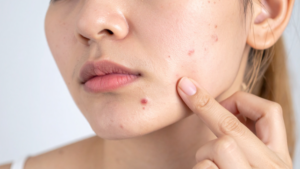
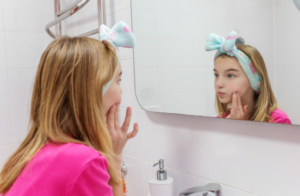
Stress can make acne worse, especially when a teenager already has acne.
That does not mean stress is the reason acne started in the first place. Acne usually has several causes, including puberty hormones, extra oil, clogged pores, inflammation, genetics, and bacteria involved in acne. Stress is better thought of as a possible acne aggravator rather than the main cause. The American Academy of Pediatrics and the American Academy of Dermatology both note a connection between stress and worse acne.
This can be frustrating for teenagers. A big test is coming. Sleep gets worse. The face suddenly seems covered in new pimples. Then the pimples create even more worry. It can feel like a never-ending cycle.
The good news is that there is something useful to take from this: reducing stress may not make acne disappear, but it can be one part of keeping breakouts under better control.
Why Does Stress Make Acne Worse?
Acne begins inside the skin. Hair follicles can become blocked by oil and dead skin cells. Inflammation then develops, and pimples, blackheads, whiteheads, or deeper bumps may appear. During puberty, hormone changes make the oil glands more active, which is one reason acne becomes so common during the teen years.
Stress can add another layer to this process. When the body is under stress, stress-related hormones and signals can affect the skin. Dermatology experts report that stress can increase oil production in some people and may increase inflammation. These changes can make acne-prone skin more likely to flare.
But the science is not quite as simple as “stress equals more oil equals acne.” One study of teenagers found that higher stress was linked with more severe acne, but the researchers did not find a significant increase in sebum, or skin oil, during the stressful period. That suggests stress may affect acne through several pathways, not just by making the skin oilier.
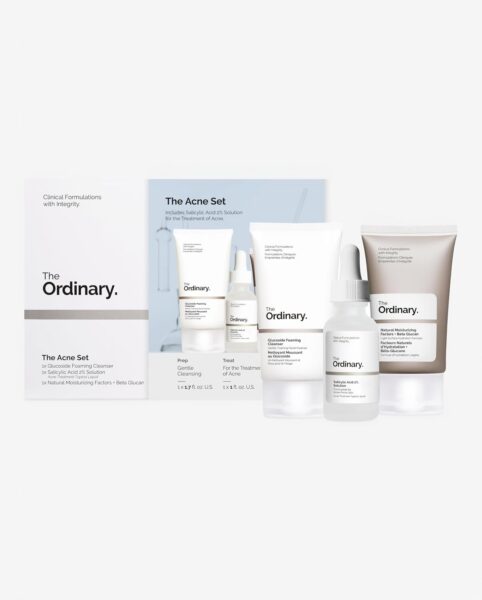
The Ordinary The Acne Set, 3-Step Skin Regimen with Glucoside Foaming Cleanser
School Stress Can Be a Real Trigger
Teenagers have plenty to worry about.
There are tests, homework, sports, friendship problems, social media, family changes, dating, college plans, and pressure to perform. Sometimes several of these things happen at the same time. A teenager may look fine on the outside while feeling completely overwhelmed.
Research has found a connection between stressful periods and acne severity. In one prospective study, researchers compared acne during examination periods with less stressful periods and found that acne severity increased along with perceived stress.
That does not mean every teenager will break out before a test. Bodies respond differently to stress. Still, if a teen notices that acne repeatedly becomes worse during exams, major school projects, or other stressful weeks, that pattern is worth paying attention to.
Stress Does Not Mean Acne Is “All in the Head”
This is an important point.
When someone says stress may worsen acne, it can accidentally sound as if acne is imaginary. It isn't. Acne is a real inflammatory skin condition. Stress is simply one of many things that may influence how severe it becomes.
A teenager should never be told, “Your acne is happening because you worry too much.”
That can add guilt to an already difficult situation. A better message is: “Stress may be making your acne harder to control, but this is not your fault.”
Acne can happen even when someone eats well, sleeps enough, washes their face, and has a relatively calm life. Genetics and puberty hormones matter a lot.
The Acne-Stress Cycle Can Go Both Ways
There is another side to the story that is easy to miss.
Stress may make acne worse, but acne itself can cause stress.
A teen may wake up and immediately check the mirror. A large pimple appears before a school presentation. Suddenly, the teenager starts thinking about whether classmates will notice. Makeup may be used to cover the spot. Photos may be avoided. Social activities may feel uncomfortable.
That emotional pressure can then add more stress.
Research has found higher levels of anxiety, depression, and stress among people with acne, although the exact relationship varies between studies. Acne can affect confidence and quality of life, especially when it is persistent or severe.
So treating acne is not only about making the skin look better. It can also help a teenager feel more comfortable in daily life.
Why Lack of Sleep Can Make Things Harder
Stress and sleep often travel together.
A teenager who is worried about school may stay up late studying. Another may lie in bed scrolling through a phone because the brain feels too busy to settle down. Someone else may simply have trouble falling asleep because of worry.
Poor sleep does not automatically cause acne, but it can become part of the problem. The American Academy of Dermatology lists too little sleep among factors that may worsen acne, and recent research has also found a relationship between sleep problems and acne.
This is one reason an acne-friendly routine should not focus only on skin care. A teenager who is using five acne products but sleeping four or five hours a night may need a different kind of support.
Sometimes the most helpful change is surprisingly basic: getting to bed earlier.
Stress Can Change Everyday Habits
There is also a very practical connection between stress and acne.
When life gets busy, healthy routines are often the first things to disappear. A teenager may stop washing her face at night. She may sleep in makeup after a long day. She may touch her face while studying. She may pick at pimples without even noticing.
None of these behaviors means she is careless.
Stress changes habits. When someone is tired or anxious, small routines can feel like extra work.
Picking is especially worth watching. Squeezing or scratching acne can increase inflammation and raise the risk of scars and dark marks.
So rather than saying, “Stop touching your face,” it may be more helpful to make the routine easier. Keep a gentle cleanser where it is easy to use. Remove makeup before bed. Keep hands busy during study time if picking has become a habit.
Small changes can be more realistic than a long list of rules.
What Can Teen Girls Do When Stress Triggers Breakouts?
The goal is not to remove every stressful thing from life. That would be impossible.
Instead, it helps to build a few habits that make stressful periods easier on both the mind and the skin.
Keep the Skin Care Routine Simple
A stressed teenager does not need a complicated 10-step routine.
Gentle cleansing in the morning and evening is usually enough for basic skin care. After heavy exercise or sweating, washing the skin can also help. Harsh scrubs, rough brushes, strong soaps, and aggressive rubbing can irritate acne-prone skin.
Simple is often better.
A gentle cleanser, moisturizer when needed, sunscreen, and appropriate acne treatment can be much more useful than constantly trying new products.
Avoid Picking During Stressful Moments
This one can be difficult.
Stress can make some people touch, scratch, or squeeze their skin without realizing it. A mirror can make the temptation even stronger.
Instead of trying to rely on willpower alone, remove some of the triggers. Avoid repeatedly checking the face in a magnifying mirror. Keep fingernails short. Put a small reminder near a desk or bathroom mirror if picking happens often.
Most importantly, do not turn one picked pimple into a lecture. Shame rarely helps.
Get Enough Sleep
A teenager does not need a perfect sleep schedule every night. Real life gets messy.
Still, regular sleep matters. It supports physical health, mood, and the body's ability to handle stress. Stress-management advice from medical sources commonly includes getting enough sleep and using relaxation techniques.
During exam weeks, this can be especially important. Staying up very late every night may seem productive, but it can leave a teenager exhausted and more stressed the next day.
Move the Body
Exercise is not an acne treatment by itself, but regular physical activity can be a useful way to manage stress.
Walking, dancing, cycling, swimming, playing basketball, or simply spending time outside can give the mind a break. The activity does not have to be intense.
After heavy sweating, however, it is a good idea to cleanse the skin gently rather than leaving sweat and products sitting on the skin for hours.
Talk About the Stress
Sometimes the skin is not the biggest problem.
A teenager who suddenly has much worse acne may also be dealing with bullying, friendship problems, academic pressure, family conflict, or worries about body image.
Parents do not always need to solve the problem immediately. Listening without criticizing can be surprisingly helpful.
Instead of saying, “Don't worry about it,” try asking, “What has been stressing you out lately?”
That question opens a door.
Should Acne Treatment Be Changed During Exams?
Usually, no.
One common mistake is starting several new acne products at the same time because the skin suddenly looks worse. That can backfire. Too many active ingredients may irritate the skin and make redness and dryness worse.
Acne treatments also take time. The American Academy of Pediatrics notes that many acne medicines need several weeks before noticeable improvement appears.
If an acne routine is already working, consistency is usually more sensible than making dramatic changes during a stressful week.
If acne is becoming painful, widespread, or difficult to control, a pediatrician, primary care doctor, or dermatologist can recommend a better treatment plan.
What About Acne Before a Period?
Teen girls may notice another pattern: acne becomes worse shortly before their period.
Hormone changes around the menstrual cycle can contribute to acne flare-ups. The American Academy of Pediatrics specifically notes that some teens notice worsening acne before their periods.
This can make things confusing. A teenager might have school stress, poor sleep, and premenstrual hormone changes all at the same time. It is not always possible to identify one single reason for a breakout.
Keeping a simple note of periods, stress levels, sleep, and acne may help reveal patterns over several months.
Does Reducing Stress Clear Acne?
Not necessarily.
Stress management can help reduce one possible trigger, but it should not be presented as a cure for acne. Acne is a complex condition with several causes.
A teen can meditate every day and still have acne. Another teen may have a stressful week and not get a single new pimple.
That is normal.
The better goal is not “remove all stress and get perfect skin.” A more realistic goal is to manage stress while using an effective acne routine.
When Should a Teen See a Doctor?
Acne deserves medical attention when it is painful, severe, persistent, or leaving scars.
It is especially worth talking with a healthcare professional when there are deep, painful lumps or bumps, significant dark marks or scars, or acne that does not improve with appropriate over-the-counter care.
Early treatment can reduce the risk of lasting scars and can also help protect a teenager's confidence and quality of life.
Emotional distress matters, too. If acne is causing a teenager to avoid friends, school, photos, activities, or social situations, that is a good reason to ask for help. Acne should not be dismissed as “just a few pimples.”
A Simple Stress-and-Acne Plan
During a stressful week, the routine can stay very basic:
- Wash the face gently twice a day.
- Avoid harsh scrubbing.
- Use non-comedogenic skin and makeup products.
- Do not squeeze or pick pimples.
- Get as much regular sleep as possible.
- Take short breaks from studying.
- Move the body every day.
- Drink water and eat regular, balanced meals.
- Talk to someone when stress feels overwhelming.
- Keep using acne treatment consistently instead of changing products every few days.
None of these steps promises perfect skin. That is not the point.
The point is to stop acne from becoming one more thing a teenager feels she has failed at.
The Bigger Picture
Stress can make teen acne worse, but acne is never simply a sign that a teenager is “too stressed.”
Puberty, hormones, genetics, skin oil, clogged pores, inflammation, skin care habits, and other factors all matter. Stress is one piece of a much bigger picture.
And sometimes the most important thing a parent can do is take the concern seriously. A teenager may be thinking about her skin far more often than anyone else realizes.
Good acne care should deal with both sides of the problem: the skin and the person living in it.
FAQ
Can stress cause acne in teenagers?
Stress does not usually cause acne by itself. However, stress can make existing acne worse. Hormonal changes, clogged pores, oil production, inflammation, and genetics play major roles in acne.
Can school stress make teen acne worse?
Yes. Some teenagers notice worse acne during exams, major assignments, or other stressful school periods. Studies have found an association between higher stress and greater acne severity.
Does stress make your skin produce more oil?
Stress may affect oil production and other skin processes, but the relationship is not simple. Research in adolescents has found that stress can be linked with worse acne even when measured sebum production does not increase significantly.
Can lack of sleep make teen acne worse?
Poor sleep may be linked with worse acne and can also make stress harder to manage. Getting regular, adequate sleep is a useful part of an overall healthy routine.
Does reducing stress help acne?
It may help reduce one factor that can worsen acne, but stress management alone usually does not clear acne. Effective skin care and acne treatment may still be needed.
Why does acne get worse before a period?
Hormonal changes during the menstrual cycle can cause some teenagers to have more acne before their periods. Stress and poor sleep may add to the problem.
Should teenagers pop stress pimples?
No. Squeezing or picking can increase inflammation and raise the risk of scars and dark marks.
When should a teenager see a dermatologist for acne?
A dermatologist is worth considering when acne is painful, severe, persistent, scarring, or not improving with appropriate home or over-the-counter treatment. Early treatment can reduce the risk of scarring.