Many parents worry about phones and screens. One of the biggest fears is blue light. People say it causes eye damage, makes kids nearsighted, and ruins sleep. But how much of this is true? Do we really need to panic about blue light, or is it just another modern myth? In this article, we’ll look at what blue light is, what it does to our eyes, and how parents can protect their children without fear.
What Is Blue Light
Light comes in many colors. Some we see, like red, green, and blue. Some we can’t see, like ultraviolet. Blue light is part of the visible light spectrum. It has short wavelengths and high energy.
Blue light is not only from phones. It’s also in sunlight, LED lights, TVs, and tablets. In fact, the sun gives off much more blue light than any phone. But since kids spend hours close to screens, parents worry about its effects.
Why Blue Light Gets a Bad Reputation
The word “blue light” sounds scary, like UV rays or X-rays. People worry it might burn or damage the eyes. Some claims on the internet even say it causes blindness. But research shows a more balanced picture.
- Fact: Blue light can affect sleep by changing melatonin levels.
- Fact: Looking at screens for too long causes eye strain.
- Myth: Normal screen blue light directly kills eye cells or causes blindness.
So while screens can cause problems, blue light itself is not as dangerous as some say.
Eye Strain vs. Blue Light
When kids stare at phones, they often feel tired eyes, dryness, or blurred vision. This is called digital eye strain. But here’s the key: strain comes from how kids use screens, not from blue light itself.
Kids blink less when looking at screens. Their eyes dry out. They focus up close for too long. These habits cause discomfort. Blue light may add a little, but it’s not the main problem.
Think of it like reading a book too close to your face. The problem is not the paper—it’s how you use it.
Blue Light and Sleep Problems
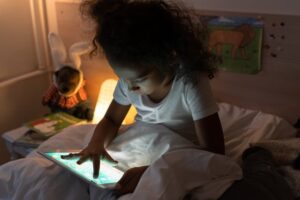
One area where blue light really matters is sleep. Our brains use light to know when it’s time to sleep. Blue light tells the brain “it’s daytime.” At night, too much screen use can confuse the body. Melatonin, the sleep hormone, goes down. Kids may find it harder to fall asleep or stay asleep.
This is why experts suggest no screens one hour before bed. It’s less about eye damage, more about protecting healthy sleep rhythms.
Blue Light and Nearsightedness (Myopia)
Parents often ask: “Does blue light make my child nearsighted?” The answer is not simple. Studies show that kids who spend more time outdoors have lower risk of myopia. Sunlight helps the eyes grow in a healthy way. Indoor screen time is linked to higher myopia risk, but not because of blue light alone.
The bigger issue is that kids spend long hours indoors, focusing on close objects. This constant near work, whether on a phone or book, increases myopia risk. Blue light may play a role, but it’s not the main driver.

Blue Light Glasses for Kids Girls Boys with Cute Car Case, UV400 Protection, Anti Blue Ray Age3-12
Can Blue Light Cause Eye Damage
Some lab studies show that very high levels of blue light can harm eye cells. But these levels are far higher than what phones produce. A normal phone screen simply doesn’t give enough blue light to cause direct damage.
So, no need to panic. Screens are not frying children’s eyes. The real danger is overuse—too much time, too close to the face, without breaks.
Blue Light Glasses: Do Kids Need Them
Blue light–blocking glasses are popular now. Parents buy them hoping to protect children’s vision. But research shows mixed results.
- They may reduce glare and make screen time feel more comfortable.
- They don’t stop myopia or guarantee long-term eye health.
- For most kids, healthy screen habits matter more than special glasses.
If your child feels better using them, that’s fine. But don’t rely on glasses alone.
Healthy Screen Habits for Kids
The good news is, parents can take simple steps to protect kids’ eyes:
- Follow the 20-20-20 rule: Every 20 minutes, look 20 feet away for 20 seconds.
- Keep a safe distance: Hold phones at least 12–16 inches from the eyes.
- Encourage blinking: Remind kids to blink to prevent dryness.
- Limit late-night screens: No phones at least one hour before bedtime.
- Increase outdoor time: At least 1–2 hours outside daily reduces myopia risk.
These steps are much more effective than worrying about blue light alone.
My Real Experience
I used to worry that blue light would damage my child’s eyes, so I was very strict about limiting her screen use. But later I realized that protecting vision is not only about blocking blue light. There are many other important factors, like practicing good eye habits, taking regular breaks, and spending more time outdoors.
Looking Ahead
Screens are here to stay. Blue light is part of modern life. Instead of fearing it, parents should focus on balance. A phone will not blind your child. But too much screen time without breaks can cause strain, poor sleep, and higher myopia risk. With good habits and outdoor play, kids can enjoy technology safely.
FAQ
Q: Does phone blue light cause blindness?
No. Normal screen use does not give off enough blue light to damage eyes permanently.
Q: Why do my child’s eyes hurt after using a phone?
It’s usually eye strain, not blue light damage. Too much close focus, less blinking, and dry eyes are the real reasons.
Q: Should I buy blue light glasses for my child?
They can help with comfort, but they are not required. Healthy screen habits matter more.
Q: Does blue light cause kids to become nearsighted?
Not directly. Myopia risk is more linked to long hours indoors and close-up work. Outdoor time helps reduce risk.
Q: How can I protect my child’s eyes from screens?
Set screen time rules, follow the 20-20-20 rule, keep devices at safe distances, and encourage outdoor play.