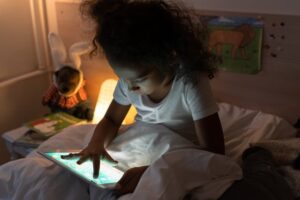
Most parents know the struggle. It’s midnight, and your child is still on the phone, wide awake. You may wonder, why can’t they just put it down and go to sleep? The truth is, this is not just about willpower. Phones and screens have a strong effect on children’s brains and sleep patterns. Let’s break it down step by step, in simple words.
There was a time when my child loved watching TV before bed. This made her go to sleep later and her sleep was not good. She often talked in her sleep or moved around a lot at night. Later, I stopped screen time before bed and gave her paper books to read instead. Very soon, her sleep quality got much better.
Why Kids Use Phones Late at Night
Phones are designed to keep our attention. Social media, games, and videos are endless. There is always “just one more thing” to check. For kids, this pull is even stronger. Their brains are still developing, and the part that controls self-control (the prefrontal cortex) is not fully grown. So when they say, “I’ll just watch one more video,” they often cannot stop themselves.
At night, kids may also feel more free. No school, no chores, and no parents asking them to study. The phone becomes their private world. The quiet of nighttime can make scrolling even more addictive.
The Role of Blue Light
Phones and tablets give off something called blue light. This is a type of light that tricks the brain into thinking it’s still daytime. Normally, when the sun sets, our bodies release a sleep hormone called melatonin. Melatonin helps us feel sleepy and ready for rest. But when kids stare at screens, blue light slows down melatonin release.
That means their brains stay alert, even if their bodies are tired. This is why your child may say, “I’m not sleepy yet,” even though it’s late. In reality, their natural sleep signals are being blocked.
How Late-Night Phone Use Hurts Kids
When kids stay up late on phones, several things can happen:
- They fall asleep much later than they should.
- Their total sleep time becomes shorter.
- Their sleep quality goes down, with more waking in the night.
- They feel tired, cranky, or unable to focus the next day.
- Long-term, poor sleep can affect mood, learning, and even health.
Some studies show that kids who use phones late at night are more likely to have depression, anxiety, or poor school performance. Sleep is not just rest—it is when the brain organizes memories, grows, and heals. Without enough sleep, kids lose more than just energy.
A Parent’s Real Experience
I once worried that blue light would damage my child’s eyes, so I was very strict about screen use. But later I realized that eye health was only one part of the story. Protecting sleep is about more than avoiding blue light. It is also about good daily habits—eye care, outdoor play, and healthy bedtime routines. Once I guided my child to use screens less at night and spend more time outside during the day, sleep and focus improved a lot.
Building a Screen-Free Bedtime Routine
So what can parents do? The key is not just to ban phones, but to create healthy family habits. Here are some ideas that work:
- Create a “no screens one hour before bed” rule. This gives the brain time to wind down and melatonin to rise.
- Set up a family charging station. All phones, tablets, and even parents’ devices go there at night. No one keeps their phone in the bedroom.
- Offer calming bedtime activities. Reading, soft music, journaling, or quiet chats can replace screen time.
- Make the bedroom a sleep zone. Keep it dark, cool, and quiet. Remove TVs or tablets from the room.
- Be a role model. If parents stay on their phones until midnight, kids will follow. Show them how you put the phone away at night.
Why a “No-Screen Zone” Works
Children need clear, simple rules. When parents create a “no screen zone” before bed, it reduces battles. Instead of saying, “Turn it off now,” the rule is understood in advance. Kids may resist at first, but with patience, they adjust. Over time, many even feel better and admit they sleep more deeply.
What If My Child Sneaks the Phone?
This is common. Some kids hide under the blanket with their phone. Instead of only punishing, try talking about the real effects. Ask how they feel the next day after late-night scrolling. Most kids notice they are more tired and moody. Linking the habit to how they feel helps them understand why it matters.
FAQ
Q: Does blue light really stop kids from sleeping?
Yes. Blue light reduces melatonin, a hormone that helps us sleep. This makes it harder for kids to feel sleepy at night.
Q: Is it enough to use blue light filters on phones?
Filters help a little, but the main issue is stimulation from games, videos, and chats. Even with filters, the brain stays active.
Q: How many hours of sleep do kids need?
School-age kids need about 9–12 hours. Teens need about 8–10 hours. Most do not get enough if they stay on phones late.
Q: Should I take away my child’s phone completely?
Not always. Instead, set healthy rules, especially for nighttime. Balance is better than a total ban.
Q: What time should kids stop using phones at night?
At least one hour before bed. Some families find two hours works even better.