Choosing a backpack for a child can feel surprisingly complicated. There are bright colors, favorite characters, trendy designs, and dozens of different sizes. Kids often know exactly which one looks the coolest. Parents, meanwhile, may be wondering something else: Will this backpack actually be comfortable?
That question matters.
A backpack that is too big, too heavy, or poorly fitted can make carrying school supplies harder than it needs to be. A child may lean forward, pull the shoulders up, or carry the bag on one shoulder. Over time, that can lead to discomfort and poor carrying habits.
The good news is that choosing a better backpack does not have to be difficult. The best one is usually not the most expensive or the most stylish. It is the one that fits the child well, spreads weight evenly, and works for everyday school life.
Start With the Right Backpack Size
One of the most common mistakes is buying a backpack that is too large.
A huge backpack may seem practical because it can hold more books, clothes, snacks, and supplies. But bigger is not always better. A backpack should fit the child's body rather than hang far below the waist.
In general, the backpack should:
- Sit comfortably on the child's back
- Not be wider than the child's torso
- Not hang far below the waist
- Stay close to the body instead of pulling backward
- Have enough space without encouraging the child to carry unnecessary items
A good way to check the fit is to have the child try the backpack on before buying it. This sounds obvious, but many backpacks are chosen online based only on age recommendations.
Two children of the same age can have very different heights and body sizes. A backpack labeled for an 8-year-old may fit one child perfectly and look enormous on another.
If possible, measure the child's torso or compare the backpack directly with the child's back. A proper fit matters more than the age printed on the product label.
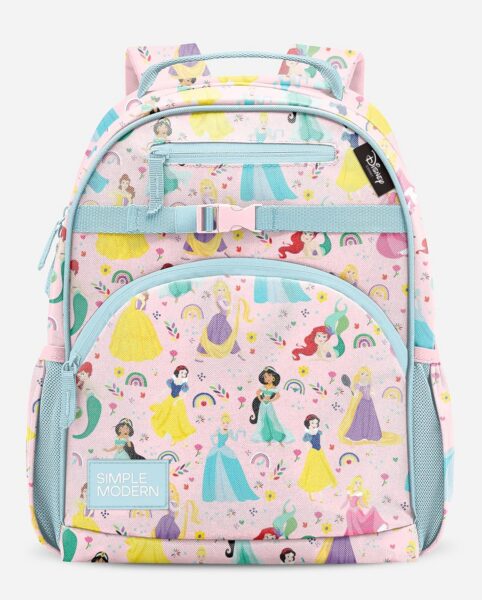
Simple Modern Disney Princess Kids Backpack for School, Girls, Boys
Choose Wide, Padded Shoulder Straps
The shoulder straps are one of the most important parts of a backpack.
Thin straps can dig into the shoulders, especially when the bag is full. Narrow straps may also concentrate pressure in a small area. This can make a backpack feel uncomfortable even when it is not very heavy.
Look for straps that are:
- Wide
- Adjustable
- Padded
- Strongly attached to the backpack
The straps should be adjusted so the backpack sits close to the child's back. If the bag hangs too low, it may pull the child's body backward and make walking less comfortable.
Both straps should also be used.
Many children like carrying a backpack on one shoulder because it feels faster or looks more casual. The problem is that all the weight then shifts to one side. This can make the child lean or twist the body to compensate.
Using two straps helps spread the weight more evenly.
Look for a Padded Back Panel
A padded back panel can make a noticeable difference, especially when children carry books or hard school supplies.
Without padding, the edges of books, folders, or pencil boxes may press directly against the child's back. A padded panel creates a softer barrier and can make the backpack more comfortable.
Some backpacks also have a shaped or breathable back panel. These designs may help the bag sit more comfortably and reduce sweating, especially in warm weather.
Still, there is no need to get lost in marketing terms. Words like “ergonomic,” “airflow,” and “advanced support” can sound impressive, but the basic fit is more important.
A simple backpack that fits well is often better than a fancy backpack that is too large.
Check the Weight Before Buying
An empty backpack should not already feel heavy.
This is especially important for younger children. A heavy bag made from thick materials may add unnecessary weight before a single book is placed inside.
Choose a backpack that is sturdy but reasonably light.
Once school starts, parents should also pay attention to the total weight. The American Academy of Pediatrics suggests that children should avoid carrying overly heavy backpacks, and a commonly used guideline is to keep the loaded backpack around 10% to 15% of the child's body weight when possible.
For example, a child who weighs 60 pounds should generally not be carrying a 25-pound backpack every day.
Of course, school requirements can make this difficult. Some children need to carry textbooks, laptops, sports gear, lunch, and other supplies.
That is why organization matters just as much as backpack design.
Multiple Compartments Can Help
A backpack with several compartments can make it easier to organize school supplies.
The heaviest items should usually be placed close to the child's back. This helps keep the weight near the body instead of pulling backward.
A useful setup might look like this:
- Heavy books closest to the back
- Lighter books or folders in the middle
- Small items in front pockets
- Water bottles in side pockets, if secure
However, more compartments are not always better. A backpack with too many tiny pockets can become frustrating for younger children.
The best design depends on the child's age and daily needs.
A kindergartener may only need room for a folder, lunch, water bottle, and extra clothes. A middle school student may need space for books, electronics, and larger supplies.
Think about what the child actually carries every day. That usually gives a clearer answer than simply choosing the backpack with the most features.
Should Kids Use a Chest Strap?
A chest strap, sometimes called a sternum strap, connects the two shoulder straps across the chest.
It can help keep the straps from sliding off the shoulders, especially for active children or children with narrow shoulders. It may also help keep the backpack more stable while walking.
Some backpacks also have waist straps. These are more common on hiking backpacks but may be useful when a child needs to carry a heavier load.
For an ordinary school backpack, a waist strap is not always necessary. But a chest strap can be helpful if the backpack tends to shift around or slide off.
The key is comfort. Straps should not be overly tight or restrict breathing.
Don't Ignore the Zippers and Materials
A backpack can look perfect and still become annoying if the zippers break after a few weeks.
Check whether the zippers move smoothly and feel strong. Children often open and close backpack compartments many times each day, so weak zippers can quickly become a problem.
The material should also match the child's lifestyle.
For example:
- Water-resistant materials can be helpful in rainy areas.
- Easy-to-clean fabrics work well for younger children.
- Stronger materials may be better for children who carry heavy books.
- Lightweight materials may be more comfortable for smaller children.
It is also worth checking the seams and stitching around the straps. This is where a backpack often receives the most stress.
Consider Safety Features
Safety may not be the first thing people think about when buying a backpack, but it can be useful.
Reflective strips or patches can make a child easier to see when walking near traffic in the early morning or evening.
This can be especially helpful for children who:
- Walk to school
- Ride a bike
- Wait near busy roads
- Attend activities that end after sunset
A reflective feature does not need to cover the whole backpack. Even a few visible reflective details can be useful.
Bright colors may also help make children easier to notice, although this is not a replacement for proper road safety habits.
Let Kids Choose—Within Reason
Children are much more likely to use a backpack properly if they actually like it.
That does not mean every backpack choice should be based on a favorite cartoon character. But giving children some choices can make the process easier.
A practical approach is to narrow the options first.
Parents can choose several backpacks that meet the basic requirements for size, weight, straps, and comfort. Then the child can choose a favorite color or design.
This creates a better balance between comfort and personal preference.
After all, a perfectly designed backpack is not very useful if the child refuses to carry it.
What About Rolling Backpacks?
Rolling backpacks can reduce the amount of weight carried on the back. They may be useful for some children who have long distances to walk or regularly carry heavy school supplies.
However, they also have drawbacks.
Rolling backpacks can be difficult to use on stairs, crowded hallways, uneven sidewalks, or buses. Some schools also have rules about them.
Before buying one, check:
- Whether the school allows rolling backpacks
- How many stairs the child uses
- Whether the route to school is smooth
- Whether the backpack will fit in lockers or storage spaces
For some children, a rolling backpack is helpful. For others, it simply becomes another heavy object that needs to be lifted.
How Should a Backpack Fit?
Once a backpack is purchased, proper adjustment is important.
The bag should sit fairly close to the child's back. The shoulder straps should be adjusted evenly, and the child should use both straps.
Watch how the child looks while walking.
A backpack may need adjustment if the child:
- Leans forward noticeably
- Pulls the shoulders upward
- Complains of pain or numbness
- Has deep strap marks
- Constantly shifts the backpack
- Carries the backpack on one shoulder
A backpack should not be a source of daily pain.
If a child regularly complains about back or shoulder pain, it is worth checking the backpack weight and fit. Persistent or severe pain should be discussed with a healthcare professional.
Teach Kids How to Pack Their Backpack
Even the best backpack cannot solve the problem if it is packed with unnecessary weight.
Many children carry items they do not need simply because they forget to take them out.
A quick backpack check can help. Before school or at the end of the day, remove:
- Old papers
- Unneeded books
- Toys
- Extra supplies
- Heavy items that do not need to travel home
Heavier books should be placed close to the back.
This small habit can make a backpack feel much lighter without buying anything new.
When Is a Backpack Too Heavy?
There is no perfect number that works for every child. Body size, strength, health, and the distance traveled all matter.
Still, a backpack deserves attention if a child is struggling to put it on, leaning forward while walking, or complaining about pain.
A child should not look like they are carrying camping equipment for a week-long trip just to get through a school day!
If the backpack is regularly too heavy, possible solutions include asking the school about lockers, leaving some books in the classroom, using digital materials when available, or dividing supplies between home and school.
Best Backpack Features at a Glance
When shopping for a child's backpack, these are the features worth prioritizing:
- The right size for the child's body
- A lightweight design
- Wide, padded shoulder straps
- An adjustable fit
- A padded back panel
- Strong zippers and stitching
- Enough compartments for daily needs
- A design that keeps heavy items close to the back
- Reflective details for visibility
- A chest strap if extra stability is needed
The most expensive backpack is not automatically the best choice. Fit and comfort should come first.
FAQ
What size backpack should I buy for my child?
Choose a backpack that fits the child's torso and does not extend far below the waist. The best size depends more on body size and daily school needs than age alone.
How heavy should a child's backpack be?
A commonly used guideline is to aim for a loaded backpack of about 10% to 15% of the child's body weight when possible. If a child struggles to carry the backpack or has pain, the load may need to be reduced.
Are backpacks bad for children's backs?
A properly fitted backpack used correctly is generally safe. Problems are more likely when the bag is too heavy, poorly fitted, or carried on one shoulder.
Should kids wear both backpack straps?
Yes. Using both straps helps spread weight more evenly across the body and can make the backpack more stable.
Are padded backpacks better for kids?
Padded shoulder straps and a padded back panel can improve comfort. However, padding does not fix a backpack that is too heavy or too large.