Eczema skin treatment for kids can feel like a constant puzzle. One week, the skin is calm and smooth. The next, it’s dry, itchy, and covered in little red patches. Eczema isn’t just a rash; it’s a skin condition where the protective barrier doesn’t work the way it should. That means the skin loses moisture faster, gets irritated more easily, and reacts to things that wouldn’t bother most people. For children, that itch can be so strong that sleep gets interrupted, school feels uncomfortable, and even playtime turns into scratching time.
Parents often try cream after cream, hoping for a magic cure. But the truth is, eczema doesn’t have a single “fix.” Instead, it’s about finding the right mix of treatments and habits that keep flare-ups under control. Some kids respond well to a certain moisturizer, others need prescription creams for bad days, and almost all benefit from small lifestyle changes. The best eczema treatment plan is usually a patchwork of daily care, quick action during flare-ups, and patience.
This guide looks at what really helps, based on what parents, dermatologists, and everyday experience have shown to work for kids with eczema.
Understanding Eczema Skin and Why It Needs Special Care
Eczema skin isn’t “bad skin” — it’s skin that needs extra help holding in moisture and blocking irritants. Imagine a wall with cracks; water leaks out, and dust or bugs can sneak in. That’s what happens when the skin barrier is weaker. Without enough protection, dryness sets in fast, and the itch starts. Scratching makes small breaks in the skin, and sometimes bacteria get in, causing infection.
In kids, eczema often shows up on the face, elbows, knees, or hands, but it can appear anywhere. The patches can be dry and rough or red and inflamed. Some children have only mild dryness, while others have severe eczema that needs medical treatment. It’s not caused by poor hygiene or “catching” something from another child. It’s simply the way their skin works.
Special care means more than just putting cream on when it looks bad. It’s about keeping the skin hydrated all the time, even when it looks clear. That constant moisture acts like a shield, preventing the skin from drying out and reducing the chances of a flare-up.
Best Daily Moisturizing Routine for Eczema
Daily moisturizing is the heart of eczema treatment. Skipping it is like skipping brushing teeth — the damage shows up sooner or later.
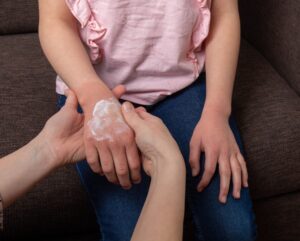
For best results, moisturizing should happen at least twice a day, sometimes more in dry weather. The type of moisturizer matters. Lotions are light, but they often have more water than oil, so they can evaporate quickly. Creams are thicker and hold moisture longer. Ointments, like petroleum jelly, are even thicker and can be great for locking in hydration overnight.
Here’s a simple daily routine many parents find helpful:
- Short, lukewarm bath or shower (no hot water)
- Pat skin dry with a soft towel — don’t rub
- Apply moisturizer right away while skin is still damp
- Use fragrance-free, dye-free products to avoid irritation
Consistency is key. Even if the skin looks better, stopping the routine too soon often leads to another flare.
Eczema Creams and Treatments for Flare-Ups
When a flare-up hits, daily moisturizing alone might not be enough. That’s when eczema creams or prescription ointments come in.
Mild flare-ups may calm down with over-the-counter hydrocortisone cream, but stronger prescription creams or ointments (like topical corticosteroids or calcineurin inhibitors) are sometimes needed. These work by calming inflammation and reducing itching. They’re not meant to replace daily moisturizers — they’re more like a targeted rescue team for problem spots.
Parents should follow the doctor’s instructions carefully, especially for young children. Using too much steroid cream for too long can cause side effects, but not using enough might let the flare get worse.
During flare-ups, soft cotton clothing can help prevent extra irritation. Some parents also find that wrapping the area with a damp layer (wet wrap therapy) after applying cream can boost moisture and reduce itching faster.
Avoiding Common Eczema Triggers
Even the best cream won’t work well if eczema triggers keep setting off flares. While every child is different, common triggers include:
- Dry winter air or sudden temperature changes
- Soaps, shampoos, or detergents with strong fragrances
- Scratchy fabrics like wool
- Sweat and overheating
- Allergens like pollen, dust mites, or pet dander
- Certain foods (less common, but possible in some cases)
Keeping a skin diary can help spot patterns. If the flare-ups always happen after swimming in a chlorinated pool or wearing a certain sweater, that’s a clue. Once triggers are known, avoiding or minimizing them can make treatment much more effective.
Special Care for Eczema on Hands, Face, and Scalp
Some areas need extra attention. Hand eczema can be stubborn because hands are washed so often. Using gentle soap and applying cream after every wash can help. Cotton gloves at night keep moisturizer in place and prevent scratching.
For eczema on the face, lighter creams or ointments are usually recommended, and steroid use should be carefully monitored by a doctor. Around the eyes, special care is needed because the skin is thin and sensitive.
Scalp eczema can be tricky, too. Using a gentle, fragrance-free shampoo and avoiding harsh hair products can reduce irritation. Sometimes medicated shampoos prescribed by a doctor are needed for stubborn scalp flares.
When to See a Doctor
If eczema isn’t improving with home care, or if the skin is getting worse, it’s time to see a doctor. Signs that need medical attention include:
- Yellow crusts, swelling, or pus (possible infection)
- Severe itching that stops a child from sleeping
- Rapid spreading of rash
- Painful, cracked skin that’s not healing
Dermatologists can suggest stronger treatments, test for allergies, or recommend new therapies like biologics for severe eczema.
FAQ
1. What is the best cream for eczema in kids?
Thick, fragrance-free creams or ointments work best for locking in moisture. Brands like Aveeno Eczema Therapy or Eucerin Eczema Relief are often recommended.
2. Can diet changes help eczema?
Some children see improvement when certain food triggers are removed, but this should be done under medical supervision.
3. How often should moisturizer be applied?
At least twice a day, and always after bathing or washing. More often in dry weather or during flares.
4. Is eczema skin treatment different for babies?
Yes. Baby eczema treatments focus on very gentle products, avoiding anything with strong chemicals or fragrances.
5. Can eczema be cured?
There’s no cure yet, but many kids outgrow it or have fewer symptoms as they get older.