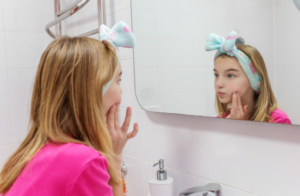
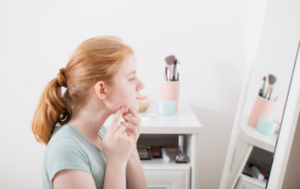
For many girls, acne becomes part of puberty almost whether they want it or not. Hormones increase oil production, pores can become clogged, and inflammation can follow. So it would be unrealistic to promise that a teenager can completely prevent every pimple. Even girls with excellent skin-care habits can still get acne.
The better goal is to reduce breakouts, keep mild acne from becoming worse, and protect the skin from scars. That means using simple habits consistently instead of trying a new product every few days. And surprisingly, doing less can sometimes be better. A complicated routine with strong acids, scrubs, masks, and several acne products may irritate the skin and create even more problems. The American Academy of Dermatology recommends keeping teen skin care simple and gentle.
Why do girls get acne during puberty?
Puberty brings major hormone changes. One important effect is increased activity in the skin's oil glands.
These glands produce sebum, an oily substance that helps protect the skin. During puberty, increased androgen hormones can make the glands produce more oil. Extra oil can mix with dead skin cells and block hair follicles. Bacteria that normally live on the skin can then contribute to inflammation inside the clogged follicle. That is how a small blocked pore can turn into a red pimple.
This explains something parents sometimes find confusing: a girl can have acne even if she takes very good care of herself. Acne is not simply a problem with cleanliness. The main changes are happening inside the skin.
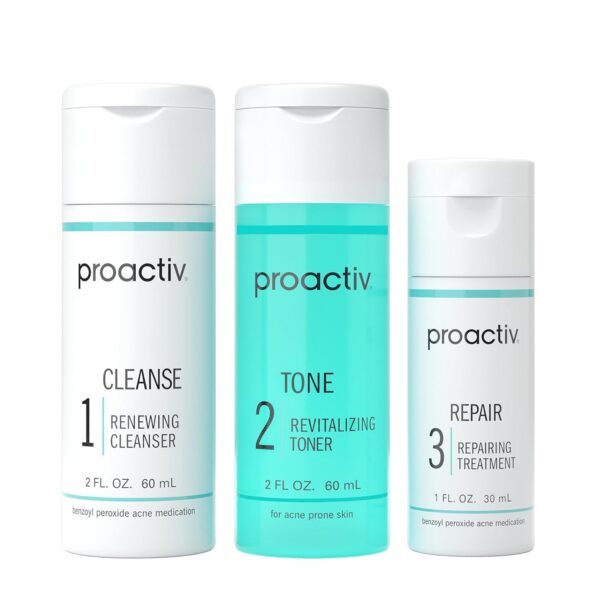
Proactiv 3 Step Acne Treatment - Benzoyl Peroxide Face Wash
Start with a simple face-washing routine
One of the easiest things a teenager can do is wash her face gently.
The American Academy of Pediatrics recommends washing the skin twice a day, generally in the morning and evening, using a gentle cleanser and warm water. Washing after heavy exercise can also help remove sweat and oil.
But there is an important catch: more washing is not better.
Washing the face many times a day, using very hot water, or scrubbing hard can irritate the skin. Irritated skin may become dry, red, and uncomfortable, and acne can look worse. The NHS also recommends not washing acne-prone skin more than twice a day because frequent washing can irritate the skin.
The goal is clean, comfortable skin—not skin that feels stripped or “squeaky.”
Skip rough scrubs and harsh brushes
A teenager with acne may naturally want to scrub harder. After all, if clogged pores cause pimples, shouldn't scrubbing remove the blockage?
Unfortunately, it does not work that way.
Acne develops inside the hair follicle. Scrubbing the surface cannot simply scrub the blockage away. Rough washcloths, exfoliating brushes, gritty scrubs, and aggressive rubbing can irritate the skin and make breakouts more noticeable.
A gentle cleanser and clean fingertips are usually enough for everyday washing. This may sound almost too simple, but simple routines are often easier to stick with—and consistency matters much more than an aggressive five-minute skin-care session once in a while.
Choose non-comedogenic skin-care products
Teen girls often start using more skin-care and makeup products during puberty. That is completely normal. The problem is that some oily products can clog pores.
Look for labels such as:
- Non-comedogenic
- Oil-free
- Won't clog pores
- Non-acnegenic
These products are less likely to block pores, although they are not a guarantee that a breakout will never happen. Even products labeled non-comedogenic can bother some people's skin.
This applies to more than facial moisturizer. Sunscreen, makeup, foundation, concealer, hair products, and other products that touch the face can matter too.
Be careful with oily hair products
A girl's hair routine can sometimes affect her skin.
Hair oils, pomades, styling creams, and other oily products may touch the forehead, temples, neck, or back. If they clog pores, small bumps may appear in those areas.
This does not mean teenagers need to stop using hair products. It simply makes sense to keep oily products away from the face when possible and wash the skin gently if hair products get onto it.
If acne suddenly appears around the hairline after starting a new styling product, that is a useful clue. Sometimes the newest product is worth changing before replacing the entire skin-care routine.
Keep makeup clean and remove it before bed
Makeup can be part of a teenager's normal routine, but it should not stay on the skin overnight.
Leaving makeup on for long periods can mix with oil and dead skin cells and may contribute to clogged pores. The NHS recommends completely removing makeup before going to bed and choosing water-based, non-comedogenic products when possible.
Makeup brushes and sponges also deserve attention. They collect oil, makeup, and skin cells over time. Washing them regularly is a simple hygiene habit that can help keep products cleaner.
And there is no need to cover every pimple with a thick layer of foundation. Sometimes heavy makeup creates a frustrating cycle: more coverage, more product, more clogged pores, and then more acne.
Do not pick or squeeze pimples
This may be the hardest rule for teenagers to follow.
A whitehead appears in the mirror, and suddenly it feels impossible to leave it alone. But squeezing and picking can push material deeper into the skin and increase inflammation. It can also damage the skin and increase the risk of scars and dark marks.
Picking is especially risky with deep, painful acne. Those bumps are already inflamed beneath the skin, so squeezing them can cause even more irritation.
If a girl has a habit of touching her face while studying, watching TV, or scrolling on her phone, simply becoming aware of that habit can help. Keeping nails short may help too.
Shower after heavy sweating
Sports are good for teenagers, so acne should never become a reason to avoid exercise.
Sweat, heat, friction, and pressure can make breakouts worse in some people. A helmet, tight sports clothing, shoulder pads, or backpack can repeatedly rub against the skin.
After a hard workout, showering or gently washing sweaty areas can help remove sweat and oil. Changing out of damp sports clothes is another easy habit.
For girls who develop acne mainly on the back or shoulders, it is worth paying attention to equipment and clothing. Sometimes the skin is reacting less to “sweat” itself and more to the combination of sweat, heat, rubbing, and pressure.
Wash pillowcases and towels regularly
Pillowcases can collect skin oil, hair products, sweat, and leftover skin-care products. Towels can collect similar things.
Keeping them clean is a reasonable part of good skin care, especially if a teenager has oily skin or uses several hair products. However, dirty pillowcases are not the main cause of acne. Puberty hormones and clogged follicles still play a much bigger role.
There is no need to become obsessed with washing bedding every day. Regular washing is enough. More importantly, avoid sharing towels and face cloths, and use a clean towel to gently pat the face dry.
Keep hands away from the face
Hands touch a lot of things throughout the day—phones, desks, door handles, keyboards, sports equipment, and more.
Touching the face repeatedly can transfer oil and irritants to the skin. More importantly, touching makes it easier to pick at small bumps without even realizing it. Picking is one of the habits most clearly linked with worsening inflammation and scarring.
This does not mean a teenager needs to panic every time her hand touches her cheek. Nobody can avoid touching their face all day. The practical goal is simply to reduce unnecessary touching, especially squeezing and picking.
Use sunscreen, even with acne
Some teenagers avoid sunscreen because they worry it will make their skin oily or cause more pimples.
That can be a problem because sun exposure can make some dark marks left after acne more noticeable. Some acne treatments can also make the skin more sensitive to sunlight. NIAMS recommends sun protection as part of acne skin care.
Look for a sunscreen that feels comfortable on acne-prone skin and is labeled non-comedogenic or oil-free when possible.
The right sunscreen is one a teenager will actually use. A lightweight lotion, gel, or other comfortable formula may be easier to use every day than a thick product that she dislikes.
Don't keep changing acne products
This is a surprisingly common problem.
A new pimple appears, so a teenager buys a new cleanser. A few days later, another product appears on the bathroom shelf. Then comes a scrub, a mask, a spot treatment, and perhaps another cleanser.
The skin can become irritated from all those changes. Acne treatments also need time to work. The American Academy of Dermatology notes that it can take around 6 to 8 weeks to see improvement from an acne treatment.
Patience is not exciting, but it matters. A simple routine used consistently is usually more sensible than constantly chasing the newest acne product.
Should teen girls use salicylic acid or benzoyl peroxide?
These are two common ingredients used to prevent and treat acne.
Salicylic acid can help unclog pores and is often found in acne cleansers and other over-the-counter products. Benzoyl peroxide helps reduce acne-causing bacteria and inflammation and is another common acne treatment.
They can be useful, but stronger is not always better. Both can cause dryness, redness, or irritation, particularly when a teenager uses several acne products at the same time. The AAD recommends introducing acne-fighting ingredients carefully while keeping the rest of the routine gentle and moisturizing.
For a teenager with only occasional pimples, a simple over-the-counter routine may be enough. If acne is moderate, severe, painful, or persistent, it is better to ask a pediatrician or dermatologist about the right treatment rather than experimenting with increasingly strong products.
What about diet?
Food and acne is one of those topics where advice online can get carried away.
There is some evidence that diets high in refined carbohydrates may be associated with more acne in some people. Some research has also looked at dairy products. But this does not mean that pizza, chocolate, or one glass of milk is going to cause a pimple the next morning.
A growing teenage girl needs enough food and a wide range of nutrients. Strict diets can create their own problems, especially during puberty.
A better approach is ordinary healthy eating: vegetables and fruit, whole grains, protein foods, healthy fats, and enough water. If a teenager notices a very clear connection between a particular food pattern and repeated breakouts, that can be discussed with a health professional rather than starting a restrictive diet on her own.
Can stress prevention help prevent acne?
Stress does not directly cause every case of acne, but it can make existing acne worse.
Teen life can be stressful enough without adding “avoid acne” to the list. Schoolwork, exams, sports, friendships, family problems, and lack of sleep can all pile up. The AAP notes a link between stress and worsening acne in some teenagers.
Regular physical activity, enough sleep, time away from screens, and supportive relationships are good for overall health and may help with stress. But teenagers should not be made to feel that every pimple is their fault because they are “too stressed.”
Sometimes a pimple is simply a pimple.
Don't ignore the menstrual cycle
For some girls, acne changes around the time of their period.
Hormone changes during the menstrual cycle can cause breakouts to appear or become worse, particularly around the lower face and jaw. Not every girl has this pattern, but it can be useful to notice if breakouts repeatedly appear before menstruation.
Tracking periods and acne for a few months may reveal a pattern. If acne is severe along with very irregular periods, excessive facial or body hair, or other hormone-related symptoms, a pediatrician may want to evaluate the situation further.
This does not mean that every girl with period-related acne has a hormone disorder. Menstrual hormone changes are a normal part of growing up.
Early treatment can prevent acne from becoming a bigger problem
There is a common attitude that teen acne should simply be tolerated because “everyone gets it.”
That idea is not always helpful.
Mild acne may settle over time, but acne can also become more widespread or severe. Deep inflammatory acne has a greater risk of permanent scarring. The American Academy of Dermatology recommends treating acne early rather than waiting for it to become severe.
Treatment is not about making a teenager obsessed with perfect skin. It is about keeping a manageable problem from turning into a painful one.
If a few blackheads become many inflamed pimples, or if acne begins leaving scars, that is a good time to ask for professional advice.
What should parents avoid saying?
Sometimes the most helpful acne prevention advice has nothing to do with skin products.
Avoid comments such as:
- “You need to wash your face.”
- “Stop eating junk food.”
- “Don't touch your dirty face.”
- “It's just teenage acne. Ignore it.”
- “Everyone has acne, so don't worry about it.”
These comments may sound harmless, but they can make a teenager feel blamed or embarrassed.
The AAD points out that acne can affect a teenager's self-esteem and that parents should take those feelings seriously. Treatment can help not only the skin but also how a teenager feels about herself.
A better approach is practical and calm: help her find a simple routine, give her some privacy, and take her concerns seriously if the acne is bothering her.
A simple acne-prevention routine for teen girls
A teenager does not need a bathroom full of products.
A basic routine might look like this:
Morning
- Gently wash the face.
- Apply a light, non-comedogenic moisturizer if needed.
- Use sunscreen.
After sports or heavy sweating
- Shower or gently wash sweaty areas.
- Change out of sweaty clothes.
Evening
- Remove makeup completely.
- Gently wash the face.
- Use an acne treatment if recommended or appropriate.
- Apply moisturizer if the skin feels dry.
And throughout the day: do not pick, squeeze, or scrub the skin.
The exact routine can change depending on how severe the acne is and how sensitive the skin is. There is no prize for having the longest skin-care routine.
When should a teen girl see a doctor for acne?
A doctor or dermatologist should be considered when acne is becoming difficult to control, particularly if there are deep or painful bumps.
Professional help is especially useful when:
- Acne is moderate or severe.
- Painful nodules or cysts are appearing.
- Acne is leaving scars.
- Breakouts continue despite consistent home treatment.
- Acne is affecting school, friendships, or self-confidence.
- A teenager is picking at her skin because of acne.
- Acne appears alongside very irregular periods or other signs of a possible hormone problem.
Early treatment can reduce the chance of long-term scarring. There are many effective acne treatments, so a teenager does not have to simply wait for puberty to end.
The bottom line
Teen acne cannot always be prevented. Puberty hormones are powerful, and even a teenager with excellent skin care may still develop pimples.
But good habits can make a real difference. Gentle cleansing, non-comedogenic products, clean makeup habits, avoiding picking, washing after heavy sweating, protecting the skin from the sun, and treating acne early can help keep breakouts under control.
Most importantly, acne is not a cleanliness test. A teenager should not feel that she has failed because her skin is breaking out. Puberty is already a time of enormous change. Skin care should make things simpler, not add another source of pressure.
FAQ:
How can a teenage girl prevent acne?
A teenage girl can reduce breakouts by washing her face gently twice a day, avoiding harsh scrubs, choosing non-comedogenic products, removing makeup before bed, avoiding picking, and washing after heavy sweating.
Can teenage acne be completely prevented?
Not always. Puberty hormones, genetics, oil production, and inflammation all affect acne. Good skin care can reduce breakouts and help prevent acne from becoming worse, but it cannot guarantee completely clear skin.
How often should a teen girl wash her face?
Most teens with acne should gently wash the face about twice a day and after heavy sweating. Washing more often can irritate the skin and make acne worse.
Does washing the face prevent acne?
Gentle cleansing can help remove excess oil, sweat, and skin products, but it cannot stop the hormone changes that cause acne during puberty. Scrubbing harder does not prevent acne and may irritate the skin.
Should teenagers use non-comedogenic products?
Yes. Non-comedogenic products are designed to be less likely to clog pores. Teen girls with acne-prone skin can look for non-comedogenic or oil-free makeup, sunscreen, moisturizer, and other skin-care products.