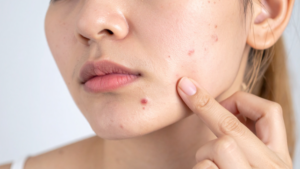
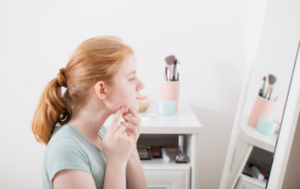
One day, your daughter may have clear skin. Then, almost out of nowhere, small bumps appear on her forehead, nose, cheeks, or chin. A few days later, there may be more. It can feel surprising, especially if she has never had skin problems before.
The good news is that sudden acne is often a normal part of puberty. The skin can change quickly when hormone levels begin to rise. This does not mean your daughter is dirty, unhealthy, or doing something wrong. Acne is one of the most common skin conditions during the teenage years. About 85% of teenagers experience it at some point.
Still, acne should not be brushed off if it is painful, severe, or affecting her confidence. The most helpful approach is to understand why it happens and watch for signs that she may need treatment.
Puberty hormones can change the skin quickly
Puberty is the most common reason a girl suddenly develops acne.
During puberty, the body begins producing more hormones called androgens. These hormones help guide many normal body changes. They also make the skin’s oil glands more active.
The oil glands produce a substance called sebum. A small amount of sebum helps keep the skin soft and protected. But when the glands begin making too much oil, the extra oil can mix with dead skin cells and clog the pores. This is often the first step in acne.
That is why acne may appear around the same time as other puberty changes, such as:
- Breast development
- Pubic or underarm hair
- A growth spurt
- More sweating
- Stronger body odor
- Changes in the menstrual cycle
Acne can even begin before a girl has her first period. The hormone changes that increase oil production may start well before menstruation becomes regular.
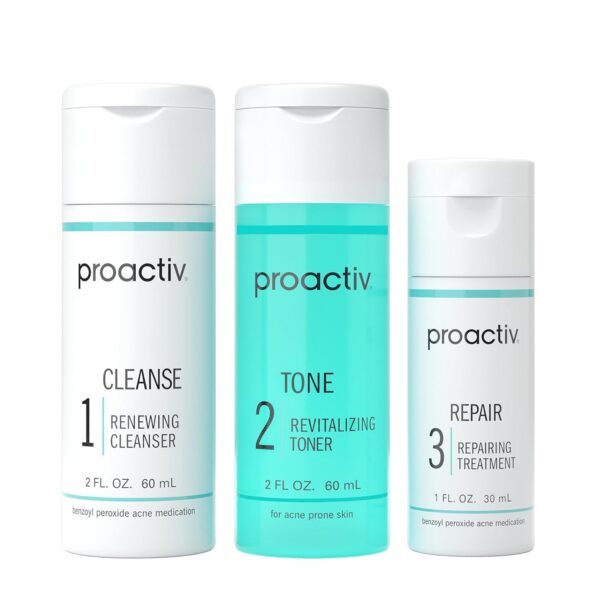
Proactiv 3 Step Acne Treatment - Benzoyl Peroxide Face Wash
Why does acne seem to appear overnight?
Acne usually does not form in just a few hours, even if it looks that way.
A pore may become clogged before a visible pimple appears. At first, the blockage may be too small to notice. Then inflammation develops, and the bump becomes red or swollen. Several clogged pores may also become noticeable at the same time.
This can make acne seem sudden. In reality, the skin may have been changing quietly for days or weeks.
A girl may also notice a quick flare-up around her period. Hormone levels change during the menstrual cycle, and some girls develop more pimples before or during menstruation.
The timing can be confusing, but it does not necessarily mean that something serious has happened.
What happens inside a clogged pore?
Each pore is connected to a tiny hair follicle. The follicle contains a hair and an oil gland.
Acne develops through a few connected steps:
- Puberty hormones increase oil production.
- Extra oil mixes with dead skin cells.
- The mixture blocks the hair follicle.
- Bacteria that normally live on the skin may multiply inside the blocked pore.
- The body responds with inflammation.
- A blackhead, whitehead, red pimple, or deeper bump appears.
A whitehead forms when a blocked pore stays closed. A blackhead forms when the pore remains open and the material inside reacts with air. The dark color is not dirt.
If inflammation develops deeper in the skin, the bump may become painful. Deep nodules and cysts are more likely to leave scars, so they should not be ignored.
Is my daughter’s acne caused by poor hygiene?
No. This is one of the most important things for parents to understand.
Acne is not caused by a dirty face. The main problem is happening inside the pores because of oil, dead skin cells, hormones, bacteria, and inflammation. Washing the face more often cannot stop all of these changes.
A teenager may feel embarrassed when someone tells her to “wash your face.” Comments like this can make acne feel like a personal failure. They can also lead to over-washing, rough scrubbing, and harsh products.
Gentle cleansing is helpful. Aggressive cleaning is not.
A simple routine is usually better:
- Wash the face gently once or twice a day.
- Use lukewarm water.
- Choose a mild cleanser.
- Avoid rough scrubs and stiff brushes.
- Pat the skin dry instead of rubbing it.
- Clean the skin after heavy sweating.
The goal is to keep the skin comfortable, not to scrub the acne away.
Could stress be making her acne worse?
Stress is not usually the main cause of acne, but it can make existing acne worse.
Teenagers may experience stress from school, exams, friendships, family changes, sports, or lack of sleep. During stressful times, some girls notice more breakouts. Researchers believe stress may affect hormone activity and inflammation, which can make acne flare.
However, it is not helpful to tell a teenager, “Your acne is caused by stress.” That statement is too simple and may make her feel responsible for every pimple.
A better message is that stress may be one factor, but puberty hormones are often the main reason. Enough sleep, regular meals, exercise, and time to relax can support overall health and may help reduce flare-ups.
Can her period cause sudden acne?
Yes. Hormone changes around the menstrual cycle can affect the skin.
Some girls notice more pimples in the week before their period. Acne may appear along the chin, jawline, or lower face, although it can happen anywhere. Other girls do not notice a clear pattern.
Tracking acne alongside periods can sometimes reveal a connection. A simple note in a calendar may help answer questions such as:
- Does acne appear before every period?
- Does it improve after bleeding begins?
- Does it happen at random times?
- Are breakouts becoming more frequent?
A pattern can be useful when talking with a pediatrician or dermatologist. It may also help a girl understand that the changes are connected to normal hormone shifts rather than something she has done wrong.
Could hair or skin products be causing the breakout?
Sometimes, yes.
Some hair products, moisturizers, sunscreens, and cosmetics contain oils or ingredients that can clog pores. If a product touches the forehead, temples, neck, shoulders, or back, it may contribute to acne in those areas.
Look for labels such as:
- Non-comedogenic
- Oil-free
- Won’t clog pores
- Non-acnegenic
These products are less likely to block pores, although no product works perfectly for everyone.
A sudden breakout after starting a new product is worth noticing. Instead of changing the entire skin-care routine at once, it may be better to stop the newest product and see whether the skin improves.
Can sweat, sports, and backpacks make acne worse?
Sweat itself does not automatically cause acne, but heat, friction, and pressure can make breakouts worse.
A teenager may develop pimples where sports equipment or clothing rubs against the skin. Examples include:
- Helmet straps
- Chin guards
- Tight collars
- Shoulder pads
- Sports bras
- Backpacks
- Tight workout clothes
Sweat and oil can stay trapped under equipment, while rubbing irritates the skin. This may lead to breakouts on the forehead, back, shoulders, or chest.
There is no reason to stop sports. Instead, encourage her to change out of sweaty clothes, shower after exercise when possible, and keep equipment clean. A backpack should also fit properly and not rub constantly against the same area.
Is acne caused by chocolate or greasy food?
Probably not in the simple way people often claim.
Chocolate, fried food, and pizza are frequently blamed for acne. But there is little evidence that these foods directly cause acne in most teenagers. Acne is mainly linked to hormones, oil production, clogged pores, bacteria, and inflammation.
Some research suggests that diets high in refined carbohydrates or certain dairy foods may be connected with acne in some people. However, the evidence is not strong enough to say that every teenager should avoid milk, chocolate, or a particular food.
A balanced diet is important for a growing girl. It is not a good idea to put her on a strict food list because of a few pimples. If she notices a clear and repeated connection between a certain food and breakouts, that pattern can be discussed with a health professional without creating fear around eating.
Could acne run in the family?
Yes. Family history can make a difference.
If a parent or close relative had severe acne, a teenager may have a higher chance of developing acne too. Genetics can affect how much oil the skin produces, how easily pores become blocked, and how strongly the skin reacts with inflammation.
This explains why two girls with similar routines may have very different skin. One may have only a few blackheads, while another may develop painful pimples.
It also means that acne is not necessarily caused by a mistake in skin care. Sometimes the skin is simply more likely to react during puberty.
Why does acne appear on the forehead, cheeks, or back?
Acne can develop anywhere the skin has many oil glands.
The face, upper back, chest, shoulders, and neck are common areas. The forehead may be affected by oily hair products, sweat, hats, or bangs. The cheeks may be irritated by touching, phones, pillowcases, or cosmetics. Back acne may be linked to sweat, tight clothing, and sports equipment.
The location can offer clues, but it does not always reveal the exact cause. Acne on the forehead is not automatically caused by hair products, and acne on the back is not always caused by poor hygiene.
The best approach is to look for changes in products, clothing, exercise, and skin habits while remembering that puberty hormones may still be the main driver.
Why should she avoid squeezing pimples?
Squeezing a pimple may seem like a quick fix, but it can make the problem worse.
Picking or squeezing can push oil and bacteria deeper into the skin. It may increase swelling and inflammation. It can also damage the skin and leave dark marks or scars.
This can be difficult advice for teenagers to follow. A large pimple can be distracting, especially before school or an important event. Still, leaving it alone is usually safer than trying to force it out.
If she often touches her face without noticing, keeping nails short and using a clean pimple patch on a small surface pimple may help reduce picking.
When should a daughter see a doctor for acne?
Mild acne is common and may improve with a gentle routine and suitable over-the-counter treatment. But some types of acne need professional care.
A pediatrician or dermatologist should be contacted if:
- Pimples are deep, large, or painful.
- There are many red or pus-filled bumps.
- Acne is spreading quickly.
- Acne is leaving scars or dark marks.
- Breakouts continue despite consistent treatment.
- Acne is affecting school, sleep, friendships, or confidence.
- The skin becomes very red, swollen, or painful.
- Acne appears with other unusual puberty symptoms.
The American Academy of Dermatology recommends medical treatment for acne that is severe, persistent, or likely to cause scars. Modern treatments can help control acne and prevent new breakouts.
A doctor may also consider other causes if acne is unusually severe or appears with signs of a hormone problem, such as very irregular periods, increased facial hair, or sudden major changes in weight. This does not mean that every girl with acne has a hormone disorder. It simply means the whole picture matters.
What can parents say to a daughter with acne?
The way adults talk about acne can make a real difference.
Instead of saying, “Your face is getting bad,” try something calmer:
- “Acne is common during puberty.”
- “This is not because you are dirty.”
- “There are treatments that can help.”
- “You do not have to deal with painful acne alone.”
- “Your skin does not change your worth.”
Teenagers are often much more aware of their appearance than adults realize. A casual comment from a parent can stay in their mind for a long time. It is better to offer support without making acne the center of every conversation.
If she wants help, involve her in choosing a simple routine. Give her some privacy, avoid constant reminders, and take her concerns seriously.
The bottom line
A daughter may suddenly develop acne because puberty hormones increase oil production in the skin. Extra oil mixes with dead skin cells, pores become blocked, and inflammation creates pimples. Family history, menstrual hormone changes, stress, oily products, sweat, and friction can make breakouts worse.
Acne is not caused by a dirty face, and it is not a sign that a teenager has done something wrong. Gentle cleansing and non-comedogenic products can help, but harsh scrubbing and squeezing usually make things worse.
If the acne is painful, deep, persistent, or affecting her confidence, medical care is worth considering. The goal is not perfect skin. It is healthier skin, fewer painful breakouts, and a teenager who feels supported rather than blamed.
FAQ
Why does my daughter suddenly have acne?
Sudden acne is often caused by puberty hormones. These hormones increase oil production, which can mix with dead skin cells and clog pores. Bacteria and inflammation can then turn clogged pores into pimples.
Is sudden acne normal during puberty?
Yes. Acne is a common part of puberty and affects most teenagers at some point. It may appear quickly as hormone levels change, even if a girl's skin was clear before.
Is my daughter getting acne because she does not wash her face?
No. Acne is not caused by dirty skin. Gentle cleansing can remove sweat and excess oil, but over-washing and rough scrubbing may irritate the skin and make acne worse.
Can a girl get acne before her first period?
Yes. Acne may begin before the first period because puberty hormones can increase oil production before menstruation starts.