Summer can be great for kids. More outdoor play, swimming, sports, and long afternoons at the park all sound wonderful—until a child comes home covered in tiny red bumps.
“Is it an allergy?”
“Did something bite them?”
“Should a cream be used?”
Sometimes the answer is much simpler: heat rash.
Heat rash, also called prickly heat or miliaria, is very common in babies and young children. It happens when sweat gets trapped under the skin because sweat ducts become blocked or irritated. The good news is that most heat rash is mild and clears once the skin is cooled and kept dry.
Still, not every summer rash is heat rash. A rash that comes with fever, pus, significant pain, spreading redness, or a child who seems unwell deserves more attention. Knowing what ordinary heat rash looks like—and when it does not fit the picture—can save parents a lot of worry.
What Is Heat Rash in Children?
Heat rash is a skin reaction caused by trapped sweat. Normally, sweat travels through tiny ducts to the surface of the skin and then evaporates. When those ducts become blocked, sweat cannot escape properly. It collects under the skin and causes irritation, small bumps, or tiny blisters.
Children are especially likely to get heat rash because babies and young children do not manage body temperature as efficiently as adults. Hot, humid weather makes the problem worse. Tight clothing, too many layers, blankets, car seats, and sweaty skin folds can also trap heat and moisture.
That is why a rash may suddenly appear after a hot afternoon outside or after a child has spent several hours sweating. It does not necessarily mean the child is allergic to something. Often, the skin simply needs a chance to cool down.
What Does Heat Rash Look Like?
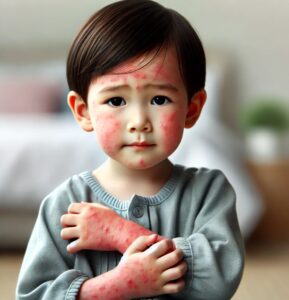
Heat rash can look slightly different from one child to another. The most common form causes tiny pink or red bumps. Some children describe the rash as itchy or prickly. Older children may say their skin feels like tiny pins and needles.
In babies, the rash may appear as tiny fluid-filled blisters. The bumps can be found on the neck, upper chest, back, hairline, armpits, or in skin folds. The diaper area can also be affected, especially when heat and moisture are trapped there.
On brown or Black skin, heat rash may not look bright red. The bumps can appear gray, white, or less noticeable than they would on lighter skin. So it is better to pay attention to the texture and feel of the skin, too—not just its color.
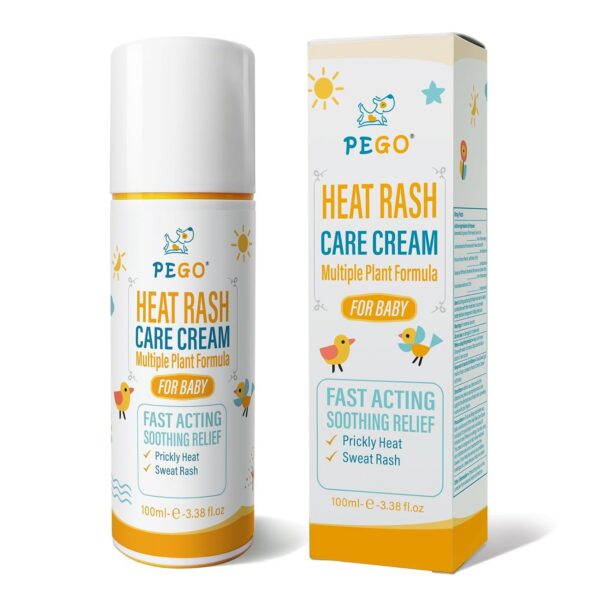
Heat Rash Care Cream for Babies | Prevents Prickly Heat, Sweat Rashes, Eczema & Skin Inflammation
Where Does Heat Rash Usually Appear?
Heat rash tends to show up where sweat and heat get trapped.
Common areas include:
- Neck and neck folds
- Upper chest
- Upper back
- Hairline and forehead
- Armpits
- Elbow creases
- Groin
- Thighs
- Under clothing
- Areas covered by diapers
For babies, the neck can be a particularly common trouble spot. A baby's neck folds can stay warm and damp for a long time, especially during hot weather.
Older children may develop heat rash after sports, outdoor play, or other activities that make them sweat heavily. Tight sports clothing can make things worse because it reduces airflow and keeps sweat against the skin.
Why Do Children Get Heat Rash So Easily?
There is a simple pattern behind many cases: heat + sweat + poor airflow.
A child playing outside on a hot day may sweat much more than usual. If that sweat stays against the skin, especially under clothing or in a skin fold, the sweat ducts can become blocked. The skin then becomes irritated.
Babies have an additional disadvantage. Their sweat ducts are still developing, so they can be more easily blocked. A baby who is bundled in several layers or wrapped tightly in a blanket may become sweaty without the parent realizing how warm the baby has become.
This is one reason “more clothing” is not always better for babies in summer. Keeping a child comfortable and cool is more important than trying to keep every inch of skin covered.
Is Heat Rash Dangerous?
Usually, no.
Most heat rash is uncomfortable rather than dangerous. Once the child is moved to a cooler environment and sweating decreases, the rash often improves within a few days.
That said, parents should avoid assuming every rash during hot weather is heat rash. Children can also develop viral rashes, allergic reactions, eczema flares, insect bites, bacterial skin infections, and other conditions during the summer.
A useful clue is the child's overall condition. A child with ordinary heat rash will usually otherwise look and act fairly normal. If the child has a fever, seems unusually tired, is not eating or drinking normally, or looks sick, the rash deserves a closer look by a healthcare professional. The American Academy of Pediatrics specifically advises contacting a child's doctor if heat rash appears infected, occurs with fever, the child is less active or eating less, or the rash is worsening or has not cleared after about three days of home care.
How to Treat Heat Rash at Home
The best treatment is surprisingly simple: cool the skin and stop the sweating.
There is usually no need for a complicated skincare routine. In fact, putting several creams and ointments on the rash can sometimes make the problem worse by blocking sweat ducts even more.
Start with the environment. Move the child into a cooler room, turn on air conditioning if available, or use a fan to improve airflow. Remove extra layers of clothing. The goal is not to make the child cold. It is simply to stop overheating and heavy sweating.
A cool bath can also help. Use comfortably cool or lukewarm water rather than very cold water. After bathing, gently pat the skin dry. Pay special attention to folds around the neck, armpits, and groin, where moisture can remain trapped.
For a small area, a cool, damp washcloth can provide relief. A short cool compress may reduce the itchy or prickly feeling. There is no need to scrub the rash. Scrubbing can irritate already sensitive skin.
What Should Children Wear With Heat Rash?
Think light, loose, and breathable.
Cotton clothing can help air move around the skin. Avoid tight shirts, heavy pajamas, thick blankets, and multiple unnecessary layers while the rash is active.
For babies, clothing should be loose enough to allow airflow but not so loose that it becomes unsafe or tangled. The American Academy of Pediatrics recommends thin, loose-fitting clothing and avoiding extra layers or tightly wrapped blankets in warm weather.
During sleep, the bedroom should also be reasonably cool and well ventilated. A child does not need to sleep in a freezing room. The main goal is to avoid sweating.
Should You Put Lotion on Heat Rash?
This is where parents sometimes make things worse without meaning to.
When skin looks irritated, the natural reaction is to reach for a thick moisturizer. But heat rash is different from dry skin. Heavy, greasy creams and ointments can block sweat ducts and may keep the rash going. Both the AAP and Mayo Clinic recommend avoiding thick or greasy products on areas affected by heat rash.
Perfumed body lotions and heavily scented products are also not a great choice for irritated skin. There is simply no need to add more potential irritation.
For a child with mild heat rash, cooling, drying, and airflow are usually more useful than adding another skincare product.
What About Hydrocortisone or Calamine Lotion?
Parents may see recommendations for calamine lotion or low-strength hydrocortisone when searching for heat rash treatment. These products can sometimes help itching, but they are not automatically right for every child.
Age matters. Skin location matters. The appearance of the rash matters, too. A rash that is actually an infection or another skin condition should not simply be covered with an anti-itch cream.
For younger children, especially babies, it is better to ask a pediatrician or pharmacist before using medicated creams. The NHS, for example, notes that hydrocortisone treatment for heat rash may require medical advice in younger children.
The bigger point is easy to miss: medicine is usually not the first step for ordinary heat rash. Cooling the skin is.
Can a Child Take a Bath With Heat Rash?
Yes. A cool or lukewarm bath can actually make the child more comfortable.
The bath does not need to contain special soap, oils, or strong skin products. Plain water is often enough. After the bath, gently pat the skin dry rather than rubbing it hard.
If the child has another skin condition, such as eczema, bathing advice may be different. Children with eczema often need short baths with warm—not hot—water and fragrance-free products, followed by moisturizer. That is another reason not to assume every itchy summer rash is heat rash.
How Can Parents Prevent Heat Rash?
Prevention is mostly about managing heat and sweat before they build up.
On very hot days, children do not need to stay indoors all day. But outdoor play should include breaks in the shade or a cool place. During extreme heat, outdoor activity may need to be reduced.
Helpful habits include:
- Choose loose, lightweight clothing.
- Avoid unnecessary layers.
- Keep bedrooms cool and well ventilated.
- Give children regular opportunities to cool down.
- Change sweaty clothing when needed.
- Keep skin folds clean and dry.
- Avoid thick greasy ointments on areas prone to heat rash.
- Use air conditioning or gentle airflow when appropriate.
- Encourage regular fluids during hot weather.
These small changes can make a surprisingly big difference, especially for babies and children who sweat heavily.
Heat Rash or Something Else?
This is probably the most important part for parents.
Heat rash is usually made up of small bumps or tiny blisters that appear after heat and sweating. It is often itchy or prickly, and the child generally feels well otherwise.
But other rashes can look similar.
For example, hives tend to appear as raised welts that can move around or disappear and reappear. Eczema usually causes dry, inflamed, itchy skin. Some infections can cause red bumps, blisters, crusting, or pus. Viral illnesses may cause a rash together with fever or other symptoms.
There is no reliable way to diagnose every childhood rash from a photo or a quick glance. If the appearance is unusual or the child seems sick, medical advice is a better choice than trying several creams at home.
When Should a Child See a Doctor?
A simple heat rash should start improving after the child is cooled down. If it is not improving, that is a reason to stop and reconsider the diagnosis.
Contact a healthcare professional if:
- The rash is getting worse.
- The rash has not improved after about three days of home care.
- There is pus or drainage.
- The skin becomes increasingly painful or tender.
- Redness is spreading.
- The child develops a fever.
- The child is eating or drinking less.
- The child is much less active than usual.
- The child looks or acts unwell.
A rash combined with serious symptoms needs urgent attention. Trouble breathing, swelling of the lips or tongue, confusion, unusual sleepiness, blue or gray skin or lips, a stiff neck, or a rash that does not fade when pressed are examples of warning signs that should not be blamed on heat rash.
A Simple Summer Skin Rule
For most children, heat rash is a reminder that the skin needs a little less heat and a little more airflow.
When tiny bumps appear after a sweaty day, the first response does not need to be a cabinet full of creams. Cool the child. Remove extra layers. Let the skin breathe. Use a cool bath or damp cloth if needed. Keep the area dry and give it some time.
And watch the child, not just the rash.
If the child is comfortable, active, drinking normally, and the rash begins to settle after cooling, heat rash is often manageable at home. If the child has fever, pus, worsening redness, significant pain, or seems unwell, it is time to get medical advice. That simple distinction is often more useful than trying to memorize what every childhood rash looks like.
FAQ: Heat Rash in Children
Is heat rash common in babies?
Yes. Heat rash is especially common in babies and young children. Their sweat ducts are still developing, and hot, humid conditions can make sweating and blocked sweat ducts more likely.
How long does heat rash last in children?
Mild heat rash often improves within a few days after the skin is cooled and sweating is reduced. If the rash is not improving after about three days or is getting worse, a doctor should check it.
Can heat rash cause a fever?
Heat rash itself should not normally cause a fever. If a child has a fever along with a rash, do not automatically assume it is heat rash. The child should be assessed, especially if they seem unwell.
Can children with heat rash take a bath?
Yes. A cool or lukewarm bath can help cool the skin and remove sweat. Gently dry the skin afterward, and avoid harsh or heavily scented products.