What Is Roseola?
Roseola is a common illness in young children. Doctors also call it exanthema subitum or sixth disease. It usually affects babies and toddlers between 6 months and 3 years old.
This illness comes from a virus called human herpesvirus 6, or sometimes human herpesvirus 7. Almost every child gets infected at least once before the age of two. Once they have had it, their body usually builds protection, so they don’t get it again.
Roseola is not dangerous in most children, but it can be worrying for parents. The sudden fever and rash may seem scary. The good news is that most children recover on their own with simple home care.
Real Life Story
I still remember when my daughter was around one year old. One day she suddenly came down with a high fever. Her temperature shot up to over 39°C, and I immediately became anxious. But what puzzled me was that she had no cough, no runny nose, no diarrhea, and her overall condition seemed fine. She was still playing with her toys and even giggling at me
This left me confused: how could she have such a high fever without looking “sick” at all? As a parent, I spent those days feeling uneasy, constantly wondering if it was something serious or if I should rush her to the hospital for tests.
The fever lasted four or five days, and then, all of a sudden, her temperature went back to normal. Just as I was about to breathe a sigh of relief, I noticed faint red rashes appearing on her chest, tummy, and back. Soon after, her face and neck were covered as well. That’s when it finally clicked—I realized she had roseola.
How Do Children Catch Roseola?
Roseola spreads from one person to another. It usually passes through tiny droplets in the air when someone coughs, sneezes, or talks. It can also spread by sharing cups, spoons, or toys that have saliva on them.
The illness is contagious before the rash shows up. This means children may spread the virus without anyone knowing they are sick. That’s why roseola is common in places where kids spend time together, like daycare or playgroups.
Even if you try to be careful, it’s hard to avoid roseola completely. Many parents discover their child has it only after the fever and rash appear.
Common Symptoms of Roseola
Roseola often starts suddenly with a high fever. The fever can go as high as 39–40°C (102–104°F). It usually lasts 3 to 5 days. During this time, your child may look tired, cranky, and eat less than usual.
Some children may also have mild cold-like symptoms, such as a runny nose, sore throat, or a slight cough. Swollen glands in the neck can happen too.
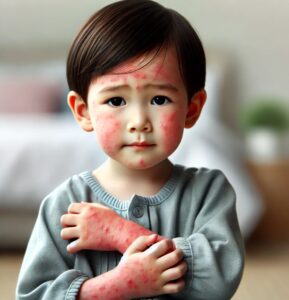
After the fever goes away, a pinkish rash usually appears. The rash starts on the chest or belly and then spreads to the face, arms, and legs. The spots are small, flat, or slightly raised. The rash doesn’t usually itch or hurt, and it fades after 1–2 days.
For many parents, the sudden end of the fever and the start of the rash is the “aha” moment that confirms it is roseola.
How Do Doctors Diagnose Roseola?
In most cases, doctors can tell it’s roseola just by looking at the symptoms. The classic pattern is high fever that stops suddenly, followed by a pink rash.
Blood tests or special exams are usually not needed. If the child is otherwise healthy and the symptoms match, that is enough for a diagnosis.
Still, you should check with your doctor if the fever is very high, lasts longer than 5 days, or if your child seems very unwell.
Home Care and Treatment
There is no special medicine to cure roseola. Because it’s caused by a virus, antibiotics do not work. Treatment focuses on keeping your child comfortable until the illness passes.
Here are some simple care tips:
- Offer plenty of fluids to avoid dehydration.
- Give acetaminophen or ibuprofen for fever if advised by your doctor.
- Keep your child in light clothing and a cool room.
- Allow rest and quiet activities while your child recovers.
The fever usually lasts 3 to 5 days. The rash then appears and fades in 1 to 2 days. Once the rash is gone, your child can go back to normal play and routine.
When to Call the Doctor
Most children recover from roseola without problems. But there are times when medical help is needed.
Call your doctor if:
- The fever is higher than 40°C (104°F).
- The fever lasts longer than 5 days.
- Your child has trouble breathing or a stiff neck.
- Your child is unusually drowsy or hard to wake.
- Your child has a seizure.
Seizures caused by fever, called febrile seizures, can happen with roseola. They look scary, but they usually don’t cause long-term harm. If your child has a seizure, call for emergency help right away.
Is Roseola Contagious?
Yes, roseola is contagious, especially during the fever stage. Once the rash appears, children are usually no longer contagious.
Because the virus spreads before the rash, many children pass it on without anyone knowing. This is why roseola is so common in the first few years of life.
Can Roseola Be Prevented?
There is no vaccine for roseola. The best way to reduce the chance of infection is through good hygiene.
Here are some prevention tips:
- Wash hands often with soap and water.
- Do not share cups, spoons, or straws.
- Keep sick children at home until they are fever-free.
Even with these steps, most children will get roseola at some point. For most families, it is just a common childhood illness that passes quickly.
Does Roseola Cause Long-Term Problems?
The good news is that roseola almost never causes long-term issues in healthy children. Once the illness is over, your child can go back to eating, playing, and sleeping normally.
Children with weak immune systems may have more severe illness, but this is rare. For most children, roseola is mild and leaves no lasting effects.
FAQ
Q1: What is roseola?
Roseola is a viral illness in children that causes high fever followed by a pink rash.
Q2: What age group gets roseola most often?
It usually affects babies and toddlers between 6 months and 3 years old.
Q3: Is roseola dangerous?
Most cases are mild. The main risk is a seizure caused by sudden high fever.
Q4: How long does roseola last?
The fever lasts 3–5 days, and the rash fades within 1–2 days.
Q5: Can my child get roseola more than once?
Most children only get it once, since their body builds protection after the first infection.