Why making brushing fun actually works
Brushing teeth sounds simple, but for many kids, it feels like a chore. It interrupts playtime. It comes right when they are tired. And honestly, it is not the most exciting thing in their day.
That is why making brushing fun matters more than most people expect. When something feels enjoyable, kids stop resisting it. They stop seeing it as something forced on them. It becomes part of their routine in a natural way.
It is worth noticing that kids are not refusing brushing because they want trouble. In many cases, they are just bored, tired, or looking for a bit of control. Changing the mood around brushing can shift everything, sometimes faster than expected.
What is the best way to make brushing teeth fun for kids?
The best way is not about one perfect trick. It is about mixing small ideas that make brushing feel lighter and more engaging.
Children respond well when brushing feels like play instead of a task. That can mean music, games, or even just a silly moment in front of the mirror.
A few simple ideas tend to work across different ages:
- turn brushing into a short game or challenge
- use music or a two minute song
- let kids choose their toothbrush or toothpaste
- brush together as a family
None of these ideas are complicated. But together, they change the experience from something dull into something a bit more lively.
Use music and timers to make brushing feel like a game
Time is tricky for kids. Two minutes can feel endless. That is where music helps.
Playing a favorite song during brushing gives kids a clear start and end. They do not have to guess how long to brush. They just follow the rhythm.
Some families notice that once music becomes part of the routine, kids stop asking how much longer. They stay engaged because the activity feels structured and fun.
The American Dental Association recommends brushing for two minutes. Music is one of the easiest ways to reach that goal without pressure.
Let kids choose their toothbrush and toothpaste
Choice changes behavior more than expected.
When a child picks their own toothbrush, it becomes “theirs.” Not something handed to them, but something they own. The same goes for toothpaste flavors.
Some children dislike strong mint. A mild or fruity flavor can make brushing feel more pleasant. That small change can reduce resistance right away.
It may seem like a small detail, but it gives kids a sense of control. And when kids feel in control, they are more likely to cooperate.
Turn brushing into a story or imagination game
Kids love stories. Even simple ones.
Instead of saying “brush your teeth,” try turning it into something playful. Maybe there are tiny sugar bugs hiding on the teeth. The toothbrush becomes a tool to chase them away.
Some kids imagine they are superheroes cleaning their teeth. Others pretend they are helping their teeth stay strong for future adventures.
It does not need to be perfect or creative every time. Even small imaginative moments can make brushing feel less like a task and more like play.
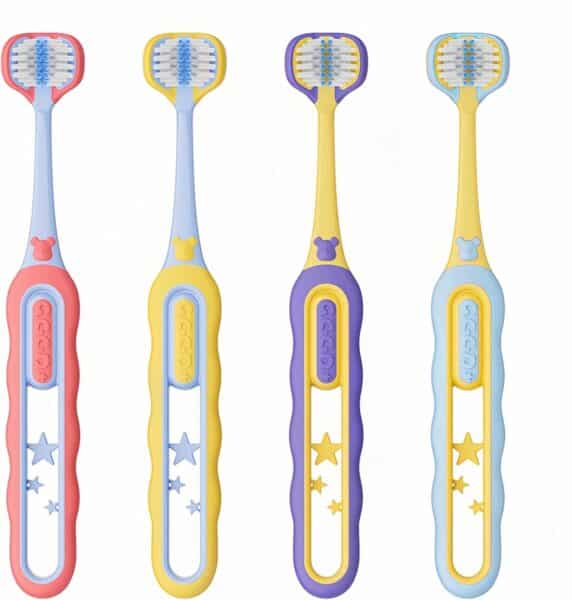
EASICUTI Soft Toddler Toothbrushes, Efficient 3 Sided Toothbrush, Baby Toothbrush 12 Months and up
Brush together and lead by example
Kids copy what they see.
When brushing becomes a shared activity, it feels less like a rule and more like a normal part of life. Standing side by side in front of the mirror can change the whole mood.
It also creates a quiet moment of connection. Not rushed, not forced. Just part of the day.
Older siblings can help too. Children often follow siblings more naturally than adults. Watching someone else brush makes it easier to do the same.
Use small rewards, but keep them simple
Rewards can help, but they do not need to be big.
A simple sticker chart can be enough. Each successful brushing adds a small mark. Over time, kids see their progress. That visual feedback matters.
Some families use small weekly rewards. Others stick to praise and encouragement. Both can work.
The key is not to make rewards the only reason for brushing. They should support the habit, not replace it.
Keep the routine consistent every day
Fun helps, but routine holds everything together.
Brushing at the same time every morning and night makes it predictable. Kids stop questioning it because it becomes part of their daily flow.
Pair brushing with something familiar. For example, brushing before bedtime stories creates a clear sequence.
According to Centers for Disease Control and Prevention, consistent daily habits are important for preventing cavities and building long term oral health.
Consistency may not feel exciting, but it is powerful.
Adjust when something is not working
Not every idea works for every child.
Some kids love music. Others ignore it completely. Some enjoy games. Others prefer simple routines.
If brushing still feels like a struggle, it helps to pause and look at what might be off. Is the child too tired? Is the toothbrush uncomfortable? Is the routine too rushed?
Small changes can make a big difference. Switching timing, trying a softer brush, or simplifying the process can shift things quickly.
Make the environment more inviting
The bathroom itself can affect how kids feel about brushing.
A bright, clean space feels more welcoming. A step stool helps kids reach the sink easily. A fun cup or mirror can add a bit of interest.
Some families add small touches like colorful toothbrush holders or playful decorations. It does not need to be elaborate.
The goal is to make the space feel comfortable, not stressful.
Accept that some days will still be messy
Even with all the right strategies, there will be days when kids resist.
That does not mean the approach is failing. It just means children are human. They get tired, distracted, or upset.
The important part is staying calm and consistent. Reacting with frustration often makes things harder the next time.
Over time, the routine settles in. Resistance fades. What once felt like a daily struggle becomes just another part of the day.
Why fun matters more than perfection
It is easy to focus on brushing perfectly. Two full minutes. Every surface covered.
But in the early stages, building the habit matters more.
If brushing feels positive, kids are more likely to keep doing it. And once the habit is strong, technique can improve step by step.
Health organizations like World Health Organization often highlight that lifelong habits start with simple, consistent routines.
Fun is not a distraction from the goal. It is part of how the goal is reached.
FAQ
1. How can I make brushing teeth fun for toddlers?
Use songs, simple games, and let them choose their toothbrush. Keep it light and playful.
2. What if my child still hates brushing teeth?
Try different approaches. Change the timing, toothbrush, or routine. Sometimes small changes make a big difference.
3. Are brushing apps or videos helpful?
They can be. Some kids respond well to visual guides or characters, especially in the early stages.
4. How long should kids brush their teeth?
About two minutes, twice a day. Music or timers can help keep track of time.
5. At what age do kids enjoy brushing more?
Many kids become more cooperative around age five or six, but it varies for each child.