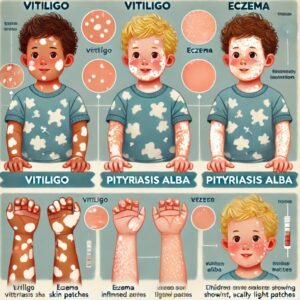
Vitiligo in children is a condition that causes white patches on the skin due to the loss of melanin, the pigment responsible for skin color. While vitiligo is not contagious, it can have a big emotional and social impact on kids. Parents often notice changes in skin appearance first, and the experience can be confusing or worrying. Understanding the causes, symptoms, treatments, and daily care options can help parents support their child effectively and promote both skin health and emotional well-being.
What Is Vitiligo in Children?
Vitiligo is a skin disorder where pigment-producing cells (melanocytes) are destroyed or stop functioning properly. This leads to smooth, white patches that can appear anywhere on the body. Children may notice these patches on the hands, feet, face, elbows, knees, or around the eyes and mouth.
The condition can start gradually, and sometimes one patch appears before more develop over weeks or months. Some children may feel self-conscious about their appearance, and it’s important for parents and caregivers to offer reassurance and understanding.
Causes of Vitiligo in Children
The exact cause of vitiligo is not fully understood, but several factors can contribute:
- Immune System Abnormalities – In many cases, vitiligo occurs due to autoimmune reactions, where the body mistakenly attacks pigment-producing cells.
- Genetic Factors – Children with a family history of vitiligo or other autoimmune conditions have a higher risk.
- Environmental Triggers – Certain chemicals, skin trauma, or prolonged sun exposure may trigger or worsen vitiligo patches.
- Psychological Stress – Emotional stress or anxiety can influence the development and progression of vitiligo in children.
Parents should be aware that while these factors may contribute, vitiligo is not caused by poor hygiene or anything the child did wrong.
Symptoms of Vitiligo in Children
Vitiligo symptoms vary, but the most noticeable sign is the appearance of white patches on the skin:
- Smooth, non-itchy, painless white spots.
- Well-defined boundaries that may slowly expand.
- Can appear on one or multiple areas, sometimes symmetrically.
- Occasionally, hair within affected areas may turn white.
Some children may feel embarrassed or anxious about their appearance. Early recognition is important, as treatment can slow progression and improve skin appearance.
Diagnosis of Vitiligo in Children
A dermatologist or pediatrician usually diagnoses vitiligo based on several methods:
- Medical History – Reviewing family history and observing the pattern of skin changes.
- Physical Examination – Examining the white patches carefully.
- Wood’s Lamp Test – Ultraviolet light can highlight affected areas not visible to the naked eye.
- Blood Tests – Sometimes used to rule out other autoimmune conditions.
Accurate diagnosis helps rule out other causes of white patches, such as fungal infections or post-inflammatory hypopigmentation.
Treatment Options for Vitiligo in Children
Although there is no definitive cure, several treatments help manage vitiligo and support repigmentation:
- Topical Medications – Steroid creams or calcineurin inhibitors can stimulate pigment restoration.
- Phototherapy – Controlled UV light therapy encourages melanocytes to recover.
- Oral Medications – In selected cases, doctors may prescribe immune-modulating drugs.
- Psychological Support – Counseling and peer support help children cope emotionally, boost confidence, and reduce anxiety.
Combination therapy, ongoing monitoring, and realistic expectations are key. Some children may respond well to treatment, while others may see slower changes.
Daily Care and Lifestyle Tips

Neutrogena Pure & Free Baby Mineral Sunscreen Stick with Broad Spectrum SPF 50
Parents can support children’s skin health and emotional well-being with practical steps:
- Sun Protection – Apply broad-spectrum sunscreen daily on exposed skin to prevent further pigment loss.
- Balanced Diet – Include foods rich in vitamins C, E, zinc, and antioxidants for overall skin health.
- Emotional Support – Encourage children to share feelings, participate in social activities, and connect with supportive peers.
- Regular Check-ups – Monitor progress with healthcare providers to adjust treatment and address concerns.
- Cosmetic Options – Some parents use makeup, self-tanners, or camouflage creams for special events, which can help children feel confident.

Suave Aluminum-Free Deodorant, Kids & Teen Girls
Helping children develop a healthy mindset around their skin condition is just as important as medical management.
Social and Emotional Considerations
Children with vitiligo may face teasing, bullying, or self-consciousness. Parents and teachers can help by:
- Talking openly about the condition in a supportive manner.
- Encouraging positive self-image and resilience.
- Explaining vitiligo to classmates or friends if appropriate.
- Seeking support groups or counseling to help children express emotions.
Emotional well-being is a major factor in managing vitiligo. Children who feel understood are more likely to follow treatment plans and stay confident in social situations.
Frequently Asked Questions (FAQ)
Q1: Is vitiligo contagious?
A1: No, vitiligo is not contagious and cannot spread between children.
Q2: Can stress worsen vitiligo in kids?
A2: Yes, psychological stress can influence progression, so emotional support is important.
Q3: How can parents protect their child’s skin?
A3: Use sunscreen with SPF 30+ or higher, cover exposed areas, and avoid harsh chemicals.
Q4: Can diet help manage vitiligo?
A4: A healthy diet with vitamins C, E, zinc, and antioxidants supports skin health but does not cure vitiligo.
Q5: Is vitiligo permanent?
A5: Vitiligo is lifelong, but early treatment and careful management can improve skin appearance and slow progression.
Q6: When should I see a dermatologist?
A6: Any new white patches or rapid spread should prompt consultation to confirm diagnosis and discuss treatment options.
References
- National Institute of Arthritis and Musculoskeletal and Skin Diseases (NIAMS) – https://www.niams.nih.gov
- American Academy of Dermatology (AAD) – https://www.aad.org
- Mayo Clinic – https://www.mayoclinic.org
- Vitiligo Research Foundation – https://www.vrfoundation.org
- National Vitiligo Foundation – https://www.nvfi.org
- British Association of Dermatologists – https://www.bad.org.uk