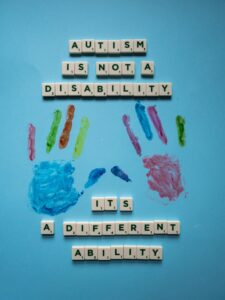
Every year on April 2nd, the world comes together for World Autism Awareness Day. It's a day to show love and support for kids with autism, often called "star children." These children may see the world a bit differently, but they deserve the same care, understanding, and kindness as anyone else.
What Is Autism?
Autism Spectrum Disorder (ASD) is a condition that affects how a child communicates, interacts, and behaves. It’s called a spectrum because every child with autism is different. Some might have trouble talking, while others may not look people in the eye or might repeat certain actions over and over.
Here are a few common signs of autism:
- Not responding when their name is called
- Avoiding eye contact
- Repeating the same words or actions
- Playing alone more often than with others
- Getting upset by changes in routine
For example, 3-year-old Liam might not talk much or answer when you call him. Five-year-old Emma might play with the same toy the same way every day. These are just examples. Every child with autism has their own strengths and struggles.
How Common Is Autism?
Recent studies show that about 1 in 36 children in the U.S. is diagnosed with autism. That number has gone up from 1 in 44 a few years ago. Boys are about four times more likely to be diagnosed than girls.
Globally, about 1% of all children are believed to be on the autism spectrum. That means around 20 million children worldwide have autism.
Why Early Signs Matter
Catching signs early makes a big difference. Early intervention means getting help as soon as possible—usually before age 3. Kids' brains grow fast at this age, so this is the best time to teach them important skills.
Early signs usually show up between 12 and 24 months, but some children might show signs even earlier or later. Parents should trust their gut if something seems off.
Some early signs to watch for:
- No smiling or warm expressions by 6 months
- No back-and-forth sounds or gestures by 12 months
- No words by 16 months
- No meaningful two-word phrases by 24 months
- Loss of speech or social skills at any age
What Causes Autism?
No one knows exactly what causes autism, but it's likely a mix of genetic and environmental factors.
- It tends to run in families
- It’s not caused by vaccines (this is a common myth)
- Premature birth and older parental age may raise risk
Autism is not caused by bad parenting or emotional trauma.
Types of Therapy That Help Kids With Autism
There are many ways to help children with autism grow and learn. The right approach depends on each child’s needs.
1. Behavior Therapy (ABA)
Applied Behavior Analysis (ABA) is one of the most well-known autism therapies. It teaches children skills step-by-step using rewards and positive feedback.
2. Speech Therapy
Helps kids with autism speak more clearly, understand others, and use gestures or pictures to communicate.
3. Occupational Therapy
Improves skills like eating, dressing, writing, or playing. It can also help with sensory issues, like being too sensitive to sound or touch.
4. Social Skills Training
Teaches kids how to make friends, take turns, and understand body language.
5. Parent Training and Support
Parents learn how to handle tough behaviors, use therapy strategies at home, and support their child’s development every day.
How Parents Can Help at Home
You don’t need to be a therapist to help your child. Here are simple things parents can do:
- Talk and read to your child every day
- Keep routines and structure at home
- Use pictures or simple words to explain things
- Praise good behavior right away
- Give your child time to respond when you ask a question
- Stay patient, calm, and loving
Support in School
Kids with autism can do well in school with the right support. Schools can create Individualized Education Plans (IEPs) that fit your child’s unique needs. Special education teachers, speech therapists, and aides can be part of your child’s team.
Building an Inclusive Community
The more we understand autism, the more supportive we can be. That means:
- Accepting kids who act or speak differently
- Teaching other kids to be kind and patient
- Making public spaces like parks, classrooms, and stores more sensory-friendly
Key Takeaways
- Autism is a lifelong condition that affects communication and behavior.
- Early signs often appear by age 2, and early help leads to better outcomes.
- Therapies like ABA, speech, and occupational therapy are effective.
- Parents play a huge role in supporting their child's growth.
- With understanding and support, children with autism can thrive.
FAQs About Autism in Children
- What are early signs of autism in toddlers?
Some early signs include no eye contact, not responding to name, delayed speech, and repetitive behaviors. - Can autism be diagnosed before age 3?
Yes. In many cases, autism can be reliably diagnosed by 18 to 24 months. - Does early intervention really help?
Yes. Studies show that kids who start therapy early often have better language, learning, and social skills later on. - Is autism more common in boys?
Yes. Boys are about four times more likely to be diagnosed than girls. - Can a child outgrow autism?
Autism is a lifelong condition, but with support, many kids improve a lot and live full, happy lives. - Is autism caused by vaccines?
No. Research from many trusted sources shows there is no link between vaccines and autism. - What should I do if I think my child has autism?
Talk to your child’s doctor. They can refer you to a specialist for testing and help you get support.
References
- Centers for Disease Control and Prevention (CDC) – Autism Spectrum Disorder
- Autism Speaks – Signs and Symptoms of Autism
- National Institute of Mental Health (NIMH) – Autism Spectrum Disorder
- World Health Organization (WHO) – Autism Spectrum Disorders
- American Academy of Pediatrics (AAP) – Guidelines on Autism Diagnosis and Treatment