Many parents ask this question in a worried voice. “Is TV bad?” “Is the iPad worse?” “Did I mess up by giving my child a tablet too early?” If you feel this way, you are not alone.
Screens are everywhere. They are in our living rooms, in our bags, and even in restaurants. It is almost impossible to raise a child today without screens. So the real question is not whether kids will see screens. The real question is which one causes more problems, and how we can manage them wisely.
Is TV Really That Bad?
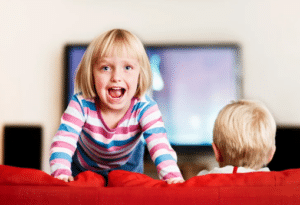
TV has been around for many years. Parents worried about it long before tablets existed. When children watch TV, they usually sit on a couch and look at a large screen from a distance. The content plays whether they touch it or not.
The good thing about TV is that it is less personal. It stays in one place. You cannot carry it everywhere. Parents can see what the child is watching. It is easier to control.
The downside is time. If a child watches TV for hours every day, it can affect sleep, exercise, and family time. The American Academy of Pediatrics, also known as the American Academy of Pediatrics, recommends limits on daily screen time, especially for young children. Too much passive watching can also slow language development in toddlers if no adult talks with them during the show.
But TV is usually watched from a safer distance. It is less intense than a small bright screen right in front of the eyes.
Why Is the iPad Different?
An iPad or tablet is very different from a TV. It is small. It is bright. And it is very close to the eyes. Children hold it in their hands. They tap, swipe, and scroll. It feels personal.
This makes it more powerful. And sometimes more addictive.
Tablets give fast rewards. A child touches the screen and something happens right away. Bright colors flash. Sounds play. Games give points and prizes. This fast feedback can make the brain want more and more.
Because tablets are portable, they go everywhere. Car rides. Bedrooms. Restaurants. Even under blankets at night. This makes it much harder for parents to control time.
That is why many experts believe tablets can lead to stronger screen habits than TV.
Which One Is Worse for Eyes?
Many parents worry about eyesight. They ask if screens cause myopia, also called nearsightedness.
The truth is not simple. Research suggests that long periods of near work and less outdoor time increase the risk of myopia. Looking at a small screen up close for hours is harder on the eyes than watching a TV across the room.
Tablets are usually held only 8 to 12 inches from the face. TV is often several feet away. That difference matters.
But here is something important. The real problem is not just the device. It is how long the child uses it and how little time they spend outside. Outdoor light helps protect children’s eyes.
So in terms of eye strain, the iPad often has a higher risk if used for long periods.
What About Brain Development?
This is where many parents feel scared. They wonder if screens damage the brain.
Young children learn best from real people. They need eye contact. They need conversation. They need play. When a screen replaces these things for many hours, development can slow down.
TV is mostly passive. The child watches. The brain does not have to work very hard. Tablets, especially games, can be very stimulating. They may improve certain skills like reaction speed. But they can also reduce attention span if the child gets used to fast changes all the time.
Studies show that heavy screen time in early childhood is linked to attention problems later. But this does not mean every child who uses a tablet will have ADHD. It means balance is important.
Screens are tools. They are not babysitters.
Sleep Problems and Screens
Sleep is one of the biggest hidden issues.
Both TV and tablets can hurt sleep. But tablets are usually worse because children often use them close to bedtime. The blue light from screens can reduce melatonin, the hormone that helps us feel sleepy.
When a child watches TV in the living room, parents often turn it off before bed. But with a tablet in the bedroom, it is easier to keep watching secretly.
Poor sleep can lead to mood swings, trouble focusing, slower growth, and weaker immunity.
So if we compare TV and iPad, bedtime tablet use is often the bigger problem.
Addiction Risk: Which Hooks Kids More?
This is the big question.
TV shows can be engaging. But tablets are interactive. Games, short videos, and apps are designed to keep attention. Some apps use reward systems that make children want just one more round.
Because of this design, tablets may have a higher risk of addictive patterns.
Signs of unhealthy screen habits include big meltdowns when the device is taken away, sneaking screen time, losing interest in toys or outdoor play, and thinking about the device all the time.
These signs appear more often with personal devices like tablets than shared TVs.
Are Educational Apps Better Than TV?
Many parents feel less guilty when their child uses educational apps. Some programs are helpful. Some shows like Sesame Street have shown positive effects when watched in moderation and with adult involvement.
But here is the key idea. Content matters. And connection matters more.
If a child watches a show and a parent talks about it, asks questions, and laughs together, learning improves. If a child uses an app alone for hours, even if it is labeled educational, benefits are smaller.
Technology does not replace human interaction.
So, Which Is Worse?
If we look at risk level alone, tablets usually create more problems than TV. They are closer to the eyes. More stimulating. More portable. Harder to control. More likely to affect sleep.
But this does not mean TV is harmless. Too much of any screen is harmful.
The real issue is not TV versus iPad. It is unlimited screen time versus healthy limits.
What Should Parents Do?
Instead of asking which device is worse, ask these questions.
How many hours per day?
Is it before bedtime?
Is my child still playing outside?
Are we still talking and reading together?
Simple rules can help.
No screens during meals.
No screens one hour before bed.
Keep devices out of bedrooms.
Encourage at least one hour of outdoor play daily.
Watch or play together sometimes.
Balance is the goal. Not perfection.
You are not a bad parent if your child watches TV or uses an iPad. Guilt does not help. Clear rules and warm guidance do.

Polly and the Screen Time Overload (TGC Kids) Hardcover – Picture Book, May 10, 2022
FAQ Section
Q1: Is iPad worse than TV for toddlers?
A1: For toddlers, tablets can be more harmful because they are used very close to the eyes and are more stimulating. Both TV and iPad should be limited, especially under age two.
Q2: Does TV cause ADHD in children?
A2: TV does not directly cause ADHD. However, heavy screen time in early childhood is linked to attention problems later. Balance and limits are important.
Q3: How much screen time is safe for kids?
A3: The American Academy of Pediatrics recommends avoiding screens under 18 to 24 months except video chat. For ages 2 to 5, about one hour per day of high-quality content is suggested.
Q4: Are educational apps better than TV?
A4: Some educational apps can be helpful, but they work best when parents are involved. Screens should not replace reading, talking, and real-life play.
Q5: Should parents ban screens completely?
A5: A full ban can cause power struggles. Clear rules, time limits, and keeping devices out of bedrooms usually work better than complete prohibition.