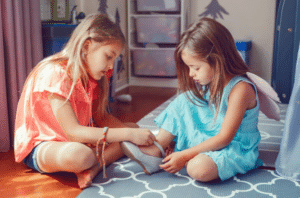
Watching your child grow can feel like magic—and sometimes a little scary! One minute they’re tiny newborns, and before you know it, they’re running around, talking, and heading to school. Keeping an eye on their growth and milestones can help you know if they’re on track—and give you peace of mind.
Every child grows at their own pace, but most kids go through five main stages: newborn, infant, toddler, preschool, and school-age. Let’s break them down and see what to expect along the way.
Stage 1: Newborn (0–2 Months)
Congratulations on your new little one! Even though your baby is brand-new to the world, you’ll see some exciting changes fast.
During these first couple of months, your newborn will start reacting to lights, sounds, and faces. You might notice:
- Making small sounds like coos or gurgles
- “Social smiling” at you or familiar faces
- Moving arms and legs more purposefully
- Pushing up on their tummy and lifting their head for a few seconds
By around two months, babies may turn their heads toward sounds, start babbling, and enjoy interaction with you. These little moments are huge milestones and show that your baby is learning about the world around them.
Stage 2: Infant (3–12 Months)
After the newborn months, your baby enters the infant stage. Growth picks up, and their movement and communication skills take off.
Milestones to watch for:
- 4 months: Copies sounds and gestures, smiles at others, reaches for toys, pushes down with legs on surfaces
- 6 months: Rolls over, sits without support, bounces when standing with help, begins responding to their name, teeth may appear
- 9 months: Crawls, pulls to stand, points at interesting objects, plays simple games like peek-a-boo
Infants are curious little explorers. Encouraging tummy time, talking, and playing helps them develop both physically and mentally.
Stage 3: Toddler (1–3 Years)
The toddler years are full of personality, energy, and first words. You’ll notice them walking, running, and experimenting with speech.
Milestones to watch for:
- 12 months: Standing with support, taking first steps, waving or saying simple words
- 18 months: Using several words, following simple instructions, feeding themselves, playing with toys
- 2 years: Talking in short phrases, recognizing emotions, beginning to run, playing with multiple toys
Toddlers are learning independence, so give them chances to try things on their own. Let them explore, but keep it safe, and celebrate every small success—they’re learning fast!
Stage 4: Preschooler (3–5 Years)
By age three, kids are ready for more structured play and even preschool. Their imagination and social skills grow quickly.
Milestones to watch for:
- 3 years: Wants to play with other children, has simple conversations, understands concepts like “mine” or “where,” starts dressing themselves
- 4 years: Pretend play, recognizes and avoids danger, comforts friends, sings and recites stories, potty trained
- 5 years: Talks clearly, follows rules, counts and recites the alphabet, does simple chores, begins writing letters or their name
Preschoolers are practicing skills they’ll use for school. Encouraging creative play, reading, and social interaction will help them thrive.

Tummy Time/Baby Mirror Toys, Black and White High Contrast Tabletop Mount Baby Newborn Toys 0 3 6 Months Brain Development
Stage 5: School-Age (6–17 Years)
School-age children become more independent, responsible, and curious. They’re learning academic skills, forming friendships, and discovering their personalities.
Around ages 12–13, puberty may start. Kids will experience:
- Physical changes (like voice changes, growth spurts, or menstruation)
- Strong emotions and mood swings
- A growing desire for independence and personal interests
At this stage, support your child by listening, guiding, and encouraging hobbies and friendships. They’ll be learning more about themselves and the world every day.
What to Do if You’re Concerned
Milestones are a helpful guide, but every child develops at their own pace. Some may reach skills earlier, some later—it’s normal.
You should reach out to a pediatrician or child development specialist if:
- Your child consistently misses multiple milestones
- They show limited interest in interacting with others
- There are big gaps in speech, movement, or social skills
Early intervention can make a huge difference. Programs like Early Intervention in many states help assess children under 3 years and provide support in learning, movement, and social skills.
Key Points to Takeaway
Keeping track of your child’s milestones helps you understand their growth and support them along the way. Celebrate achievements, notice patterns, and don’t panic if your child moves a little slower or faster than average. With love, patience, and guidance, your child can grow into a happy, confident, and healthy individual.