One minute she is laughing at something funny. A little later, she is upset because someone said something she did not like. Then she goes to her room, closes the door, and does not want to talk.
For parents, this can be confusing.
Sometimes it feels like the daughter who used to be easygoing has suddenly become very sensitive, easily annoyed, or impossible to please. A small problem can seem huge. A simple question can turn into an argument. And just when everyone thinks the bad mood is here to stay, she is cheerful again.
So, why does this happen?
The short answer is that teen mood swings can come from many things at the same time. Puberty and changing hormones are part of the picture, but they are not the whole story. Sleep, school pressure, friendships, body changes, family conflict, social media, stress, and developing emotional skills can all affect a teen girl's mood.
Some ups and downs are completely normal. But big or lasting changes should not simply be dismissed as "just teenage hormones."
Mood Swings Can Be Normal During the Teen Years
Adolescence is a period of enormous change. A girl is dealing with a changing body, new social expectations, greater independence, stronger emotions, and a growing sense of who she is.
That is a lot to handle at once.
The American Psychological Association notes that many adolescents can move between happy and sad moods quite quickly. Physical changes, hormones, new relationships, and the way teenagers experience important events can all play a role.
A teenager may also experience an event much more intensely than an adult expects. Not making a sports team, getting a disappointing grade, or being left out by a friend may seem like a small problem to a parent. To the teenager, it may feel like a very big deal.
That does not mean she is being dramatic on purpose.
Her emotions are real, even when the situation looks small from the outside.
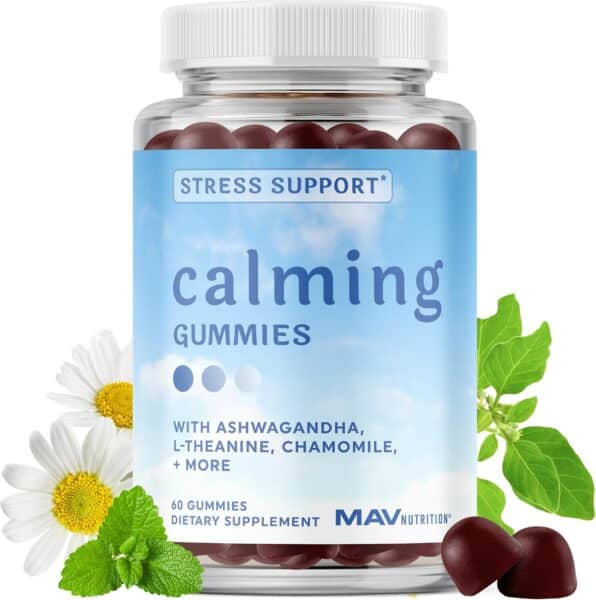
Calming Ashwagandha Gummies for Teens, Stress Relief Supplement + Theanine
Puberty and Hormones Can Affect Mood
Hormones are an obvious part of puberty, and they can influence mood.
As girls go through puberty, the body produces increasing amounts of sex hormones such as estrogen. These hormones are important for physical development, but hormonal changes can also affect how a girl feels. The American Academy of Pediatrics notes that hormone changes during puberty can contribute to mood swings.
This is especially noticeable around the time of the menstrual cycle for some girls.
A teen may feel more irritable, emotional, tired, or sensitive before her period. Some girls notice the same pattern month after month. Others barely notice a connection.
It is worth paying attention to the pattern rather than blaming every difficult day on hormones.
"She's moody because she's a teenager" may be an easy explanation, but it is not always the right one.
Her Period May Be Part of the Pattern
For some teen girls, mood changes happen at certain points in the menstrual cycle.
MedlinePlus notes that girls may feel irritable, sad, less confident, or have trouble sleeping before their periods. These changes are linked with hormonal shifts around menstruation.
A simple calendar can sometimes help parents and teens notice whether there is a pattern. If mood changes repeatedly appear before a period and improve afterward, that information can be useful when talking with a health care provider.
However, severe mood symptoms should not automatically be blamed on PMS. If a girl's emotional changes are intense, interfere with school or relationships, or happen throughout the month, something else may be going on.
Lack of Sleep Can Make Everything Feel Worse
This one is easy to underestimate.
A teenager who sleeps five or six hours may still get out of bed, go to school, finish homework, and appear to be functioning. But she may have much less patience than usual.
She may snap at her parents. She may cry over something that normally would not bother her. She may struggle to focus. She may feel overwhelmed by tasks that used to seem manageable.
Teenagers ages 13 to 18 generally need 8 to 10 hours of sleep each night. Not getting enough sleep is linked with problems in mood, attention, behavior, and mental health.
And there is a frustrating part of this: puberty itself can shift a teenager's natural sleep schedule later. So a girl may not feel sleepy early at night, even though she has to get up early for school.
Late-night homework, phones, social media, sports, and busy schedules can make the problem even worse.
Sometimes the "mood swing problem" is partly a sleep problem.
School Pressure Can Spill Into Her Mood
Teen girls often have a lot on their plates.
There may be tests, homework, sports, music, clubs, college worries, and pressure to perform well. Some girls put even more pressure on themselves than their parents do.
A teen who looks successful may actually be carrying a lot of stress.
She may become frustrated when she gets a B instead of an A. She may panic when she has several assignments due at once. She may spend hours worrying about a test and then become angry when someone interrupts her studying.
Stress can show up as irritability, crying, withdrawal, sleep changes, headaches, stomachaches, and changes in eating habits. The American Psychological Association points out that negative changes in behavior can be important clues that a young person is struggling with too much stress.
This is why "She's doing well in school" does not always mean "She's doing well emotionally."
Friendships Can Feel Extremely Important
Friendship problems can hit teenagers hard.
A friend stops texting. Someone leaves her out of a group chat. Two girls have an argument. A best friend suddenly spends more time with someone else.
To an adult, these things may seem like ordinary teenage drama. To the girl living through them, they can feel deeply personal.
Teenagers are becoming more independent from their parents and often place greater importance on friendships and peer relationships. MedlinePlus lists increased peer influence as a normal part of adolescent development.
That means a friendship problem can affect the whole day. A girl may come home quiet, snap at her family, cry in her room, and then seem perfectly fine the next morning.
The emotional change may have started with something that happened at school that parents never saw.
Social Media Can Keep the Stress Going
Friendship problems used to end when a teenager came home from school.
Now they can follow her into the bedroom.
Messages, group chats, photos, comments, likes, and social media posts can keep social pressure going late into the evening. A teen may wonder why someone viewed her story but did not reply. She may compare herself with other girls. She may feel left out when she sees pictures from an event she was not invited to.
Even when nothing obviously bad happens, constant comparison can be tiring.
Social media is not automatically harmful, and many teens use it in positive ways. The more useful question is how it affects a particular girl. If she regularly feels worse, more worried, angry, or insecure after using social media, that pattern deserves attention.
The American Academy of Pediatrics recommends talking with teens about how digital media affects their mood, relationships, sleep, and daily life rather than focusing only on screen-time numbers.
Body Changes Can Affect Confidence
Puberty changes a girl's body quickly.
Breasts develop. Hips become wider. Weight naturally changes. Acne may appear. Body hair grows. Periods begin. Clothes may suddenly fit differently.
Even normal changes can make a girl feel uncomfortable in her own skin.
She may compare herself with classmates or girls online. She may worry that she is developing too early or too late. She may suddenly become very sensitive about comments about her appearance.
MedlinePlus explains that puberty involves major physical, emotional, and social changes, including increased concern about body image and greater peer influence.
A parent may see a girl who is "overreacting" to a small comment. But the comment may have touched a much deeper insecurity.
Sometimes the kindest response is not to argue about whether she looks fine. It is to acknowledge that body changes can feel uncomfortable and that she does not have to figure them out alone.
She Is Also Learning How to Handle Big Feelings
Teenagers are not simply smaller adults.
Their ability to understand emotions, control impulses, think ahead, and put problems into perspective is still developing.
That is one reason a teen can understand something logically and still react emotionally.
She may know that one bad grade will not ruin her future, yet still cry when she sees the grade. She may know that her friend probably did not mean to hurt her, but still feel deeply rejected.
Emotional regulation takes practice.
A teenager gradually learns how to pause, name what she feels, consider another person's point of view, and decide what to do next. Parents can help with that process, but it takes time.
The goal is not to prevent every strong emotion. The goal is to help a teen become better at handling those emotions.
Hunger and Skipping Meals Can Affect Her Mood
A busy teenager may skip breakfast, eat a quick lunch, and then spend the afternoon running from class to practice.
By dinner, she may be exhausted and extremely irritable.
Food is not a magic answer for mood swings, of course. But regular meals matter for growing teenagers. Hunger, an unbalanced diet, or simply going too long without eating can make it harder to concentrate and manage emotions.
Stress can also change eating patterns. The American Psychological Association has reported that teens may eat more or less when stressed and may skip meals because of stress.
Instead of treating every emotional moment as a behavior problem, it can be useful to ask a few basic questions:
Did she sleep enough?
Has she eaten?
Has she been under unusual pressure?
Did something happen at school?
Sometimes the answer is surprisingly simple.
Family Conflict Can Add Fuel to Mood Swings
Teenagers naturally want more independence.
Parents, meanwhile, still need to set limits.
That combination can create plenty of arguments.
Curfews, phones, homework, clothing, friends, dating, chores, and schoolwork can all become areas of conflict. A girl may feel that her parents are controlling her. Parents may feel that she has suddenly become disrespectful.
Neither side is necessarily trying to make family life difficult.
Adolescence is partly about learning to become more independent while still needing support from parents. The American Psychological Association notes that the teen years often bring conflict around independence, friends, school, appearance, and family rules.
Parents do not have to agree with every teenage decision. But a calm relationship makes it easier for a teen to come back and talk when something serious is happening.
Anxiety Can Look Like Moodiness
An anxious teen may not always say, "I'm anxious."
She may become irritable instead.
She may worry about school, friendships, health, appearance, or the future. She may ask the same questions repeatedly. She may avoid activities. She may complain about stomachaches or headaches. She may have trouble sleeping.
NIMH notes that anxiety and other mental health concerns in young people can show up through worry, sleep changes, physical complaints, social withdrawal, academic struggles, and other changes in behavior.
So when a teenager suddenly becomes much more irritable, it is worth asking what might be underneath the irritation.
Anger is sometimes the emotion people see.
Worry may be the emotion underneath it.
Depression Can Also Look Like Irritability
Depression in teenagers does not always look like obvious sadness.
A depressed teen may be angry, easily frustrated, withdrawn, tired, or uninterested in things she used to enjoy. Her sleep or appetite may change. She may struggle at school or stop spending time with friends.
NIMH specifically notes that teenagers with depression may be irritable rather than simply sad.
This is one of the most important reasons not to dismiss major mood changes as "normal teenage behavior."
Normal moodiness tends to come and go. A mental health problem is more likely when changes persist, become intense, or interfere with everyday life.
When Are Mood Swings More Than Normal?
There is no perfect number of bad days that tells a parent when something is wrong.
The bigger issue is the pattern and impact.
A teen may need more support if mood changes are:
- Very intense or happening almost every day
- Lasting for weeks rather than passing
- Getting worse over time
- Interfering with school
- Affecting friendships
- Causing major sleep or eating changes
- Leading her to stop activities she once enjoyed
- Causing frequent unexplained physical complaints
- Making family life extremely difficult
- Connected with hopelessness or feeling worthless
- Associated with self-harm or thoughts of suicide
The AAP recommends paying attention to changes from a teenager's normal behavior, including mood swings, irritability, withdrawal, sleep or eating changes, loss of interest, school struggles, and signs of self-harm.
One symptom does not automatically mean there is a mental health disorder. But several changes happening together deserve attention.
What Parents Should Not Do
It can be tempting to say:
"You're just hormonal."
"Stop being so dramatic."
"You're overreacting."
"Nothing is wrong."
These comments may end the argument for a moment, but they usually do not solve the problem.
A teenager may stop sharing what is really going on because she expects to be dismissed.
Another common mistake is trying to fix everything immediately. Parents may start giving advice before the teen has even finished explaining the problem.
Sometimes she needs a solution.
Sometimes she needs someone to listen first.
A simple response such as, "That sounds like a really rough day. Do you want to talk about what happened?" can open the door much better than a lecture.
What Can Parents Do About Teen Mood Swings?
Parents cannot stop every mood swing, and they should not try to.
The goal is to help a teenager build habits and skills that make strong emotions easier to handle.
A few basics can make a real difference:
- Encourage 8 to 10 hours of sleep for teens.
- Keep regular meals and snacks available.
- Make room for daily physical activity.
- Avoid overloading the schedule.
- Give teenagers some private time while staying connected.
- Set clear family rules without turning every disagreement into a battle.
- Talk about social media and how it affects mood.
- Make time for conversations that are not about grades or chores.
- Help her put feelings into words.
- Take persistent changes seriously.
Sleep deserves special attention. CDC guidance recommends 8 to 10 hours for teenagers ages 13 to 18, and research has linked adequate sleep with better emotional well-being.
And perhaps most importantly, parents should try to stay curious.
Instead of only asking, "Why are you acting like this?" try asking, "What has been hard lately?"
That question can lead somewhere useful.
Keep an Eye on the Bigger Picture
Mood swings are often discussed as if there is one simple explanation: hormones.
Hormones do matter. But a teenager is more than her hormones.
She is also a student dealing with school pressure. A friend trying to fit in. A daughter becoming more independent. A girl adjusting to a changing body. Someone figuring out relationships, identity, expectations, and the future.
All of that can show up as a short temper or a sudden tearful evening.
Parents do not need to analyze every mood change. That would be exhausting for everyone.
Instead, notice the bigger pattern.
Is she still enjoying life? Is she sleeping? Is she eating normally? Does she have friends she enjoys being around? Can she recover after a difficult day? Is she still able to go to school and take part in normal activities?
Those questions often tell parents more than one dramatic argument ever could.
When to Talk With a Doctor or Mental Health Professional
If a teen's mood changes are persistent, severe, or affecting everyday life, it is reasonable to bring them up with her pediatrician or another qualified health professional.
There may be a mental health concern, but there may also be a physical issue, sleep problem, medication effect, menstrual-related pattern, or another source of stress. A professional can help sort through the possibilities rather than guessing.
Parents do not need to wait until a teenager is in crisis before asking for help. Early support can prevent a problem from becoming harder to manage.
And if a teen talks about suicide, self-harm, or wanting to die, that should always be taken seriously. In the United States, parents can call or text 988 for the Suicide & Crisis Lifeline. If there is immediate danger, call 911 or go to the nearest emergency department. NIMH advises getting immediate help when a young person is at risk of harming herself or others.
The Real Question Is Not "Why Is She So Moody?"
It is easy to focus on the behavior.
Why is she angry?
Why is she crying?
Why does she keep changing her mind?
Why can't she just calm down?
But a more helpful question is often hiding underneath:
"What is this mood trying to tell us?"
Sometimes the answer is simply puberty. Sometimes it is lack of sleep or a stressful week at school. Sometimes it is a friendship problem that feels enormous right now.
And sometimes, the mood change is a sign that a teenager needs more support.
The good news is that parents do not have to get every response right. A calm home, honest conversations, healthy routines, and a willingness to take concerns seriously can give a teen something very valuable during these years: a safe place to come back to.
FAQ
Are mood swings normal in teenage girls?
Some mood changes are a normal part of adolescence. Puberty brings physical, emotional, and social changes, and many teenagers experience ups and downs. The concern is when mood changes become unusually intense, last for a long time, or interfere with school, friendships, sleep, or everyday life.
Can puberty cause mood swings in girls?
Yes. Hormonal changes during puberty can affect mood. Girls may also experience emotional changes around their menstrual periods. However, not every mood problem is caused by hormones, so persistent or severe changes should not automatically be blamed on puberty.
Why is my teen girl suddenly so angry?
Irritability can be related to normal adolescence, stress, lack of sleep, friendship problems, school pressure, anxiety, depression, or other concerns. Look for other changes happening at the same time, such as withdrawal, poor sleep, loss of interest, or falling grades.
Can lack of sleep cause mood swings in teenagers?
Yes. Teens need about 8 to 10 hours of sleep each night. Too little sleep can affect mood, concentration, behavior, and emotional control.