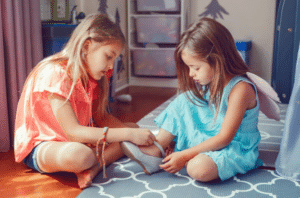
Many parents spend a lot of time teaching children to be kind.
They remind them to share, take turns, include others, and use polite words. These are important lessons. Kindness helps children build friendships and become caring people.
But there is another skill that deserves just as much attention. Surprisingly, it is often overlooked.
Children also need to know how to protect their own space, feelings, and needs. In other words, they need healthy boundaries.
Without boundaries, children may struggle to stand up for themselves. They may feel pressured by friends, tolerate behavior that makes them uncomfortable, or believe they must always put other people's needs before their own.
Healthy boundaries are not about being selfish or rude. They are about understanding where one person ends and another person begins. This skill helps children stay safe, develop confidence, and build stronger relationships throughout life.

Boundaries Workbook for Kids: Fun, Educational & Age-Appropriate Lessons About Personal Safety
What Are Healthy Boundaries?
The word "boundaries" can sound complicated, but the idea is actually simple.
A boundary is a limit that helps people feel safe, comfortable, and respected.
Adults use boundaries all the time, even if they do not think about them. Someone may decide not to answer work emails late at night. Another person may choose not to discuss certain personal topics.
Children need boundaries too.
For example, a child may not want a friend to take their belongings without asking. They may not like rough play. They may need quiet time after a stressful day.
Healthy boundaries help children communicate these needs in respectful ways.
The goal is not controlling others. The goal is teaching children to communicate what feels acceptable and what does not.
Why Some Children Struggle with Boundaries
Many children naturally want approval.
They want friends to like them. They want adults to be happy with them. They want to avoid conflict whenever possible.
Because of this, some children say yes when they really want to say no.
A child may lend a favorite toy even though they feel uncomfortable. Another child may go along with a game they dislike because they do not want to disappoint friends.
At first glance, these situations seem small. Yet over time, children can begin ignoring their own feelings in order to keep others happy.
That habit can follow them into adolescence and adulthood.
Teaching healthy boundaries early helps children understand that their feelings matter too.
Boundaries Help Children Stay Safe
One of the most important reasons to teach boundaries is safety.
Children who understand personal boundaries are often better prepared to recognize uncomfortable situations.
They know they can speak up when something feels wrong.
They know they can seek help from trusted adults.
They know they have the right to say no when someone crosses a line.
This applies to physical boundaries, emotional boundaries, and social boundaries.
A child who understands boundaries is more likely to recognize unhealthy behavior and respond appropriately.
That knowledge provides an extra layer of protection as children grow more independent.
Teach Children That Their Feelings Matter
Children sometimes receive mixed messages.
They hear things like:
"Just be nice."
"Don't hurt anyone's feelings."
"Share with everyone."
While these messages are usually well intended, children may begin believing that other people's feelings are more important than their own.
That is not a healthy lesson.
Children need to know that kindness and self-respect can exist together.
A child can be caring while still expressing discomfort.
A child can be polite while still saying no.
A child can be generous while still protecting something important to them.
Helping children trust their own feelings is one of the foundations of healthy boundaries.
Teach Kids How to Say No
Many adults struggle to say no.
Interestingly, this difficulty often starts during childhood.
Children are sometimes taught obedience without being taught assertiveness.
As a result, saying no can feel uncomfortable.
The good news is that assertiveness is a skill that can be practiced.
Simple phrases can help:
• No, thank you.
• I don't want to do that.
• Please stop.
• I'm not comfortable with that.
• I'd rather do something else.
These responses are respectful, clear, and effective.
Children do not need lengthy explanations every time they set a boundary.
Sometimes a simple no is enough.
Respect Physical Boundaries
Physical boundaries are often the easiest for children to understand.
Most children know what personal space feels like.
They know when someone stands too close, grabs their belongings, or touches them in a way that feels uncomfortable.
Parents can help reinforce these lessons by respecting children's physical boundaries as well.
For example, forcing a child to hug relatives may send confusing messages.
Encouraging polite alternatives such as waving, smiling, or giving a high five allows children to practice consent in age-appropriate ways.
Children who experience respect for their own boundaries often become better at respecting the boundaries of others.
Emotional Boundaries Matter Too
Not all boundaries are physical.
Some involve emotions.
A child may have a friend who constantly criticizes them. Another may feel responsible for solving everyone else's problems.
Children sometimes absorb emotions that do not belong to them.
They may think it is their job to keep everyone happy.
It is worth reminding children that caring about others does not mean carrying everyone else's emotional burdens.
Healthy relationships allow people to support one another without losing themselves in the process.
Help Children Handle Peer Pressure
Peer pressure becomes more common as children get older.
Friends can influence decisions about behavior, activities, appearance, and social groups.
Many children know what they want to do. The challenge comes when they worry about being excluded or judged.
This is where boundaries become especially important.
Children who practice boundary skills are often better prepared to handle pressure from peers.
They understand that fitting in should never require sacrificing safety, values, or personal comfort.
Confidence grows when children realize they can disagree with others and still maintain friendships.
Model Healthy Boundaries at Home
Children pay attention to how adults handle boundaries.
If adults constantly ignore their own needs, children notice.
If adults say yes when they mean no, children notice that too.
On the other hand, children also observe healthy examples.
When adults communicate respectfully, protect their personal time, and maintain appropriate limits, children gain valuable lessons.
A parent saying, "I need a few minutes to finish this task before I can help," demonstrates a healthy boundary.
Small everyday examples often teach more than lengthy lectures.
What If a Child Feels Guilty?
This is very common.
Many children feel guilty after setting a boundary.
They worry that someone may be disappointed or upset.
That feeling does not necessarily mean they made the wrong choice.
In fact, guilt often appears when children are practicing a new skill.
Parents can reassure children that respectful boundaries sometimes make others unhappy, and that is okay.
The goal is not pleasing everyone all the time.
The goal is creating healthy, respectful relationships.
Once children understand this, boundary setting becomes easier.
Boundaries and Confidence Grow Together
Something interesting happens when children develop healthy boundaries.
Confidence often grows alongside them.
Children begin trusting themselves more.
They become less dependent on constant approval from others.
They feel more comfortable expressing opinions and making decisions.
This does not happen overnight.
Like any social skill, boundary setting requires practice, mistakes, and patience.
But over time, children start realizing something powerful: they are allowed to have needs, preferences, and limits.
That realization can change how they approach friendships, school, and future relationships.
Final Thoughts
Teaching children healthy boundaries is not about making them stubborn or difficult.
It is about helping them understand that respect works both ways.
Children should learn to respect other people's boundaries, but they should also know that their own boundaries matter.
A child who can say no, communicate discomfort, recognize unhealthy situations, and protect personal values carries important skills into adulthood.
The world will always contain pressure, disagreements, and challenging social situations. Healthy boundaries give children tools to navigate those experiences with confidence.
Perhaps one of the most valuable lessons a child can carry through life is this: being kind does not require sacrificing self-respect. The two can exist side by side, and when they do, relationships tend to become healthier and stronger.
FAQ
1. What are healthy boundaries for children?
Healthy boundaries are limits that help children feel safe, respected, and comfortable in relationships and social situations.
2. Why is it important to teach kids boundaries?
Boundaries help children stay safe, build confidence, resist peer pressure, and develop healthy relationships.
3. At what age can children start learning boundaries?
Children can begin learning simple boundary concepts as early as preschool through lessons about personal space, consent, and respectful communication.
4. How do I teach my child to say no?
Encourage simple, respectful phrases and practice common situations through role-playing and everyday conversations.
5. Are boundaries the same as being rude?
No. Healthy boundaries are respectful and clear. They communicate personal needs without hurting others.
6. How can boundaries help prevent bullying?
Children with strong boundary skills are often more likely to speak up, seek help, and recognize inappropriate behavior.
7. What should I do if my child struggles with peer pressure?
Help them practice assertive responses, discuss real-life scenarios, and remind them that true friends respect boundaries.
8. Can healthy boundaries improve self-esteem?
Yes. Children who feel comfortable expressing their needs often develop stronger confidence and self-respect.