A school backpack can look perfectly normal from the outside, but what is inside may tell a different story. Textbooks, notebooks, laptops, lunch boxes, water bottles, sports clothes, and random school supplies can add up surprisingly fast.
Many children also get used to carrying a heavy bag. They may not complain every day. Instead, parents might notice small changes first: a child leaning forward while walking, pulling one shoulder up, dropping the backpack on the floor with a big sigh, or asking someone else to carry it.
A heavy backpack does not automatically cause a serious health problem. Still, carrying more weight than a child can comfortably manage may lead to temporary pain, muscle strain, tired shoulders, or poor posture. The most useful approach is simple: watch how your child looks and feels while carrying the backpack, rather than focusing only on the bag itself.
Here are some common signs that a child’s backpack may be too heavy.
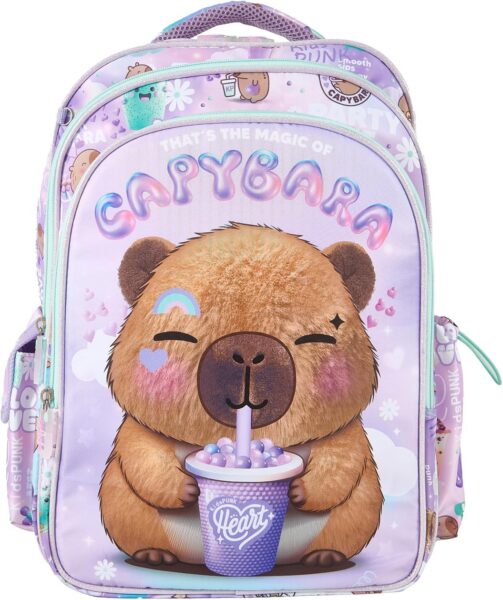
KidsPUNK Backpack for Girls Elementary
1. Your Child Leans Forward While Walking
One of the easiest things to notice is a change in posture.
If a backpack is very heavy, the child may lean forward to balance the weight behind the body. The heavier the bag feels, the more the body may try to compensate.
This can look like:
- Leaning forward from the waist
- Hunching the shoulders
- Walking with the head pushed forward
- Taking unusually small or awkward steps
Children may not even realize they are doing this. Their bodies are simply trying to stay balanced.
A backpack should not force a child to walk in a completely different way. If posture changes as soon as the bag goes on, it is worth checking the weight and fit.
2. Your Child Complains About Shoulder, Neck, or Back Pain
Pain is one of the clearest signs that something needs attention.
Some children may say their shoulders hurt after school. Others may complain about neck pain, an aching upper back, or soreness around the lower back.
Parents sometimes hear comments like:
“My shoulders are tired.”
“My back hurts when I get home.”
“This bag is so heavy!”
These complaints should not always be brushed off as normal school life. A child may have pain for many reasons, and a backpack is only one possible cause. But if the pain often appears after carrying the backpack and improves when the child is not carrying it, the bag deserves a closer look.
Ongoing or severe pain should be discussed with a healthcare professional, especially if it affects sleep, sports, walking, or normal daily activities.
3. Your Child Has Red Marks on the Shoulders
Take a quick look at your child’s shoulders after the backpack comes off.
Deep red marks, dents, or sore spots may mean that the straps are putting too much pressure on the shoulders. This can happen when the backpack is too heavy, but it can also happen when the straps are too narrow or adjusted incorrectly.
Some children may also complain that the straps dig into their skin.
Wide, padded shoulder straps can help spread pressure more evenly. The backpack should fit close to the body rather than hanging far down the back.
A temporary light mark is not necessarily a major problem. However, deep marks that happen often are a good reason to adjust the backpack or reduce what is inside.
4. Your Child Carries the Backpack on One Shoulder
This is extremely common, especially with older children and teenagers. It may look casual or convenient, but carrying a heavy backpack on one shoulder puts most of the weight on one side of the body.
Over time, the child may raise one shoulder to keep the bag from sliding off. This can create uneven pressure and make the muscles on one side work harder.
A child who constantly refuses to use both straps may also be telling you something important: the backpack may feel uncomfortable.
The best habit is to use both shoulder straps. If the backpack has a chest strap, it may help keep the bag stable. However, children should still be able to breathe and move comfortably.
5. Your Child Struggles to Put the Backpack On
Watch what happens when your child picks up the backpack.
Does the child struggle to lift it from the floor? Does the child need to swing it onto the back? Does the bag look difficult to control?
A backpack should not feel like lifting a heavy piece of luggage.
If a younger child needs help putting on the backpack every morning, the bag may contain too much weight. The problem may also be that the backpack itself is unnecessarily heavy before anything is placed inside.
This is why choosing a lightweight backpack can make a real difference. A heavy backpack filled with school supplies becomes even heavier.
6. Your Child Looks Tired After Carrying It
Children can be energetic, but carrying a heavy load every day can still be tiring.
Some children may look worn out after walking from the car, bus stop, or school gate. They may immediately drop the bag and stretch their shoulders.
Of course, being tired after a full school day does not automatically mean the backpack is too heavy. But when the backpack seems to make walking harder or leaves a child exhausted after a short distance, it is worth paying attention.
A backpack should carry school supplies, not make a child feel like they are training for a mountain hike.
7. Your Child Has Trouble Walking Normally
A backpack that is too heavy can affect the way a child moves.
Watch for signs such as:
- Walking more slowly than usual
- Leaning to one side
- Looking unsteady
- Struggling on stairs
- Holding onto the straps very tightly
- Changing the way the feet or legs move
These signs do not always mean the backpack is the cause. Children can have balance or movement problems for many different reasons. But if the change happens mainly when the backpack is on, reducing the load is a sensible first step.
8. The Backpack Hangs Too Low
A backpack that hangs near the hips or below the waist may pull the child backward.
Long straps can make even a reasonably weighted backpack harder to carry comfortably. The bag should sit fairly close to the child's back.
Parents can check the straps regularly because children often loosen them without thinking. A backpack that fit well in September may be hanging much lower by December.
Adjusting the straps takes only a few seconds and can improve how the backpack feels.
9. The Backpack Looks Overstuffed
Sometimes the answer is obvious.
If books are sticking out, the zipper is under pressure, or the backpack looks like it could barely hold one more pencil, it is probably time to clean it out.
Children often carry things they do not actually need. Old worksheets, completed projects, extra notebooks, toys, and random items can stay inside for weeks.
A quick weekly backpack check can remove a surprising amount of unnecessary weight.
It is also helpful to pack heavier items closer to the child's back. This keeps the load closer to the body's center and may feel easier to manage.
How Heavy Should a Child’s Backpack Be?
There is no single perfect number for every child. Recommendations about backpack weight can vary, and a child's age, size, strength, and health all matter.
Many experts suggest keeping a backpack load around 10% to 15% of a child's body weight. This is best used as a general guide rather than a strict rule.
For example, a child who weighs 70 pounds may aim for a backpack in the range of about 7 to 10.5 pounds.
But numbers do not tell the whole story.
A smaller backpack that fits poorly may feel worse than a slightly heavier bag that fits well. A child who already has pain, weakness, or another health concern may need more individual guidance.
The most important question is practical: Can the child carry the backpack comfortably while walking normally?
How to Make Your Child’s Backpack Safer
Small changes can make a big difference.
Use both shoulder straps
Using both straps helps spread the weight across the body instead of placing it all on one shoulder.
Adjust the straps
The backpack should sit close to the back and should not hang very low.
Choose wide, padded straps
Narrow straps can dig into the shoulders. Wider straps may feel more comfortable.
Keep the backpack light
Remove unnecessary items regularly. Children do not need to carry every school item every day.
Put heavier items close to the back
Heavy books and larger items should be placed closer to the child's back when possible.
Consider a backpack with useful features
A backpack with several compartments can help organize items. Some children may also benefit from a chest strap or waist strap, depending on the design and how the backpack is used.
Talk with the school if the load is unreasonable
Sometimes the problem is not the backpack. The child may simply be required to carry too many heavy items.
Parents can ask whether books can be left in a classroom or locker, whether digital materials are available, or whether some supplies can stay at school.
Choosing the Right Backpack Matters
A good backpack does not need to have every possible feature. The most important things are usually a comfortable fit, adjustable straps, enough room without being oversized, and a lightweight design.
A backpack that is much too large may encourage children to fill it with unnecessary items. Bigger is not always better.
It is also a good idea to let the child try the backpack while wearing it. A backpack that looks great online or on a store shelf may not fit every child well.
Check:
- Does it fit the child's back?
- Are the shoulder straps comfortable?
- Can the child put it on without struggling?
- Does the bag stay close to the body?
- Is it light when empty?
- Is there enough room without being oversized?
The right fit can make the school day more comfortable before the first book is even packed.
When Should You Talk to a Doctor?
Most backpack-related discomfort improves when the load is reduced and the backpack is fitted correctly.
However, a child should be checked by a healthcare professional if there is ongoing or severe pain, weakness, numbness, tingling, trouble walking, or pain that continues even when the child is not carrying the backpack.
Parents should also avoid assuming that every case of back pain is caused by a school bag. Children can have pain for many different reasons, and persistent symptoms deserve proper attention.
FAQ
How do I know if my child’s backpack is too heavy?
Common signs include leaning forward, shoulder or back pain, red marks from straps, trouble putting the backpack on, and walking differently while carrying it.
What percentage of body weight should a child's backpack be?
A commonly used guideline is around 10% to 15% of a child's body weight. However, comfort, posture, and the child's individual needs also matter.
Can a heavy backpack cause back pain in children?
A heavy or poorly fitted backpack may contribute to muscle strain and discomfort. Persistent or severe back pain should be evaluated by a healthcare professional.
Should kids wear backpacks on both shoulders?
Yes. Using both shoulder straps helps distribute the weight more evenly and may reduce pressure on one side of the body.
Is it bad for a backpack to hang low?
A backpack that hangs too low may pull the child backward and make the load harder to control. Adjusting the shoulder straps can help keep the backpack closer to the body.