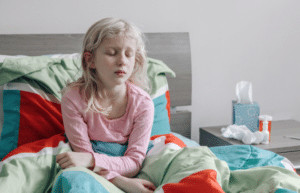
A child with a fever can make even a calm parent nervous. The number on the thermometer goes up, the child feels hot, and suddenly every old fever remedy starts coming to mind.
Should the child take medicine? Should the child have a cold bath? More blankets or fewer? Should the fever be brought down as quickly as possible?
The good news is that most childhood fevers can be cared for at home. A fever is usually the body's response to an infection, and the temperature itself is not always the most important part. How the child looks, drinks, breathes, responds, and behaves can tell much more about how sick they are.
The goal is not always to make the thermometer show a perfectly normal number. The real goal is to help the child stay comfortable, hydrated, and safe while the body deals with the illness.
What Counts as a Fever in Children?
For most children, a temperature of 100.4°F (38°C) or higher is considered a fever. A fever can happen with many common childhood infections, including colds, flu, ear infections, sore throats, and other illnesses.
It is tempting to focus completely on the number. A child with a temperature of 102°F may look fairly comfortable, while another child with a lower temperature may seem very sick. That is why the temperature should be considered together with the child's overall condition.
A child who is drinking, making eye contact, talking, resting, and becoming more comfortable after medicine is generally less concerning than a child who is difficult to wake, breathing poorly, refusing fluids, or acting very differently from normal.
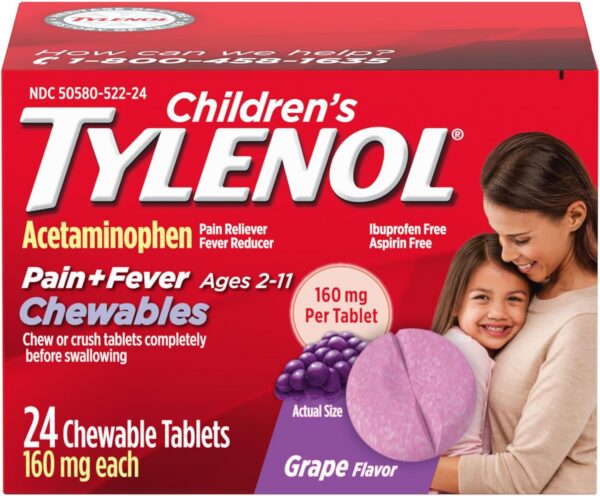
Children's Tylenol Chewables, 160 mg Acetaminophen, Grape, 24 ct | Pain Reliever & Fever Reducer, Cold + Flu Symptoms, Headache, Sore Throat
Does Every Fever Need to Be Lowered?
Not necessarily.
A fever is part of the body's response to infection. Fever-reducing medicine does not cure the infection, and it does not necessarily make the illness end sooner. Its main purpose is to help a child who is uncomfortable, in pain, or having trouble resting.
This is an important shift in thinking. Parents do not need to “win” against the thermometer. If a child has a fever but is comfortable enough to drink, sleep, and interact normally, there may be no need to chase the temperature down with medicine.
If the child is miserable, achy, unable to rest, or clearly uncomfortable, bringing the fever down can make them feel much better.
Give Plenty of Fluids
One of the most useful things parents can do is surprisingly simple: keep the child drinking.
Fever can increase fluid loss, especially when the child is sweating, breathing faster, vomiting, or having diarrhea. Dehydration can become a bigger problem than the fever itself. The NHS recommends giving children plenty of fluids and watching for signs of dehydration.
Water is a good choice for older children. Babies who breastfeed should continue breastfeeding as usual. Depending on the child's age and symptoms, other suitable fluids may also be offered.
A sick child may not want a large cup of water. That's okay. Small amounts offered often can be easier.
Try:
- Small sips every few minutes
- Water
- Breast milk for babies
- An appropriate oral rehydration solution when vomiting or diarrhea is causing fluid loss
- Ice pops for children who are old enough to have them safely
- Soups or other foods with plenty of fluid
The important thing is not forcing a large amount at once. A few successful sips are better than a big drink that makes a nauseated child vomit.
Don't Force Food
When children have a fever, appetite often drops. This can worry parents, especially when a normally hungry child suddenly eats almost nothing.
For a short illness, fluids matter more than making a child finish a full meal. The NHS recommends offering food if the child wants it rather than forcing them to eat.
If the child is hungry, simple foods are often easier to tolerate. Things like oatmeal, rice, toast, bananas, yogurt, soup, noodles, or other familiar foods may work well.
There is no special “fever food” that makes a temperature disappear. A child recovering from an infection needs enough fluids and, as appetite returns, normal nutritious food.
Use Fever Medicine for Comfort
Two medicines commonly used for children with fever are acetaminophen (paracetamol) and ibuprofen.
They can lower a child's temperature and help with aches and pain. But they should not be treated like two different versions of the same medicine. They have different dosing instructions and age restrictions.
The correct dose depends on the product, the child's age, and often the child's weight. Always check the product label carefully. A pediatrician or pharmacist can help if the correct dose is unclear.
For younger children especially, guessing the dose with a kitchen spoon is not a good idea. Use the measuring syringe or cup that comes with the medicine.
And keep track of what was given and when. This sounds like a small detail, but when a child has been sick all night, it is surprisingly easy to forget whether a dose was already given.
Acetaminophen or Ibuprofen?
Both can help reduce fever and discomfort, but they are not suitable for every child.
Acetaminophen is commonly used in children, but the correct age and dose must be followed carefully. The NHS notes that most children older than 2 months can take acetaminophen, although some children should not take it because of certain medical conditions.
Ibuprofen is another option for many children, but it has additional restrictions. For example, it should not be given to certain young infants, children who are dehydrated, or children with certain health conditions unless a healthcare professional recommends it.
The safest approach is simple: choose a medicine that is appropriate for the child's age and health, and follow the label or the child's doctor's instructions.
Be Careful About Combining Medicines
This is one of the easiest ways for a tired parent to accidentally give too much medicine.
Some children's cold and flu products contain acetaminophen. If a child is also given a separate acetaminophen product, the same medicine may be given twice without the parent realizing it.
For that reason, avoid giving several combination products unless a healthcare professional has specifically recommended them. The American Academy of Pediatrics also advises parents to pay attention to the active ingredients in medicines.
Keep a simple note on the phone or on paper:
8:00 AM — acetaminophen
2:00 PM — acetaminophen
It takes seconds and can prevent confusion later.
Don't Automatically Alternate Fever Medicines
Some parents have heard that acetaminophen and ibuprofen should be alternated every few hours.
That is not something to do automatically.
Alternating medicines can make dosing more complicated and increase the chance of a mistake. The NHS advises not to alternate them unless a healthcare professional tells you to do so.
If one medicine does not seem to help enough, ask a doctor or pharmacist what to do rather than creating a schedule from memory.
Don't Use Cold Baths or Ice
When a child feels extremely hot, a cold bath may seem like an obvious solution.
It is not.
Cold water can make a child shiver, which can make them even more uncomfortable. Routine cold baths, ice packs, or aggressive cooling are not recommended ways to manage a typical childhood fever.
The NHS specifically advises against undressing a child or sponging them down to cool them.
A comfortable bath may be fine if the child enjoys it, but it should not be used as an aggressive attempt to force the temperature down.
Dress Your Child Comfortably
There is another common mistake: wrapping a feverish child in several blankets because they are shivering.
A child with a fever may feel cold during the rise in temperature, but piling on heavy blankets can make them too hot.
At the same time, completely undressing the child to “let the fever out” is unnecessary.
A better approach is simple: use comfortable, light clothing and normal bedding. Adjust the room and clothing based on how the child feels. The goal is comfort, not extreme cooling.
If the child is shivering, a light blanket may help. Once the child feels hot or starts sweating, remove extra layers.
Let the Child Rest
Fighting an infection takes energy.
A child with a fever may sleep much more than usual. That is often okay. There is no need to keep a sick child awake just because they have a fever.
Let the child rest, but check on them regularly, especially if they are very young or seem more sick than expected. The NHS recommends checking children with fever regularly, including during the night.
Quiet activities are fine when the child feels up to them. Reading a book, watching something calmly, or simply lying on the sofa can be enough.
There is no need to turn recovery into a productivity project.
What About a Fever After a Bath?
Sometimes a child's temperature may look higher shortly after a bath or after being wrapped in a blanket.
That does not necessarily mean the illness suddenly became worse. The NHS recommends waiting a few minutes and then checking the temperature again if the child has just had a bath or been heavily covered.
This is one reason it helps to look at the bigger picture instead of reacting to every small change on the thermometer.
Focus on the Child, Not Just the Number
A thermometer is useful, but it cannot tell the whole story.
Consider these questions:
- Is the child drinking?
- Are they urinating normally?
- Are they breathing comfortably?
- Can they wake up and respond normally?
- Do they have periods when they seem more like themselves?
- Can they keep fluids down?
- Are they becoming more comfortable after fever medicine?
- Is the illness getting better or worse?
A child who has a fever but wakes up, asks for water, talks to a parent, and watches a favorite show may be doing reasonably well.
On the other hand, a child with a lower fever who is extremely sleepy, confused, struggling to breathe, or refusing all fluids needs more attention.
The American Academy of Pediatrics emphasizes that a child's overall appearance and behavior are important when deciding how concerning a fever is.
When Should Parents Call a Doctor?
Some children need medical advice sooner than others.
Parents should contact a healthcare professional promptly if:
- A baby younger than 3 months has a temperature of 100.4°F (38°C) or higher
- The child looks very ill or is unusually difficult to wake
- The child has trouble breathing
- The child has repeated vomiting or diarrhea
- The child has a stiff neck
- The child develops an unexplained rash
- The child has a seizure
- The child shows signs of dehydration
- The child has severe pain
- The fever keeps getting worse
- The child still seems very sick after the fever comes down
- The fever lasts longer than expected
The AAP advises contacting a doctor for infants younger than 3 months with a temperature of 100.4°F (38°C) or higher and for children with concerning symptoms such as breathing difficulty, stiff neck, unexplained rash, repeated vomiting or diarrhea, or a seizure.
The NHS also advises medical assessment for certain age groups and for fever lasting five days or more.
Because guidance can vary with age and medical history, parents of very young babies or children with chronic health conditions should follow their own pediatrician's advice.
When Is a Fever an Emergency?
Some symptoms should not wait for a routine doctor's appointment.
Seek emergency medical care if a child with fever:
- Is difficult to wake
- Has severe difficulty breathing
- Has blue, gray, or unusually pale skin or lips
- Is confused or not responding normally
- Has a stiff neck
- Has a seizure for the first time
- Has a rash that does not fade when pressed
- Has signs of a serious illness or rapidly worsening condition
These warning signs matter more than simply asking whether the thermometer says 102°F or 104°F.
If something about the child's behavior looks seriously wrong, it is better to seek medical advice rather than waiting for the temperature to reach a certain number.
A Simple Fever Care Plan for Parents
When a child develops a fever, it helps to keep things simple.
First, check the temperature. Use a reliable thermometer and note the reading.
Next, look at the child. Are they alert? Drinking? Breathing normally? Comfortable enough to rest?
Then, offer fluids. Small, frequent drinks are often easier than large amounts.
Keep clothing comfortable. Avoid both heavy layers and aggressive cooling.
Use fever medicine only when appropriate. If the child is uncomfortable, acetaminophen or ibuprofen may help when suitable for the child's age and health. Follow the dosing instructions carefully.
Watch for changes. A fever may come and go during an illness. What matters is whether the child is improving, staying stable, or getting worse.
And if something does not feel right, call the child's healthcare provider. Parents do not need to figure out every fever alone.
Frequently Asked Questions
How can I reduce my child's fever quickly?
There is no need to force a fever down as quickly as possible. Offer plenty of fluids, let the child rest, keep them comfortably dressed, and consider an appropriate fever-reducing medicine if the child is uncomfortable. Fever medicine is mainly for comfort, not for curing the infection.
What is the best medicine for a child's fever?
Acetaminophen and ibuprofen are commonly used, but the best choice depends on the child's age, weight, health, and symptoms. Always follow the product label or medical advice.
Should a child with a fever take a cold bath?
No. Cold baths, ice, and aggressive cooling are not recommended for routine fever care. They can make a child uncomfortable and cause shivering. Keep the child comfortably dressed instead.
Should a child with fever be covered with a blanket?
A light blanket can be used if the child feels cold or is shivering, but avoid heavy blankets and too many layers. The goal is comfortable temperature control rather than making the child sweat.
Should a child eat when they have a fever?
If the child is hungry, offer normal, easy-to-eat foods. Do not force food. Fluids are especially important during a fever, particularly if the child is also vomiting or having diarrhea.