Introduction
Many parents have faced the same daily struggle:
“The water bottle came home almost full again.”
“Why does my child only want juice or milk?”
“My child says they are not thirsty, even after playing outside.”
Getting children to drink enough water can feel surprisingly difficult.
Some kids simply forget to drink because they are busy playing. Others do not like the taste of plain water. Some children become used to sweet drinks and start refusing anything that does not have a strong flavor.
But water is one of the most important things a child needs every day.
Water helps the body:
- control temperature
- move nutrients through the body
- support digestion
- keep energy levels stable
- improve concentration
A child who does not drink enough may feel tired, have headaches, become less focused, or have trouble during physical activities.
The good news is that children can build better hydration habits. The key is not forcing them to drink more water all day. It is creating an environment where drinking water becomes normal and easy.
Why Some Kids Don’t Like Drinking Water
Before solving the problem, it helps to understand why a child avoids water.
Usually, it is not because children are “stubborn.” There is often a simple reason behind it.
1. They Are Not Feeling Thirsty
Children often get distracted.
A child playing a game, building blocks, watching a show, or talking with friends may completely forget about drinking.
Unlike adults, many young children are not very good at noticing early signs of thirst.
By the time they say:
“I’m thirsty,”
they may already need fluids.
This is why children often need gentle reminders.
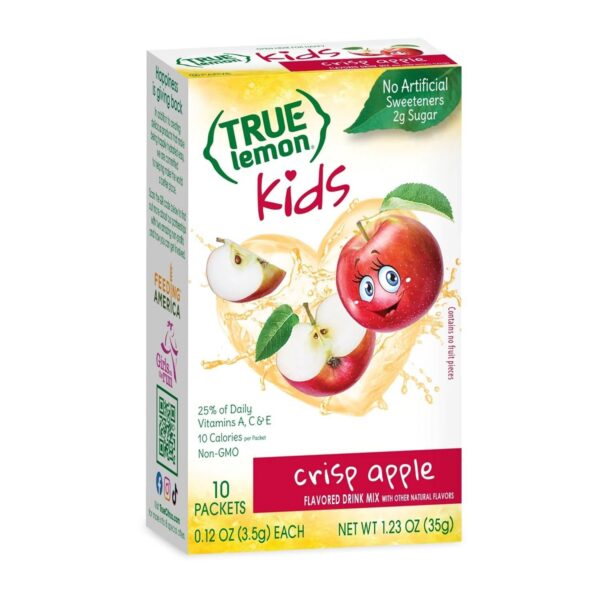
True Lemon Kids Crisp Apple 10ct, Drink Mix for Kids Hydration, No Artificial Sweeteners
2. They Prefer Sweet Drinks
Many children naturally prefer sweet flavors.
Juice, flavored drinks, sports drinks, and soda often taste exciting because they contain sugar.
Compared with these drinks, plain water can seem boring.
The problem is that frequent sugary drinks can increase the risk of:
- tooth decay
- unhealthy weight gain
- developing a preference for sweet tastes
Children who drink sweet beverages often may need time to adjust to plain water.
3. They Do Not Like the Taste of Water
Some children say:
“Water tastes weird.”
This may sound funny to adults, but children can be very sensitive to small differences.
The taste of tap water can change depending on:
- where the family lives
- minerals in the water
- temperature
- the cup or bottle being used
Sometimes a small change can make water more appealing.
4. They Are Busy at School
School-age children may avoid drinking water because:
- they do not want to ask the teacher for a bathroom break
- they forget to bring a water bottle
- they are too busy during class
- they do not have easy access to water
Creating a simple routine can help.
How Much Water Do Kids Need?
Children’s water needs depend on:
- age
- body size
- activity level
- weather
- health condition
There is no single amount that fits every child.
In general:
- Younger children need smaller amounts throughout the day.
- Older children and teenagers need more, especially during sports and hot weather.
A child who plays outside in summer needs more fluids than a child spending a quiet day indoors.
Parents do not need to measure every sip.
A better approach is watching daily habits and signs.
Signs a child may need more fluids include:
- dark yellow urine
- dry lips or mouth
- tiredness
- headaches
- less frequent bathroom visits
Simple Ways to Encourage Kids to Drink More Water
1. Make Water Easy to Reach
Children are more likely to drink water when it is available.
Try:
- keeping a water bottle nearby
- placing water on the table during meals
- bringing water when leaving home
- preparing water before outdoor activities
Sometimes the solution is not motivation.
It is convenience.
2. Let Kids Choose Their Own Water Bottle
A fun water bottle can make drinking water feel more personal.
Children often enjoy having:
- their favorite color
- their favorite character
- a bottle they choose themselves
A water bottle becomes something they want to carry instead of something parents remind them to use.
For school-age children, this small choice can create a sense of independence.
3. Create Water Drinking Routines
Children do well with routines.
Instead of repeatedly saying:
“Drink water!”
try connecting water with daily activities.
For example:
- drink water after waking up
- drink water before leaving for school
- drink water after outdoor play
- drink water with meals
- drink water after sports
When something becomes part of a routine, children do not need as many reminders.
4. Add Natural Flavor
Some children need time to accept plain water.
Parents can try adding natural flavors, such as:
- lemon slices
- orange slices
- cucumber
- strawberries
- mint leaves
Avoid adding lots of sugar.
The goal is helping children enjoy water, not turning water into another sweet drink.
5. Be a Role Model
Children notice what adults do.
If parents drink water regularly, children are more likely to copy the habit.
A child may ignore a lecture about healthy drinks but remember seeing family members refill their water bottles every day.
Healthy habits often spread through everyday examples.
Should Parents Force Children to Drink Water?
Many parents worry:
“My child refuses water. Should I make them finish the bottle?”
Usually, pressure is not the best solution.
When drinking water becomes a battle, children may develop a stronger dislike of it.
Instead of forcing, try offering.
For example:
Instead of:
“You cannot leave until you finish your water.”
Try:
“Let’s take a few drinks before we go outside.”
Small, positive reminders usually work better over time.
The goal is not just getting a child to drink water today.
The goal is helping them understand that taking care of their body matters.
What About Juice, Milk, and Other Drinks?
Many parents wonder whether milk or juice can replace water.
Milk can be an important source of nutrients, especially for younger children.
However, water should still be the main drink for staying hydrated.
Juice contains natural sugar, and many packaged juices contain added sugar.
Too much juice may:
- reduce appetite for healthy foods
- increase sugar intake
- contribute to tooth problems
A good daily pattern is:
- water as the main drink
- milk as part of a balanced diet
- juice only occasionally and in appropriate amounts
Water and School: Helping Kids Stay Hydrated
School days can make hydration harder.
Parents can help by preparing simple habits.
Try:
Pack a Water Bottle
Choose a bottle that:
- is easy to open
- fits in a backpack
- does not leak
- is comfortable for the child to carry
Teach Children to Listen to Their Bodies
Children should know:
“Feeling thirsty is a sign that my body needs water.”
They should also feel comfortable asking teachers for bathroom breaks when needed.
Water and Sports: Why Hydration Matters More During Exercise
Active children lose more water through sweat.
During sports or outdoor play, children may need extra fluids.
Helpful habits:
- drink water before activity
- take water breaks during activity
- drink afterward
For most everyday activities, water is enough.
Sports drinks are usually unnecessary for regular play and may add extra sugar.
FAQ
How can I get my child to drink more water?
Make water easy to access, create regular drinking routines, use a fun water bottle, and avoid turning drinking water into a daily argument.
Why does my child refuse water but drink juice?
Many children prefer sweet flavors because they are more rewarding. Gradually reducing sweet drinks and offering water regularly can help children adjust.
How much water should a child drink every day?
Water needs vary depending on age, activity level, and weather. Children who are active or spend time outdoors need more fluids.
Is flavored water healthy for kids?
Water with natural fruit slices can be a healthy option. However, many bottled flavored waters contain added sugar or sweeteners, so parents should check labels.
Can milk replace water for children?
Milk provides important nutrients, but it should not completely replace water. Water remains the best choice for regular hydration.
What are signs that my child is dehydrated?
Possible signs include dark urine, dry mouth, tiredness, headaches, and fewer bathroom visits.