A backpack can look completely normal from the outside while carrying a surprising amount of weight. A few textbooks, a laptop, lunch, a water bottle, sports clothes, and suddenly a child is struggling to lift the bag onto their shoulders.
Many parents notice the same thing: the backpack seems to get heavier every year.
So, how heavy should a child's backpack be?
There is no single number that works perfectly for every child. Age, body size, strength, health, and how far the child has to carry the bag all matter. Still, pediatric and orthopedic organizations commonly suggest keeping a child's loaded backpack at around 10% to 15% of body weight, when possible.
That guideline is helpful, but it should not be treated like a magic number. A child who weighs 60 pounds and carries a 9-pound backpack may be perfectly comfortable. Another child may find the same percentage difficult because the bag fits poorly or the weight is packed badly.
The bigger question is this: How does the backpack affect the child while carrying it?
If a child struggles to lift the backpack, leans forward, complains of pain, or constantly adjusts the straps, the backpack may be too heavy, even if it falls within a recommended weight range.
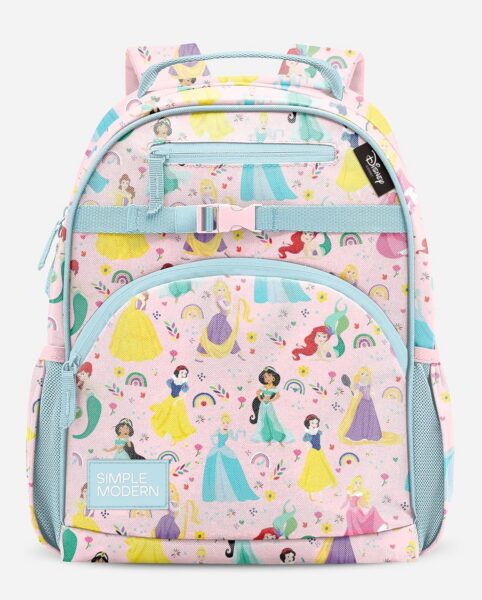
Simple Modern Disney Princess Kids Backpack for School, Girls, Boys
The 10% to 15% Backpack Guideline
A commonly used guideline is that a child's backpack should weigh no more than about 10% to 15% of their body weight when fully packed.
Here are some simple examples:
| Child's Weight | 10% of Body Weight | 15% of Body Weight |
|---|---|---|
| 40 pounds | 4 pounds | 6 pounds |
| 50 pounds | 5 pounds | 7.5 pounds |
| 60 pounds | 6 pounds | 9 pounds |
| 70 pounds | 7 pounds | 10.5 pounds |
| 80 pounds | 8 pounds | 12 pounds |
| 100 pounds | 10 pounds | 15 pounds |
These numbers can give parents a useful starting point. Still, there is an important detail that often gets missed: a backpack does not become automatically safe just because it weighs less than 15% of a child's body weight.
A poorly fitted backpack can still cause discomfort. So can a bag carried for a long distance. Walking across a school campus for five minutes is very different from walking 30 minutes to school with the same backpack.
This is why the percentage guideline works best as a general reference rather than a strict rule.
Why Heavy Backpacks Can Be a Problem
Children are often stronger than adults expect, but that does not mean they should carry unnecessary weight every day.
When a backpack is very heavy, a child may naturally change how they walk. They might lean forward to balance the load. Some children lift their shoulders toward their ears. Others swing the bag onto one shoulder because it feels easier for a few minutes.
Those habits can put extra stress on the shoulders, neck, and back.
A heavy backpack may also lead to temporary problems such as:
- Shoulder discomfort
- Neck pain
- Back pain
- Tired muscles
- Tingling or numbness in the arms
- Deep marks from shoulder straps
- Poor posture while walking
One uncomfortable day does not necessarily mean the backpack has caused lasting harm. Children can have sore muscles for many reasons. But repeated discomfort should not be ignored.
The goal is not to make parents panic about every school bag. It is simply to notice when a child is clearly struggling and make practical changes.
Signs Your Child's Backpack May Be Too Heavy
Sometimes the easiest way to judge a backpack is to watch what happens when the child picks it up.
A backpack may be too heavy if your child:
- Has trouble lifting it from the floor
- Needs help putting it on
- Leans forward noticeably while walking
- Walks differently when wearing it
- Complains about back, neck, or shoulder pain
- Frequently takes the backpack off to rest
- Has numbness or tingling in the arms
- Gets deep strap marks on the shoulders
- Uses only one shoulder because both straps feel uncomfortable
It is also worth looking at the child's face and body language. A child may not always say, “My backpack is too heavy.” Instead, they may sigh when picking it up, drag it across the floor, or throw it down the moment they get home.
Those small observations can tell parents quite a lot.
The Backpack's Weight Is Not the Only Problem
A 10-pound backpack can feel very different depending on how it is designed and packed.
Imagine carrying a bag with all the weight pressed close against the body. Now imagine the same weight hanging far away from the back and pulling backward. The number on the scale is the same, but the experience is completely different.
A backpack should sit close to the child's back. The heaviest items should be placed in the part of the backpack closest to the body.
Try to avoid putting all heavy books in the outermost compartment. That can pull the backpack backward and make the child work harder to stay balanced.
The backpack itself should also fit properly. A large backpack may encourage children to fill every available space, creating an unnecessary “more room means more stuff” problem.
How Should a Child Wear a Backpack?
Even a well-designed backpack can become uncomfortable if it is worn incorrectly.
Children should generally wear both shoulder straps. This helps spread the weight across both sides of the body.
The straps should be adjusted so that the backpack sits close to the back. It should not hang very low near the hips or bounce around while the child walks.
Look for:
- Two wide shoulder straps
- Soft padding
- Adjustable straps
- A backpack that fits the child's torso
- A padded back panel
- A chest strap for extra stability, if helpful
Some children strongly prefer carrying a backpack on one shoulder. It may look convenient, but carrying the full load on one side can make the body compensate.
It is better to build the habit of using both straps early.
How to Pack a Backpack the Right Way
Parents do not always need to buy a new backpack to solve the problem. Sometimes the simplest solution is to clean out the one already being used.
Children can collect a surprising amount of extra weight during a school week. Old worksheets, notebooks, forgotten supplies, and books that are no longer needed can quietly add several pounds.
A quick backpack check once or twice a week can help.
When packing:
- Put the heaviest books closest to the child's back.
- Place medium-weight items in the middle.
- Put lighter items in the outer compartments.
- Remove papers and supplies that are no longer needed.
- Avoid carrying unnecessary items “just in case.”
- Check whether school materials can be stored in a locker or classroom.
Water bottles can also add significant weight. A large bottle filled with water may weigh more than parents realize. Of course, children still need access to water, especially during hot weather or physical activity. The solution is not to limit hydration, but to consider whether the child needs to carry a large amount all day.
Should Parents Weigh Their Child's Backpack?
Yes, occasionally weighing the backpack can be useful.
It does not need to become a daily ritual. Once a week, or whenever the bag seems unusually heavy, place it on a household scale.
You may be surprised by the result.
A backpack can feel “normal” because everyone else at school is carrying something similar. But common does not always mean ideal. Checking the weight gives parents a clearer picture.
It can also help children understand the issue. When they see that their backpack weighs 15 pounds, they may be more willing to remove old papers or leave unnecessary supplies at home.
What If School Requires Heavy Books?
This is a real problem for many families. A parent cannot always solve it by simply telling a child to carry fewer books.
If the backpack regularly feels too heavy, consider practical options:
- Ask whether books can stay in the classroom.
- Use a locker when available.
- Keep duplicate supplies at home if practical.
- Use digital textbooks when the school provides them.
- Ask teachers which materials are truly needed each day.
- Divide supplies between home and school.
- Consider a wheeled backpack if the school allows it.
A rolling backpack may help some children, but it is not perfect. It can be difficult on stairs, crowded hallways, buses, and uneven sidewalks. Some schools also do not allow them.
The best solution often depends on the child's school routine.
Does a Heavy Backpack Cause Serious Back Problems?
Parents often worry that a heavy backpack will permanently damage a child's spine. The evidence is more complicated than that.
Backpacks can cause discomfort, muscle fatigue, and changes in posture while they are being carried. However, occasional use of a heavy backpack does not automatically mean permanent injury.
That said, regular pain should never be brushed off simply because “kids have always carried heavy school bags.”
If a child repeatedly complains of back or neck pain, the first step is to check the backpack's weight and fit. But persistent, severe, or unexplained pain should be discussed with a healthcare professional.
A backpack may be part of the problem, but it should not automatically be blamed for every case of back pain.
What Makes a Good Backpack for Kids?
A good backpack does not need to have every possible feature.
The basics matter most:
- Lightweight when empty
- Correct size for the child
- Wide, padded shoulder straps
- Adjustable straps
- A padded back
- Strong zippers
- Enough room without being oversized
- Compartments that help organize the load
- Reflective details if the child walks near traffic
Parents often see the word “ergonomic” on backpack labels. It can be useful, but the word itself does not guarantee a good fit.
A simple backpack that fits well may be a better choice than an expensive “ergonomic” backpack that is too large.
Backpack Weight Changes as Kids Grow
The backpack that worked perfectly in first grade may not work in fourth grade.
Children grow, school supplies change, and daily routines become more demanding. Older students may need laptops, larger books, sports equipment, and other supplies.
It is worth checking the fit at least once each school year.
Ask:
- Does the backpack still fit the child's body?
- Are the straps comfortable?
- Is the backpack too small or unnecessarily large?
- Has the school workload changed?
- Is the child carrying more technology?
- Is the child complaining about discomfort?
A backpack should grow with the child's needs, not become a permanent piece of equipment that is never checked again.
Simple Ways to Make a Backpack Feel Lighter
Sometimes the actual weight cannot be reduced very much. In those cases, small adjustments can still help.
Try these ideas:
- Adjust the straps every few months.
- Use both shoulder straps.
- Keep heavy items close to the back.
- Remove unnecessary papers.
- Use smaller, lighter supplies when possible.
- Choose a lightweight backpack.
- Encourage children to use lockers.
- Avoid adding decorative items that increase weight.
- Check the backpack before a long walk.
One overlooked issue is that children sometimes carry items for friends, sports teams, or after-school activities. A backpack may be reasonable for a normal school day but become much heavier on certain days.
Those are the days worth checking more carefully.
FAQ
How much should a child's backpack weigh?
A commonly used guideline is about 10% to 15% of the child's body weight when possible. However, comfort, fit, and how far the child carries the backpack also matter.
Is 20 pounds too heavy for a child?
It depends on the child's body weight. For a smaller child, 20 pounds could be extremely heavy. Even for a larger child, parents should consider how the backpack fits and how far it must be carried.
What happens if a child's backpack is too heavy?
A heavy backpack may cause temporary shoulder, neck, or back discomfort. Children may also lean forward, change how they walk, or struggle to maintain a comfortable posture.
Should a child use one or two backpack straps?
Two straps are generally better because they distribute the weight more evenly and help keep the backpack stable.
How can parents tell if a backpack is too heavy?
Watch the child put it on and walk with it. Difficulty lifting the bag, leaning forward, pain, deep shoulder marks, and frequent complaints are all signs that the backpack may need attention.