Every year in November, families across the United States gather to celebrate Thanksgiving. There is usually a big meal, a lot of talking, and perhaps a football game on TV. Children look forward to turkey, pumpkin pie, and a few days off school. But have you ever wondered where Thanksgiving came from?
The story goes back more than 400 years, to a time when English settlers arrived in North America. Their meeting with the Wampanoag people led to a harvest gathering in 1621. However, the history of Thanksgiving is more than one friendly meal. It includes the lives of Native Americans, the struggles of early settlers, and the story of how a harvest celebration became a national holiday.
1. Before Thanksgiving: Native Americans and Their Traditions
Long before English settlers arrived, Native American communities had lived across North America for thousands of years. They had their own languages, homes, cultures, and ways of life. Many communities grew crops, hunted animals, fished, and gathered wild plants for food.
Giving thanks for food and nature was already an important part of many Native American traditions. Some communities held special harvest celebrations to give thanks for successful crops and the gifts of the land. These traditions existed long before the famous gathering at Plymouth in 1621.
One of the Native groups connected to the Thanksgiving story is the Wampanoag Nation. Their homeland included parts of what is now Massachusetts and Rhode Island. They knew the local land, rivers, forests, and seasons very well. Their knowledge of farming, fishing, and hunting would later become important to the English settlers.
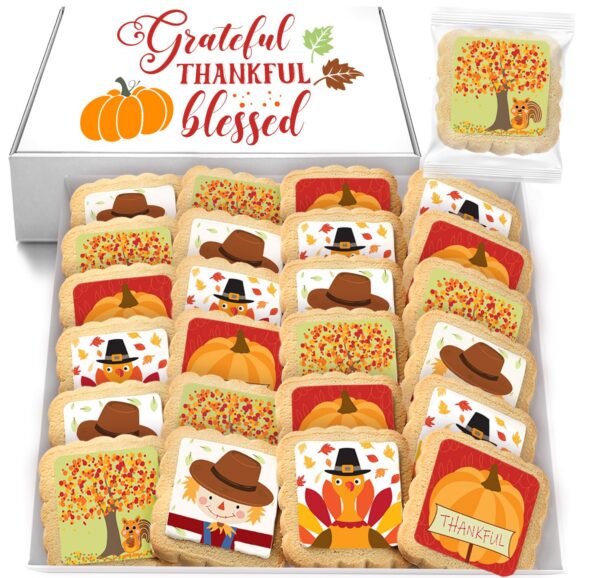
Thanksgiving Cookies 24 Pack Decorated
2. The Pilgrims Arrive in North America in 1620
In September 1620, a group of English settlers known as the Pilgrims sailed across the Atlantic Ocean on a ship called the Mayflower. They were looking for a place to build a new community and practice their religious beliefs.
The journey was difficult. About 102 passengers boarded the ship, along with the crew. After roughly two months at sea, they reached the coast of what is now Massachusetts. They eventually settled at a place called Plymouth.
The first winter was extremely hard. The settlers faced cold weather, hunger, and disease. Many became sick, and almost half of the original group died before spring arrived. They had little experience with the local environment and struggled to find enough food.
It is important to remember that the settlers did not arrive in an empty land. They settled in Patuxet, a place that had been home to the Wampanoag people. A serious epidemic had already killed many people in the region before the English arrived.
3. How the Wampanoag People Helped the Settlers
In the spring of 1621, the settlers began making contact with the Wampanoag people. One important figure was Tisquantum, often called Squanto in English history books. He was a Patuxet Wampanoag man who had previously been taken to Europe and later returned to his homeland.
Because he had learned English, Tisquantum could communicate with the settlers. He helped them understand local farming methods, including how to grow corn. He also showed them ways to use natural resources in the area.
Another important leader was Ousamequin, whom the English called Massasoit. He was the leader of the Pokanoket people, part of the Wampanoag Nation. He made an agreement with the settlers that helped establish an alliance between the two groups.
Their relationship was not simply a story of instant friendship. Both sides had their own concerns and reasons for working together. Still, the help and knowledge shared by Native people played an important role in the settlers' survival.
4. The First Thanksgiving in 1621
By the fall of 1621, the settlers had gathered their first successful harvest. After a difficult year, having enough food was a reason to celebrate.
The English settlers held a harvest celebration that lasted three days. Around 90 Wampanoag men joined about 52 English settlers. The Wampanoag brought five deer to share with the group.
What did they eat? Historical records mention wild birds and deer, along with other foods available in the area. Corn, seafood, and vegetables were likely part of the meal. However, the exact menu is not fully known.
There are a few surprises here! The meal probably did not look like the Thanksgiving dinner families enjoy today. There is no clear historical evidence that pumpkin pie, mashed potatoes, or cranberry sauce were served. And turkey, although found in the region, is not specifically mentioned in the surviving account.
The gathering is now commonly called the First Thanksgiving. However, the people who attended did not call it that. It was a harvest celebration, and the familiar Thanksgiving story developed over many years.
5. How Thanksgiving Became a National Holiday
For many years, different American communities held their own days of thanksgiving. There was no single date for everyone.
In 1789, President George Washington issued a proclamation asking Americans to observe November 26 as a national day of thanksgiving and prayer. Other presidents also declared days of thanksgiving, but the dates were not always the same.
A woman named Sarah Josepha Hale played an important role in making Thanksgiving a regular national holiday. She was a writer and editor who spent many years encouraging American leaders to establish one special day for the whole country.
Her efforts finally helped bring attention to the idea. In 1863, during the American Civil War, President Abraham Lincoln proclaimed a national Thanksgiving Day to be observed on the last Thursday of November.
The timing was meaningful. The country was deeply divided, and many families had lost loved ones in the war. Lincoln hoped the holiday would encourage people to give thanks and pray for peace and unity.
6. Why Is Thanksgiving Celebrated on the Fourth Thursday?
Although President Lincoln established a regular Thanksgiving tradition in 1863, the date was not permanently settled at first.
In 1939, President Franklin D. Roosevelt moved Thanksgiving one week earlier. He hoped a longer Christmas shopping season would help businesses during the difficult economic years following the Great Depression.
Not everyone agreed with the change. Some states followed the new date, while others continued celebrating on the traditional date. For a short time, Americans even had different Thanksgiving dates depending on where they lived!
In 1941, Congress passed a law setting Thanksgiving on the fourth Thursday of November. President Roosevelt signed it, and that is the date Americans still follow today.
7. How Do Families Celebrate Thanksgiving Today?
Today, Thanksgiving is one of the most popular family holidays in the United States. Many people travel long distances to spend time with parents, grandparents, children, and friends.
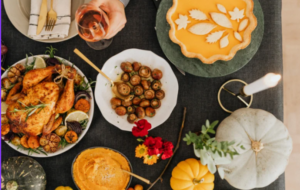
Food is a big part of the celebration. A traditional Thanksgiving meal may include:
- Roast turkey with gravy.
- Mashed potatoes and stuffing.
- Green bean casserole and cranberry sauce.
- Pumpkin pie or apple pie.
Of course, not every family celebrates in exactly the same way. Some prepare special family recipes, while others enjoy a simple meal at home. Many people also watch football, attend holiday parades, volunteer at food banks, or help serve meals to people in need.
The Macy's Thanksgiving Day Parade in New York City is another popular tradition. It features huge balloons, colorful floats, marching bands, and performances. Children especially enjoy seeing the giant cartoon characters floating above the streets.
8. What Is the Real Meaning of Thanksgiving?
Thanksgiving is often associated with turkey, shopping, and a long weekend. But its meaning goes beyond the holiday meal.
It is a chance to stop and appreciate the people and things that make everyday life better. A warm home, a healthy family, a good friend, or a meal shared with others may seem ordinary, but these are things worth appreciating.
It is also important to remember the full history behind the holiday. The story of 1621 includes both English settlers and the Wampanoag people. Their meeting was part of a much larger history, and the relationship between the two communities later became difficult. Native American communities experienced the loss of land, lives, and independence as English settlement expanded.
Understanding this history helps children see Thanksgiving from more than one point of view. It is possible to appreciate the tradition of giving thanks while also respecting the people whose history is connected to the holiday.
Perhaps that is one of the most meaningful lessons of Thanksgiving: being thankful should not stop at saying a few kind words. It can also mean sharing what is available, helping someone who needs support, and treating others with kindness and respect.
FAQ
1. When was the first Thanksgiving?
The famous 1621 harvest celebration took place in the fall at Plymouth, Massachusetts. English settlers and Wampanoag people gathered for a three-day celebration.
2. Who celebrated the first Thanksgiving?
About 52 English settlers and 90 Wampanoag men took part in the 1621 harvest gathering. The event brought together people from two different communities.
3. What did people eat at the first Thanksgiving?
Historical accounts mention wild birds and deer. Other foods likely included corn, seafood, and vegetables. The exact menu is not known.
4. Who made Thanksgiving a national holiday?
President Abraham Lincoln issued a national Thanksgiving proclamation in 1863. President George Washington had previously declared a national day of thanksgiving in 1789.
5. Why do Americans celebrate Thanksgiving in November?
The 1621 harvest gathering took place in the fall. President Lincoln later established a regular Thanksgiving celebration in November in 1863.
6. Why is Thanksgiving always on a Thursday?
Congress passed a law in 1941 setting the holiday on the fourth Thursday of November. This is still the official date today.
7. What is the meaning of Thanksgiving for kids?
Thanksgiving reminds children to appreciate their families, friends, food, and everyday blessings. It is also a time to share, help others, and understand the history behind the holiday.