Parents often see the words “ergonomic backpack” when shopping for a school bag. The term sounds impressive, but what does it actually mean?
An ergonomic backpack is simply a backpack designed to fit the body more comfortably and reduce unnecessary strain. For children, this usually means a backpack that sits well on the back, has adjustable straps, spreads weight more evenly, and does not pull too hard on the shoulders or neck.
That sounds simple. Yet many children carry backpacks that are too large, too loose, too heavy, or poorly organized. A backpack may look great on a store shelf, but once it is filled with books, lunch, a water bottle, and other school supplies, comfort can change quickly.
An ergonomic backpack is not a magic solution that makes a heavy load harmless. This is an important point. Even the best-designed backpack can cause problems if a child carries too much weight. Good design and reasonable backpack weight need to work together.
What Does “Ergonomic” Really Mean?
The word “ergonomic” refers to something designed to work well with the human body. Instead of forcing the body to adapt to an object, the object is designed to better fit the person's natural shape and movement.
For a child’s backpack, this means thinking about several things:
- How the backpack sits on the child's back
- How the weight is spread
- Whether the shoulder straps fit properly
- Whether the backpack moves around while walking
- Whether it creates uncomfortable pressure
- Whether the child can easily adjust and use it
A good ergonomic backpack should feel like part of the child’s body rather than a heavy object hanging from the shoulders.
That does not mean a backpack needs every possible feature. Some bags have so many straps, clips, pockets, and padded sections that they become heavy before anything is even placed inside. More features do not always mean better design.
The best choice is usually one that fits the child well and has useful features without adding unnecessary weight.
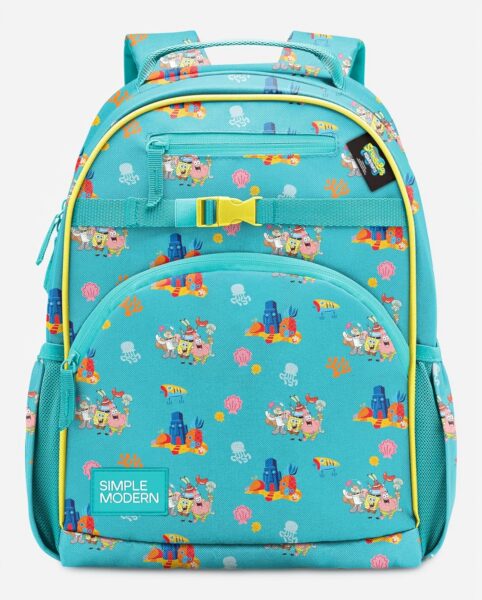
Simple Modern SpongeBob SquarePants Kids Backpack for School Girls Boys 18L
Why Does Backpack Design Matter for Kids?
Children are still growing. Their bodies change quickly, and a backpack that fit well last year may not fit properly now.
Many kids also wear backpacks for longer than parents realize. They may carry them from the car to school, between classrooms, around campus, and back home again. Some children walk several blocks or take public transportation while carrying their bags.
A poorly fitting backpack can make a child lean forward, round the shoulders, or shift the body to one side. Kids often do this without thinking. They simply adjust their body to deal with an uncomfortable bag.
Common signs that a backpack is not fitting well include:
- Shoulder straps digging into the skin
- Red marks on the shoulders
- The backpack hanging very low
- The child leaning forward while walking
- Complaints of shoulder, neck, or back discomfort
- Constantly switching the backpack from one shoulder to the other
- The bag swinging from side to side
One complaint does not automatically mean the backpack is causing a serious problem. Kids can have aches for many reasons. Still, repeated discomfort is worth checking. Sometimes the solution is surprisingly simple: adjust the straps, remove unnecessary items, or use a better-fitting backpack.
The Most Important Features of an Ergonomic Backpack
Adjustable Shoulder Straps
Shoulder straps are one of the most important parts of any backpack. They should be wide enough to spread pressure over a larger area and padded enough to avoid digging into the shoulders.
The straps should also be adjustable. A child’s backpack should not hang near the hips or bounce against the lower back while walking.
Ideally, the backpack should sit fairly close to the body. A loose, low-hanging backpack pulls backward and may make the child lean forward to balance the load.
Both straps should be worn whenever possible. Carrying a backpack on one shoulder may look convenient, but it puts the weight unevenly on the body.
A Well-Padded Back Panel
A padded back panel can make a backpack more comfortable, especially when the child carries books or other hard objects.
Without padding, sharp edges can press directly against the back. A good back panel creates a more comfortable barrier between the child and the contents of the bag.
However, thicker is not always better. Very heavy padding can add unnecessary weight. The goal is comfort and support without making the backpack bulky.
Weight Distribution
One of the biggest benefits of a well-designed backpack is better weight distribution.
A backpack with several useful compartments can help keep heavier items close to the child’s back. This matters because a heavy object placed far away from the body can pull the backpack backward.
For example, a heavy textbook should usually go in a compartment closer to the back. Lighter items can go farther away.
This simple habit can make a backpack feel more balanced.
An ergonomic backpack should also have enough structure to keep items from sliding around constantly. A bag that allows everything to collect at the bottom may feel awkward and harder to carry.
The Right Size
A bigger backpack is not always a better backpack.
Parents sometimes buy an oversized backpack because they want it to last for several school years. Unfortunately, a very large backpack can be difficult for a smaller child to control.
The backpack should generally match the child’s body size. It should not be wider than the child’s torso, and it should not extend too far below the waist.
A child should also be able to reach the zippers and use the compartments easily. If the backpack is so large that the child struggles to handle it, it may not be the right size.
A Chest Strap or Waist Strap
Some ergonomic backpacks include a chest strap or waist strap. These features can help keep the backpack stable, especially when walking longer distances.
A chest strap helps stop the shoulder straps from sliding outward. A waist strap may help distribute some of the load when it is properly designed and used.
These straps can be useful, but they are not necessary for every child or every school day. For a light backpack carried over short distances, a simple and well-fitted design may be enough.
They may be more helpful for children who walk longer distances or carry heavier loads.
How Should an Ergonomic Backpack Fit?
Even an excellent backpack can feel uncomfortable if it is worn incorrectly.
The first step is adjusting the shoulder straps. The backpack should sit close to the back instead of hanging loosely.
The top of the backpack should generally sit around the upper or middle back rather than far below the waist. The exact position may vary depending on the child and the backpack design, but a low-hanging bag is usually harder to control.
Both shoulder straps should be used. They should feel secure but not painfully tight.
Parents can also check the fit while the backpack is loaded. An empty backpack may seem perfect, but the real test comes when the child is carrying normal school supplies.
A useful routine is to have the child:
- Put on the backpack.
- Use both shoulder straps.
- Stand normally.
- Walk across the room.
- Turn and bend gently.
- Check whether the bag shifts or swings too much.
If the child immediately wants to take the backpack off, keeps pulling at the straps, or looks uncomfortable, something may need to change.
Does an Ergonomic Backpack Prevent Back Pain?
This is where expectations should stay realistic.
An ergonomic backpack can improve comfort and help reduce unnecessary strain from poor fit. But it cannot completely prevent back pain or guarantee that a child will never have discomfort.
Back pain can have many causes. Growth, sports, posture, injuries, and medical conditions can all play a role.
The most useful approach is to focus on several basic habits together:
- Choose a backpack that fits the child.
- Keep the load as light as reasonably possible.
- Use both shoulder straps.
- Put heavier items close to the back.
- Adjust the backpack as the child grows.
- Pay attention to repeated pain or discomfort.
If a child has ongoing or severe back pain, numbness, weakness, or pain that interferes with normal activities, it is a good idea to speak with a healthcare professional rather than assuming the backpack is the only cause.
How Heavy Should an Ergonomic Backpack Be?
There is no single perfect number for every child. Recommendations about backpack weight can vary.
Many health experts suggest keeping a child's backpack relatively light and avoiding loads that make the child struggle, lean forward, or change the way they walk.
A commonly discussed guideline is keeping the backpack at about 10% to 15% of a child's body weight, although this should not be treated as an exact medical rule for every situation.
For example, a child who weighs 80 pounds may ideally carry a backpack that is much lighter than 12 pounds. But comfort and function matter too. If an 8-pound backpack makes the child lean forward or causes pain, it is still too much for that child.
The simplest rule is practical: if the backpack looks heavy, feels difficult to lift, or changes how the child walks, check the load.
What Makes a Backpack Look Ergonomic but Not Actually Be?
Marketing can sometimes make backpack shopping confusing.
Words such as “orthopedic,” “spine-friendly,” “back support,” and “ergonomic” may appear on product labels. But these words alone do not guarantee that a backpack is a good fit for a particular child.
A backpack should be judged by its actual design.
Check whether:
- The straps are adjustable.
- The backpack fits the child’s body.
- The bag is not unnecessarily heavy when empty.
- The back panel is comfortable.
- The weight stays close to the body.
- The bag has enough organization for school supplies.
- The child can put it on and take it off easily.
It is also worth remembering that a very expensive backpack is not automatically more ergonomic. A simple, lightweight backpack that fits properly may work better than a costly bag with many extra features.
How to Choose an Ergonomic Backpack for Your Child
The easiest way to shop is to focus on fit first and appearance second.
Bring the child along if possible. Try the backpack on with a few items inside. Check how it sits on the body.
Look for these practical features:
- Lightweight material
- Wide, adjustable shoulder straps
- Comfortable padding
- A back panel that does not feel stiff or sharp
- Compartments for organizing school supplies
- Strong zippers and seams
- A size that matches the child
- Optional chest or waist straps for extra stability
Style still matters, of course. Kids are more likely to use a backpack correctly when they actually like it. The goal is not to choose between comfort and appearance. Many backpacks offer both.
Can an Ergonomic Backpack Help With Posture?
A well-fitting backpack may help a child carry school items in a more balanced way. However, it should not be viewed as a treatment for poor posture.
Good posture involves much more than backpack design. Daily movement, screen habits, sitting time, muscle strength, and individual growth patterns all matter.
A child who spends hours sitting with a tablet or computer may have posture issues even with the best backpack available.
Regular physical activity, breaks from long periods of sitting, and comfortable school equipment can all support healthy movement.
An ergonomic backpack is one small part of the bigger picture.
When Should Parents Replace a Child's Backpack?
A backpack does not need to be replaced every year. But it should be checked regularly.
Consider replacing it if:
- The child has clearly outgrown it.
- The straps no longer adjust properly.
- The padding is damaged.
- The backpack is too small for normal school needs.
- Zippers or seams are failing.
- The bag has become unusually heavy or awkward.
- It no longer sits properly on the child’s back.
Children can grow quickly, especially during school-age years. A quick fit check before each school year can prevent many problems.
FAQ
What is an ergonomic backpack?
An ergonomic backpack is designed to fit the body more comfortably and reduce unnecessary strain. For children, useful features may include adjustable padded straps, a comfortable back panel, and compartments that help distribute weight.
Are ergonomic backpacks better for kids?
A well-designed ergonomic backpack may be more comfortable than a poorly fitting backpack. However, the most important factor is still proper fit. A backpack should match the child's body and should not be overloaded.
What should I look for in an ergonomic backpack?
Look for a lightweight design, adjustable shoulder straps, comfortable padding, useful compartments, and a size that fits your child. The child should also be able to use the backpack comfortably.
Should kids wear both backpack straps?
Yes. Using both shoulder straps helps distribute weight more evenly and keeps the backpack more stable.
Can a backpack cause back pain in children?
A heavy or poorly fitting backpack may contribute to discomfort or strain. However, back pain can have many causes. Ongoing or serious pain should be discussed with a healthcare professional.