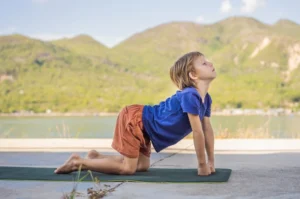
Getting kids to exercise does not always mean signing them up for a sports class or spending an hour at the gym. Sometimes, the hardest part is simply getting them off the couch.
A child may say, “I’m tired,” after school, then somehow find enough energy to run around the house when a favorite game starts. That is pretty normal. Kids are often more willing to move when exercise feels like play instead of another task on a long to-do list.
The good news is that a workout does not have to be long to be useful. A quick 10-minute activity can be an easy way to break up sitting, wake up the body, and get kids moving. For children ages 6 and older, health guidelines recommend at least 60 minutes of moderate-to-vigorous physical activity each day. That does not have to happen in one long session. Short periods of activity can add up throughout the day.
So, a 10-minute workout should not be seen as the whole goal. Think of it as a simple starting point.
Why Kids Need Daily Movement
Kids need movement for much more than burning calories. Regular physical activity helps build strong bones and muscles, supports heart and lung health, improves coordination, and can also support emotional well-being. Physical activity is also linked with better motor and cognitive development in children.
There is another benefit that parents sometimes notice before they notice anything physical: movement can change a child's mood. A child who has been sitting for a long time may become restless, cranky, or unable to focus. A few minutes of jumping, dancing, or running around can sometimes be enough to reset the mood.
That does not mean exercise will magically fix every behavior problem. It simply gives children a chance to move their bodies, use their energy, and take a break from sitting.
What Makes a Good 10-Minute Workout?
A good kids' workout does not need complicated equipment. In fact, simple is often better.
Young children are still developing balance, coordination, and body control. They do not need to copy an adult workout. The goal is to choose movements that match the child's age and ability and make them enjoyable.
A simple home workout can include several types of movement:
- Cardio: jumping, marching, dancing, running in place
- Strength: squats, wall push-ups, bear crawls
- Balance: standing on one foot, walking along a line
- Coordination: jumping jacks, opposite-hand knee taps
- Flexibility and mobility: gentle stretches and reaching movements
The CDC and American Academy of Pediatrics both emphasize that activities for children should be age-appropriate, enjoyable, and varied.
A Simple 10-Minute Kids Workout
Here is a routine that can work well for many school-age children. It does not require weights or machines.
The idea is simple: do each movement for about 40 seconds, followed by about 20 seconds to rest or change movements. Ten exercises make roughly 10 minutes.
1. March or Jog in Place
Start with an easy movement.
Have the child march in place, lifting the knees comfortably. After a few seconds, the pace can become faster. Older children can turn it into a light jog.
This is a good warm-up because it gets the heart beating a little faster without asking too much from the body right away.
Try making it a game: “Can those knees reach your hands?”
2. Jumping Jacks
Jumping jacks are a classic for a reason. They work the whole body and need almost no space.
For younger children who are still learning the movement, step one foot out at a time instead of jumping. The goal is not perfect form. It is safe, comfortable movement.
If jumping feels too difficult, simple side steps with arm movements are a good alternative.
3. Bodyweight Squats
Ask the child to stand with feet about hip-width apart. Then bend the knees and lower the body as if sitting in an invisible chair. Stand back up.
Keep the movement comfortable. There is no need to squat as low as possible.
For younger children, this can become a pretend game: “Pick up the toy from the floor, then put it on the shelf.”
That little change can make an ordinary exercise much more interesting.
4. Wall Push-Ups
Regular push-ups can be difficult for some children. Wall push-ups are much easier to control.
Stand facing a wall with both hands on it. Slowly bend the elbows and bring the body toward the wall. Then push away.
The body should stay fairly straight during the movement.
This exercise works the arms, shoulders, and chest without requiring a child to get down on the floor.
5. Bear Crawl
This one usually feels more like play than exercise.
Have the child place hands and feet on the floor, lift the knees slightly, and walk forward like a bear.
A short hallway can become a “bear cave.” Put a pillow or soft object at the end and ask the child to crawl there and back.
Make sure the floor is clear of sharp objects and anything slippery.
6. Fast Feet
Ask the child to stand in one spot and move the feet quickly, almost as if running without going anywhere.
Keep the movement light and controlled.
For a fun version, call out different commands:
“Fast!”
“Slow!”
“Freeze!”
“Turn!”
Now the child is not just moving. They are also listening and reacting.
7. Side-to-Side Hops
Place a small line on the floor using a piece of painter's tape, or simply imagine one.
Ask the child to hop from one side to the other.
Younger children can step instead of hop. Older kids can make the movement faster.
This activity can help practice balance and coordination while getting the heart rate up.
8. Mountain Climbers
Mountain climbers can be challenging, so there is no need to rush.
Start in a high plank position with hands on the floor. Bring one knee toward the chest, then switch sides.
For younger children, put their hands on a sturdy bench or low table instead of the floor. This makes the position easier.
If the movement looks uncomfortable or the child cannot keep good control, switch to marching in place.
9. Dance Break
This may be the easiest exercise on the list.
Put on a favorite song and let the child dance.
There is no correct way to dance. Jump, spin, clap, shake, or simply move to the beat.
Dancing counts as physical activity, and it can be especially helpful for children who dislike traditional exercises. The American Academy of Pediatrics includes dancing among examples of aerobic activities for children.
Sometimes the best workout is the one a child actually wants to do.
10. Slow Down and Stretch
Do not finish with another round of jumping.
Take the final minute to slow down. Walk around the room, take a few comfortable breaths, and do gentle stretches.
Try reaching both arms overhead, stretching the sides of the body, or gently reaching toward the toes without forcing the movement.
There is no need to push into pain. Children's stretching should feel comfortable, not like a test of flexibility.
Another Option: The 10-Minute Exercise Game
Some kids will happily follow a workout. Others will hear the word “workout” and disappear.
For those children, turn the activity into a game.
Write simple movements on pieces of paper and put them in a bowl:
- 10 jumps
- 5 squats
- March for 30 seconds
- Dance for one minute
- Walk like a bear
- Balance on one foot
- Do five wall push-ups
- Run to the door and back
- Touch the floor and reach for the ceiling
- Freeze like a statue
Let the child pick several cards.
This gives the child a little control over what happens next. It also keeps the activity from feeling exactly the same every day.
FAQ: Kids Workouts at Home
Are 10-minute workouts enough for kids?
A 10-minute workout is a good start, but it is not the full daily activity goal for most school-age children. Children ages 6–17 are generally advised to get at least 60 minutes of moderate-to-vigorous physical activity each day. The good news is that the activity can be spread throughout the day.
What are the best exercises for kids at home?
Good choices include dancing, marching, jumping jacks, squats, wall push-ups, animal walks, balance games, and simple obstacle courses. The best exercise is usually one that is safe, age-appropriate, and enjoyable enough for the child to keep doing.
Can kids work out without equipment?
Absolutely. Many useful exercises use only body weight and a little floor space. Squats, wall push-ups, marching, dancing, jumping, crawling, and balance exercises can all be done without special equipment.
How often should kids exercise?
Children should have opportunities to be physically active every day. For ages 6–17, the general target is at least 60 minutes of moderate-to-vigorous activity daily, including aerobic activity and regular muscle- and bone-strengthening activities.
What if my child hates exercise?
Try removing the word “exercise” altogether. Dancing, playing tag, riding a bike, jumping rope, walking the dog, and playing outside are all forms of physical activity. Letting children choose between a few activities can also make movement feel less like a chore.