A fever can make any parent nervous.
One minute your child is running around the house. A few hours later, the thermometer shows 102°F (38.9°C), and suddenly every little change feels scary.
Should the child go to the doctor? Is the fever too high? What if it gets worse during the night?
The good news is that most childhood fevers are not dangerous. Fever is usually a sign that the body is fighting an infection, and the temperature itself is often less important than how the child looks and acts. A child with a 102°F fever who is drinking, talking, and playing a little may be less concerning than a child with a lower fever who is very sleepy, difficult to wake, or having trouble breathing.
Still, some fever symptoms should never be ignored.
Here are the warning signs parents should know.
What Counts as a Fever in Children?
In general, a temperature of 100.4°F (38°C) or higher is considered a fever in children. The exact reading can vary depending on the child's age and how the temperature is measured. Digital thermometers are a good choice for checking a child's temperature.
A fever is not automatically a sign that something is seriously wrong. Common infections such as colds, flu, and other viral illnesses can cause fever. Sometimes fever is the first symptom, and other signs do not appear until a day or so later.
That is why parents should avoid judging the whole situation from one number on the thermometer.
Instead, ask a few simple questions:
- Is the child awake and responding normally?
- Can the child drink fluids?
- Is the child breathing comfortably?
- Is the child peeing normally?
- Does the child have severe pain?
- Is there a strange or unusual rash?
- Does the child seem to be getting better or worse?
These clues often tell more about how sick a child really is.
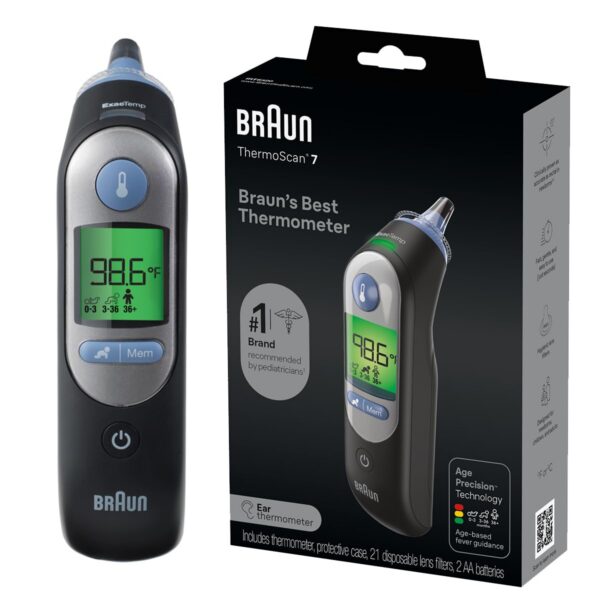
Braun ThermoScan 7 Digital Ear Thermometer for Adults, Babies & Infants
A High Fever Does Not Always Mean a Dangerous Illness
This can be hard for parents to accept.
A temperature of 103°F or 104°F looks frightening on the thermometer. But a high number alone does not always mean that the child is seriously ill. The American Academy of Pediatrics emphasizes looking at the child's overall condition, behavior, and other symptoms rather than focusing only on the temperature.
For example, a school-age child with a fever, runny nose, and cough who is still drinking, talking, and responding normally may often be cared for at home while being watched closely.
On the other hand, a child with a temperature of only 101°F who is extremely sleepy, confused, breathing hard, or refusing all fluids needs more attention.
So the better question is not simply, "How high is the fever?"
It is "How sick does my child look?"
Warning Sign 1: Trouble Breathing
Breathing problems are one of the biggest reasons to seek urgent medical care.
Watch your child when they are calm. Are they breathing much faster than usual? Does the skin between the ribs or around the neck pull inward with each breath? Are they struggling to speak, cry, drink, or breathe normally?
Blue, gray, or unusually pale lips or skin are also serious warning signs.
If a child is struggling to breathe, becoming unresponsive, or cannot catch their breath, this is an emergency. Do not wait for the fever medicine to work.
Warning Sign 2: Your Child Is Hard to Wake
Fever can make children tired. That is normal.
But there is a big difference between a sleepy child who wakes up and responds to you and a child who is extremely difficult to wake.
If your child is unusually drowsy, confused, not responding normally, or seems "out of it" even when awake, seek urgent medical attention. A child who cannot be awakened normally needs emergency care.
A simple check can help. Call the child's name, gently touch them, and see whether they respond in their usual way.
If something feels very different from normal, take it seriously.
Warning Sign 3: A Concerning Rash
Not every rash with a fever is dangerous. Many common childhood infections can cause both fever and a rash.
But some rashes need immediate attention.
One particularly concerning sign is a rash made up of purple, dark red, or blood-colored spots that do not fade when pressed. A fever combined with a stiff neck, unusual sleepiness, confusion, or a rapidly changing rash is also a reason for urgent medical care.
Parents do not need to become experts at identifying every type of rash. If a child has a fever and suddenly develops an unusual rash, especially if the child also looks very sick, it is safer to get medical advice quickly.
Warning Sign 4: Signs of Dehydration
Children with fever can lose more fluid through sweating and may also drink less than usual.
Watch for signs such as:
- Very dry mouth
- No tears when crying
- Much less urine than usual
- Dark urine
- Sunken-looking eyes
- Extreme weakness or sleepiness
For babies, fewer wet diapers can be an important clue.
If a child cannot keep fluids down because of repeated vomiting, or refuses to drink and is showing signs of dehydration, medical care may be needed.
Do not worry about forcing a sick child to eat a full meal. Fluids are more important in the short term. Offer small amounts often and continue breastfeeding if the baby is breastfed.
Warning Sign 5: Severe Pain or Stiff Neck
A fever with mild body aches can happen with many infections.
Severe or unusual pain is different.
Seek medical attention if a child has a very stiff neck, severe headache, severe ear pain, severe throat pain, significant abdominal pain, or pain that seems much worse than expected. A stiff neck together with fever can be a serious warning sign and should not be watched casually at home.
Parents know their children's normal behavior better than anyone. If a child keeps crying in pain, cannot get comfortable, or cries when touched or moved, that matters too.
Warning Sign 6: A Seizure
Some children have febrile seizures when they develop a fever. They can be extremely frightening to watch.
If a child has a seizure with a fever, especially if it is the first seizure, medical evaluation is important. Emergency help is needed if the child has difficulty breathing, does not wake normally afterward, or the seizure is prolonged or otherwise appears severe.
During a seizure, do not put anything in the child's mouth and do not try to hold the child down. Keep the child in a safe place and seek emergency help when appropriate.
Warning Sign 7: The Fever Keeps Coming Back or Lasts Too Long
Most simple viral fevers improve within a few days.
If the fever continues without improvement, keeps returning, or the child becomes more unwell, it is time to talk with a healthcare professional. The American Academy of Pediatrics advises contacting a doctor when fever lasts more than three days in children age 2 and older, while younger children may need evaluation sooner depending on their age and symptoms.
A fever that disappears and then comes back can also be worth discussing with a doctor, especially if new symptoms appear.
The important thing is not to wait for an exact number of days if the child is clearly getting worse.
FAQ
When should I worry about my child's fever?
Be especially concerned if your child has trouble breathing, is difficult to wake, seems confused, has a seizure, develops a concerning rash, shows signs of dehydration, has severe pain or a stiff neck, or is clearly getting worse.
What temperature is dangerous for a child?
There is no single temperature that tells the whole story. A fever of 104°F (40°C) or higher should prompt medical advice, particularly if it is repeated or the child looks ill. A lower fever can also be serious if the child has other warning signs.
Is 102°F a high fever for a child?
A temperature of 102°F (38.9°C) is a fever, but it does not automatically mean the child is seriously ill. Look at the child's behavior, breathing, fluid intake, urine output, and other symptoms.
When should a baby with a fever see a doctor?
A baby younger than 3 months with a temperature of 100.4°F (38°C) or higher should be medically evaluated promptly. Young babies need special attention because serious infections can develop quickly.
Can a child sleep with a fever?
Usually, yes. A child with a simple fever can sleep and rest. What matters is whether the child can be awakened normally and responds appropriately. A child who is unusually difficult to wake or cannot be awakened normally needs urgent medical attention.
Should parents wake a child to check their fever?
There is no need to repeatedly wake a comfortable, sleeping child just to check the temperature unless a healthcare professional has specifically told you to do so. Instead, check on the child and watch for changes in breathing, responsiveness, hydration, and overall condition.
Can fever cause brain damage in children?
Typical fevers caused by infections are generally not dangerous by themselves. The concern is the illness causing the fever and the child's overall condition. Extremely high body temperatures caused by overheating are different from ordinary infection-related fever and require urgent attention.
When should a child with fever go to the emergency room?
Seek emergency care for serious breathing difficulty, unresponsiveness, a seizure, severe confusion, a stiff neck with fever, or a rapidly appearing purple or blood-colored rash. If you believe the child is in immediate danger, call your local emergency service.
Final Thought
A fever can look dramatic, but the thermometer is only one part of the picture.
The more useful question is: How is the child doing overall?
A child who is drinking, responding, breathing normally, and slowly getting better is usually much less concerning than a child whose behavior, breathing, hydration, or alertness is changing.
When warning signs appear, trust them. It is always better to ask a pediatrician about a worrying symptom than to spend the night wondering whether it is serious.