A baby can love a bottle for many reasons.
It provides milk, but it can also mean comfort, sleep, and time with a parent. Some toddlers even want the bottle when they are not hungry. They want it because it feels familiar.
That is why getting rid of the bottle can be harder than parents expect.
A child may happily eat solid food from a spoon, drink a little water from a cup, and still cry for a bottle before bed. Another child may refuse a cup completely and act as if the bottle is the only acceptable way to drink.
So when should a child stop using a bottle? And what is the easiest way to make the change?
For most children, the transition can start around 6 months, when they begin learning to drink from a cup. The American Academy of Pediatrics recommends gradually reducing bottle use and completing the transition between about 12 and 18 months. The Centers for Disease Control and Prevention also says children can start practicing with a cup around 6 months and become much better at using cups after their first birthday.
The important thing is not to wait until the bottle has become a very difficult habit to break.
When Should a Child Stop Using a Bottle?
There are really two different milestones.
The first is learning to use a cup.
The second is giving up the bottle completely.
These do not need to happen on the same day.
Around 6 months, when a baby starts eating solid foods, parents can offer a small amount of breast milk, formula, or water in a cup. An open cup, straw cup, or training cup can all be used as practice. At this age, spilling is completely normal. The goal is simply to let the baby get used to the idea that drinks can come from something other than a bottle.
By around 12 months, most children are becoming much more comfortable with cups. This is a good time to actively reduce bottle feedings. Ideally, the bottle transition is completed sometime between 12 and 18 months.
That does not mean every child will follow the same schedule. A child with developmental delays, physical differences, feeding difficulties, or certain medical conditions may need a different plan. In those situations, a pediatrician or feeding specialist can help.
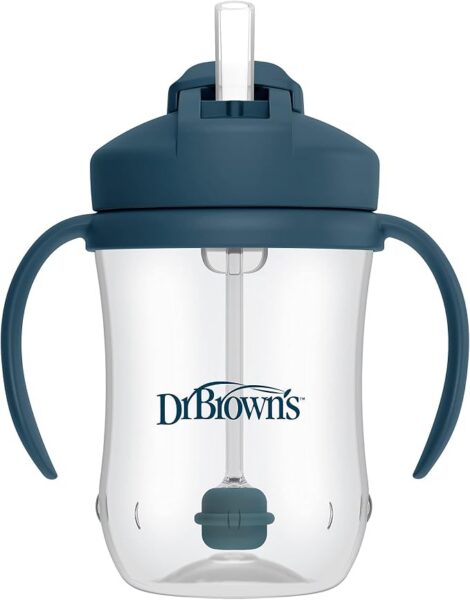
Dr. Brown's Milestones Baby's First Straw Cup, Blue, 1-Pack
Why Is It Important to Stop Using a Bottle?
The bottle itself is not dangerous.
The problem is when a toddler continues to depend on bottles for a large part of the day, especially when the bottle is used as a constant snack, comfort object, or sleep aid.
One problem is that milk can fill a toddler's stomach quickly. A child who drinks a lot of milk throughout the day may not feel hungry enough to eat meals. The AAP notes that excessive milk intake can contribute to a cycle in which toddlers fill up on milk and become less interested in other foods.
There is also the issue of teeth.
When milk or formula stays around the teeth for long periods, especially overnight, the risk of tooth decay increases. This is one reason pediatricians and pediatric dentists recommend moving away from bottles and avoiding putting a child to bed with a bottle.
There is another reason that is easy to overlook: growing independence.
A toddler is learning to eat, drink, use utensils, and do more things without help. Learning to drink from a cup is part of that process. It is a small skill, but it is also one of those everyday steps toward becoming more independent.
Start Practicing Before You Plan to Quit
One common mistake is waiting until the toddler is 12 or 18 months old and then suddenly taking every bottle away.
That can turn a small developmental change into a huge family battle.
A gentler approach is to introduce the cup early.
Around 6 months, place a small cup at meals. Let the baby touch it, hold it, and experiment with it. There will probably be spills. There may be more water on the table than in the baby's mouth.
That's okay.
At first, drinking from a cup is a skill, not a replacement for every bottle feeding.
The CDC says babies can begin learning to use a cup around 6 months, and children can start practicing with an open cup as they develop. By about 12 months, many children can drink from a cup with help.
Early practice makes the later transition feel much less dramatic.
Which Cup Should a Toddler Use?
Parents can easily get overwhelmed by the number of cups in a baby store.
There are straw cups, sippy cups, weighted cups, spill-proof cups, open cups, training cups, cups with handles, and cups that look like miniature adult glasses.
There is no single perfect cup.
A straw cup can be a useful step. An open cup is also a good skill to practice. The AAP recommends moving toward an open cup, with the goal of children drinking from an open cup by around age 2.
The important thing is not to let a training cup become a bottle replacement that the child carries around all day.
If a child is constantly drinking from a cup filled with milk, the same problems can continue even though the bottle is gone.
The goal is not simply “bottle to sippy cup.”
The bigger goal is “bottle to normal drinking habits.”
Which Bottle Should Be Removed First?
For many families, it is easier to start with the easiest bottle rather than the most emotional one.
For example, if a child drinks from a bottle several times during the day, start by replacing one daytime bottle with a cup.
Keep the bedtime bottle for a little longer if that is the hardest one.
Once the child accepts the daytime change, remove another bottle.
A gradual plan might look like this:
- Replace one daytime bottle with a cup.
- Keep the other familiar bottle feedings for now.
- After several days, replace another bottle.
- Keep offering milk with meals in a cup.
- Replace the bedtime bottle last if it is strongly connected to sleep.
- Build a new bedtime routine that does not depend on the bottle.
The AAP recommends gradually reducing bottle feedings rather than stopping everything at once.
There is no prize for finishing the transition in three days.
A calmer transition is often easier for both the child and the parent.
Why Is the Bedtime Bottle So Hard to Give Up?
This is often the real battle.
A toddler may not actually be hungry.
The bottle has become part of falling asleep.
Bottle. Pajamas. Story. Bed.
Remove the bottle, and suddenly the entire routine feels different.
That is why simply saying, “No more bottle,” may lead to a very unhappy toddler.
Instead, replace what the bottle was doing.
If the bottle provided comfort, offer cuddles.
If it marked the beginning of bedtime, create a new routine.
For example:
Bath → pajamas → milk in a cup → brush teeth → story → cuddle → bed
The bottle is not the only thing that can make bedtime feel safe.
A favorite stuffed animal, a story, a song, a cuddle, or a quiet few minutes with a parent can become the new comfort routine.
The AAP specifically recommends replacing the emotional comfort of the bottle with other soothing activities such as extra cuddles, songs, and bedtime stories.
Do Not Put Milk in the Bedtime Bottle
If a child is still using a bottle during the transition, one habit deserves special attention: falling asleep with milk or formula in the bottle.
This exposes the teeth to sugars for a long period while saliva flow decreases during sleep.
The AAP recommends not putting children to bed with bottles containing milk, formula, or other sugary drinks. The American Academy of Pediatric Dentistry also identifies prolonged bottle feeding and frequent exposure to milk or other fermentable carbohydrates as risk factors for early childhood cavities.
If a child absolutely needs a bottle while working through the transition, parents should talk with the child's pediatrician or dentist about the best approach. But as a general goal, the bedtime drink should move away from the bottle, and tooth brushing should become part of the bedtime routine.
What If the Toddler Refuses the Cup?
This is very common.
A toddler may take one sip, make a face, throw the cup, and demand the bottle.
That does not necessarily mean the child cannot use a cup.
It may simply mean the child prefers the familiar option.
Try different cups. Some children like a straw. Others prefer a simple open cup. Some like holding two handles. Others want to copy what adults are doing.
And sometimes the best strategy is surprisingly boring: keep offering the cup without turning it into a major event.
If every cup attempt becomes a battle, the child may learn that refusing the cup creates a big reaction.
Instead, offer it calmly.
“Here is your cup.”
Then move on.
Parents can drink from their own cups during meals, too. Toddlers are excellent imitators. Seeing everyone else drink from a cup can make the new habit seem much more normal.
Let the Child Practice With Water
Water is useful for practice because it does not add calories and is less likely to contribute to tooth decay than sugary drinks.
It is also a good way to prevent a toddler from carrying a cup of milk around all day.
The AAP recommends water as the main drink between meals, while milk can be offered with meals.
This creates a useful pattern:
Meals → milk
Between meals → water
That pattern can help with both bottle weaning and healthy eating habits.
Be Careful With Too Much Milk
Sometimes the bottle problem is actually a milk problem.
A toddler who drinks large amounts of milk may have little appetite for other foods.
After the first birthday, the AAP recommends keeping milk intake around 16 to 24 ounces (473 to 750 mL) per day, depending on the child and overall diet.
The exact amount can vary, and children with special nutritional needs may need different advice.
The main point is that milk should be part of a balanced diet, not the main food a toddler depends on all day.
If a child constantly asks for a bottle of milk instead of eating meals, it may be time to look at the whole feeding routine rather than only focusing on the bottle.
Do Not Replace the Bottle With Juice
Some parents try to make the cup more attractive by putting juice inside.
That can backfire.
The child may happily accept the cup, but now there is a new habit to break.
Young children do not need sugary drinks to make the transition successful. The AAP recommends water and plain milk as the main drinks for young children and advises limiting juice. Infants under 12 months should not be given juice.
A cup filled with juice may also increase exposure to sugar and contribute to dental problems.
A child may complain about plain water at first.
That's okay.
Taste preferences are built over time.
What If the Child Only Wants the Bottle When Upset?
This is a slightly different problem.
The bottle may have become an emotional comfort tool.
The toddler falls down and wants a bottle.
The toddler is tired and wants a bottle.
The toddler is frustrated and wants a bottle.
In these moments, removing the bottle without replacing the comfort can be difficult.
Parents can offer another response:
“Come here. Big hug.”
“Let's sit together.”
“Do you want your teddy bear?”
“Let's read your favorite book.”
The child is still getting comfort. The only thing changing is the source of that comfort.
This matters because toddlers do not just give up habits. They need something to replace them.
Don't Shame a Child for Wanting the Bottle
A toddler who asks for a bottle is not being naughty.
The bottle has been part of the child's life for months or even more than a year.
It makes sense that giving it up can feel strange.
Avoid saying:
“You're a big kid now.”
“Babies use bottles.”
“Stop acting like a baby.”
These comments may seem harmless, but they can turn a developmental transition into a source of shame.
A calmer message is:
“You're learning to drink from a cup now.”
“You're getting really good at it.”
“Let's try your cup first.”
The child does not need to feel embarrassed about an old habit.
They just need help developing a new one.
What If the Child Cries for the Bottle?
Crying does not always mean the plan is wrong.
A toddler may cry because the routine has changed.
That does not mean the parent has to immediately bring back the bottle.
If the child is safe, healthy, and otherwise drinking and eating normally, parents can offer comfort without changing the plan every time the child protests.
For example:
“I know you want your bottle. It's hard when things change. Come sit with me.”
That acknowledges the feeling without giving the bottle automatically.
Consistency matters.
If the bottle disappears one night but returns after twenty minutes of crying, the child may learn that prolonged crying eventually brings it back. That can make the next attempt harder.
At the same time, parents do not need to be rigid. If the child is sick, dehydrated, struggling to eat or drink, or has a medical condition affecting feeding, the plan may need to change.
A Simple Bottle-Weaning Plan
For a healthy child who is ready for the transition, a simple approach can look like this.
Around 6 months
Start offering a cup with meals when solid foods begin.
Let the baby practice.
Expect spills.
Around 9 to 12 months
Offer the cup more often.
Let the child practice holding it.
Begin reducing reliance on bottles during the day.
Around 12 months
Make the cup the normal way to drink during meals.
Offer milk in a cup.
Offer water between meals.
Start actively removing remaining daytime bottles.
Between 12 and 18 months
Work toward ending bottle use completely.
Remove one bottle at a time.
Keep bedtime routines calm and predictable.
Replace the comfort of the bottle with cuddles, stories, or another familiar routine.
This general timeline follows AAP guidance, but individual children may need a different pace.
What If the Child Is Almost Two and Still Uses a Bottle?
Don't panic.
But it is worth making a plan.
A child who still has an occasional bottle is not automatically in trouble. The bigger concern is frequent bottle use, especially overnight or throughout the day.
By this age, the goal should generally be drinking from a cup rather than depending on bottles. The AAP recommends moving toward an open cup by about age 2.
If a nearly two-year-old strongly refuses cups, has difficulty chewing or swallowing, has a history of feeding problems, or becomes extremely distressed whenever bottle feeding changes, talk with the pediatrician.
Sometimes there is more going on than a simple habit.
When Should Parents Talk to a Pediatrician?
Most children can make the transition with patience and practice.
But some children need extra help.
Talk with a pediatrician if your child:
- Has difficulty drinking from any type of cup
- Coughs, chokes, or repeatedly gags while drinking
- Has trouble chewing or swallowing
- Has poor weight gain
- Eats a very limited range of foods
- Refuses most drinks other than milk
- Has a developmental delay
- Has a physical or medical condition affecting feeding
- Becomes extremely distressed during feeding changes
- Has signs of dehydration
- Continues heavy bottle use well beyond the toddler years
A pediatrician may recommend a feeding evaluation or referral to a feeding or speech-language specialist when appropriate.
The AAP specifically advises parents to seek pediatric guidance when chronic illness, physical differences, or developmental delays may affect bottle weaning.
The Goal Is More Than Getting Rid of the Bottle
It can be tempting to think of bottle weaning as one more parenting task to finish.
But the real goal is bigger.
A child is learning to drink independently. Meals are becoming more important. Milk is becoming one part of the diet rather than the center of it. Water is becoming a normal drink. Bedtime comfort is slowly moving from sucking to other forms of reassurance.
That is a lot of development packed into one little cup.
So if the first attempt ends with milk on the floor and a toddler screaming for the bottle, don't assume the transition has failed.
Try again tomorrow.
The process does not need to be perfect. What matters is moving gradually toward healthier, more independent drinking habits while keeping meals and bedtime calm.
For most children, the bottle is eventually just another baby habit they outgrow.
And one day, quite suddenly, the cup becomes normal.
FAQ
What should a toddler drink after stopping the bottle?
For most healthy toddlers, plain water and plain milk are the main choices. Milk can be offered with meals, while water is a good choice between meals. Avoid using juice or sweet drinks as a replacement for the bottle.
How much milk should a toddler drink after age one?
The AAP generally recommends about 16 to 24 ounces (473 to 750 mL) of milk per day for toddlers after their first birthday, although individual needs vary. Too much milk can reduce appetite for other nutritious foods.
What if my toddler refuses a cup?
Try a straw cup, training cup, or open cup. Let the child practice at meals and expect some spills. Parents can also model cup drinking themselves. If the child continues to have significant difficulty drinking from a cup, talk with a pediatrician.
Is a sippy cup better than a bottle?
A sippy cup can be a temporary training tool, but it should not simply become a bottle that the child carries around all day. The long-term goal is comfortable drinking from a regular open cup. The AAP recommends moving toward an open cup by about age 2.
What if my child cries when the bottle is taken away?
Crying is a normal response to changing a familiar routine. Stay calm, offer comfort, and keep the new routine consistent. Hugs, stories, songs, and a favorite comfort object can replace some of the emotional role the bottle used to play.