Many parents are surprised when they hear that a 7-year-old may need an orthodontic evaluation. After all, most children still have a mix of baby teeth and permanent teeth at this age. This often leads to an important question: Can a 7-year-old get braces?
The simple answer is yes, some 7-year-olds can get braces or other orthodontic treatments. However, not every child needs braces at this age. In fact, most children will not receive full braces until they are older. An orthodontic visit at age 7 is usually about checking how the teeth and jaws are developing and deciding whether early treatment would be helpful.
Let's take a closer look at why orthodontists recommend evaluations at age 7, which children may benefit from early treatment, and what parents can expect.
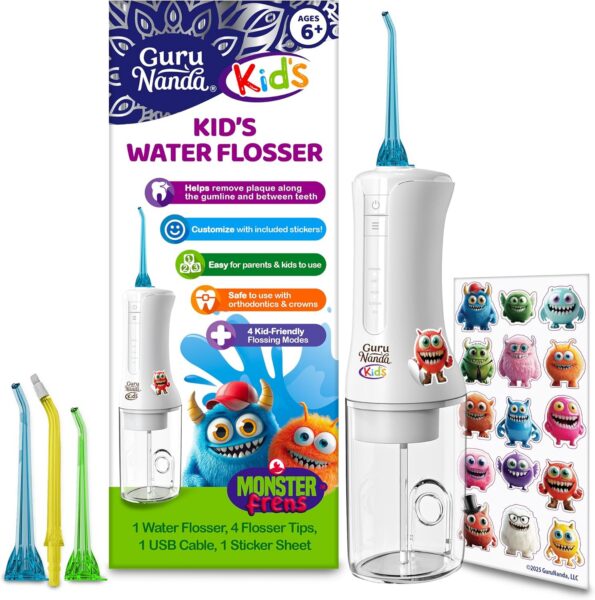
GuruNanda Kids Water Dental Flosser - 4 Flossing Modes, 4 Nozzles, 2-Min Smart Timer, Ages 6+
Why Is Age 7 Important?
Many orthodontists recommend that children have their first orthodontic evaluation around age 7.
At this age, most children have a combination of baby teeth and permanent teeth. The first permanent molars have usually appeared, and several front teeth may have already come in.
This stage allows orthodontists to see how the jaws are growing and whether there are any developing problems. Some issues are easier to correct while a child is still growing.
An evaluation does not automatically mean braces are needed. In many cases, the orthodontist simply monitors growth and recommends follow-up visits.
Do Most 7-Year-Olds Get Braces?
No. Most 7-year-olds do not receive traditional braces.
Many children at this age are still losing baby teeth and developing their permanent smile. Full braces are usually placed later, often between ages 9 and 14.
However, some children have dental or jaw problems that benefit from early treatment. Orthodontists sometimes call this "Phase 1 Treatment" or "early interceptive treatment."
The goal is not always to create a perfect smile immediately. Instead, early treatment may help guide jaw growth and reduce more serious problems later.
What Is Early Orthodontic Treatment?
Early orthodontic treatment is treatment that starts before all permanent teeth have erupted.
Depending on the child's needs, treatment may involve:
- Partial braces
- Expanders
- Space maintainers
- Specialized appliances
- Limited orthodontic corrections
Not every child needs early treatment. Orthodontists recommend it only when the benefits outweigh the risks and costs.
For many children, waiting until more permanent teeth come in is still the best option.
What Problems Might Require Braces at Age 7?
Some dental issues are easier to treat when children are young.
Severe Crowding
Sometimes there is not enough room for permanent teeth to grow properly.
Early treatment may help create additional space and reduce future crowding.
Crossbite
A crossbite occurs when some upper teeth fit behind lower teeth instead of in front.
Treating a crossbite early may help prevent uneven jaw growth.
Underbite
An underbite happens when the lower jaw extends beyond the upper jaw.
Early treatment may improve jaw alignment while the bones are still developing.
Protruding Front Teeth
Front teeth that stick out significantly may be more likely to get injured during sports or falls.
Orthodontic treatment may help protect these teeth.
Jaw Growth Problems
Some children have jaw growth patterns that benefit from early intervention.
Addressing these concerns during growth can sometimes reduce the need for more extensive treatment later.
Signs Your Child May Need an Orthodontic Evaluation
Parents often wonder whether there are warning signs to watch for.
Possible signs include:
- Crooked teeth
- Crowded teeth
- Difficulty chewing
- Early loss of baby teeth
- Delayed loss of baby teeth
- Mouth breathing
- Thumb sucking beyond age 5
- Underbite
- Overbite
- Crossbite
- Jaw clicking
- Speech difficulties
Even if your child shows none of these signs, a routine orthodontic evaluation at age 7 can still be helpful.
What Happens During the First Orthodontic Visit?
The first orthodontic appointment is usually simple and painless.
The orthodontist may:
- Examine the teeth
- Check the bite
- Evaluate jaw growth
- Take photographs
- Take dental X-rays
- Discuss treatment options
Many children leave the appointment without needing any treatment right away.
Parents often gain valuable information about future dental development and timing.
What If the Orthodontist Says "Wait"?
Many parents worry when they hear their child may eventually need braces.
However, it is very common for orthodontists to recommend observation instead of immediate treatment.
This means the orthodontist wants to monitor growth and development over time.
Follow-up visits may occur every six to twelve months until treatment becomes necessary.
Waiting is often part of the treatment plan itself.
Are Braces Safe for 7-Year-Olds?
Yes. When recommended by a qualified orthodontist, braces and other orthodontic appliances are generally safe for young children.
Orthodontists carefully evaluate whether a child is ready for treatment.
A child's maturity level also matters. Young children need to cooperate with oral hygiene, appliance care, and appointments.
Parents play an important role in helping children succeed during treatment.
How Long Does Early Treatment Last?
The length of treatment varies.
Some children wear an appliance for only a few months. Others may receive treatment for one to two years.
After early treatment is complete, many children enter a monitoring phase while permanent teeth continue to erupt.
Some children later need a second phase of treatment with full braces during their teenage years.
This does not mean the first treatment failed. Early treatment often addresses different problems than later braces.
Does Early Treatment Mean My Child Won't Need Braces Later?
Not always.
This is one of the biggest misunderstandings about early orthodontic treatment.
Some children who receive early treatment still need braces later. However, the second phase may be shorter or less complicated.
Early treatment is often designed to improve jaw growth, create space, or prevent worsening problems.
The exact outcome depends on the child's individual dental development.
How Can Parents Prepare Their Child?
Children often feel nervous before seeing an orthodontist.
Parents can help by:
- Explaining that the visit is not painful
- Using positive language
- Answering questions honestly
- Bringing comfort items if needed
- Focusing on healthy teeth rather than appearance
A calm and positive approach can help children feel more comfortable.
Benefits of Early Orthodontic Evaluation
Even if treatment is not needed immediately, an early orthodontic checkup offers several benefits.
It can:
- Identify problems early
- Monitor jaw growth
- Prevent worsening issues
- Improve treatment timing
- Reduce future complications
- Provide peace of mind for parents
Early evaluation helps orthodontists make informed decisions about the best care for each child.
Final Thoughts
So, can a 7-year-old get braces? Yes, some children can benefit from braces or other orthodontic treatments at age 7. However, most children do not need full braces that early.
The purpose of an orthodontic evaluation at age 7 is to identify problems that may benefit from early treatment and to monitor healthy growth. In many cases, the orthodontist simply watches development and recommends treatment later.
Every child's smile develops differently. A professional orthodontic evaluation is the best way to determine whether your child may benefit from early orthodontic care.
FAQ
Can a child get braces at age 7?
Yes. Some children may receive braces or other orthodontic treatments at age 7 if specific dental or jaw problems are present.
Why do orthodontists recommend age 7 evaluations?
Age 7 is often the ideal time to identify developing bite problems, jaw growth issues, and crowding before they become more serious.
Does my 7-year-old need full braces?
Most 7-year-olds do not need full braces. Many simply receive an evaluation and monitoring.
What dental problems may require early braces?
Crossbites, underbites, severe crowding, jaw growth concerns, and protruding front teeth are common reasons for early treatment.
Is early orthodontic treatment worth it?
For some children, early treatment can improve jaw growth, create space for teeth, and reduce future orthodontic problems.
Will my child still need braces later?
Possibly. Some children who receive early treatment still need braces during their teenage years.
Is an orthodontic evaluation at age 7 necessary?
Many orthodontic experts recommend an evaluation around age 7 because it allows early detection of potential problems.