Many parents worry about their baby's skin in the summer. Babies have soft and sensitive skin that can burn much faster than adult skin. A few minutes in strong sunlight may lead to redness, discomfort, and even sunburn. Because of this, many parents ask the same question: Can babies wear sunscreen?
The answer depends on your baby's age. For older babies, sunscreen can be part of a good sun protection plan. For younger babies, especially those under 6 months old, experts recommend other methods first. Knowing when and how to use sunscreen can help keep your child safe while enjoying time outdoors.
Why Are Babies More Sensitive to the Sun?
A baby's skin is thinner and more delicate than an adult's skin. It has less natural protection against the sun's harmful ultraviolet (UV) rays. This means babies can burn more quickly, even on cloudy days.
Babies also have a harder time regulating body temperature. Spending too much time in the sun can increase the risk of overheating and dehydration. This is why sun safety is important from the very beginning.
Even a mild sunburn can be painful for a baby. Repeated sun damage during childhood may also increase the risk of skin problems later in life.
Can Babies Under 6 Months Wear Sunscreen?
Most health experts recommend avoiding regular sunscreen use for babies younger than 6 months whenever possible.
Instead of relying on sunscreen, the safest approach is to keep young babies out of direct sunlight. Their skin is extremely sensitive and may react more easily to ingredients found in sunscreen products.
For babies under 6 months:
- Stay in the shade whenever possible.
- Use a stroller canopy or sunshade.
- Dress your baby in lightweight long sleeves and pants.
- Put on a wide-brimmed sun hat.
- Avoid outdoor activities during peak sunlight hours.
Sometimes complete shade is not available. In those situations, small amounts of sunscreen may be applied to limited areas such as the face or backs of the hands after discussing it with your pediatrician. However, shade and protective clothing should remain the first choice.
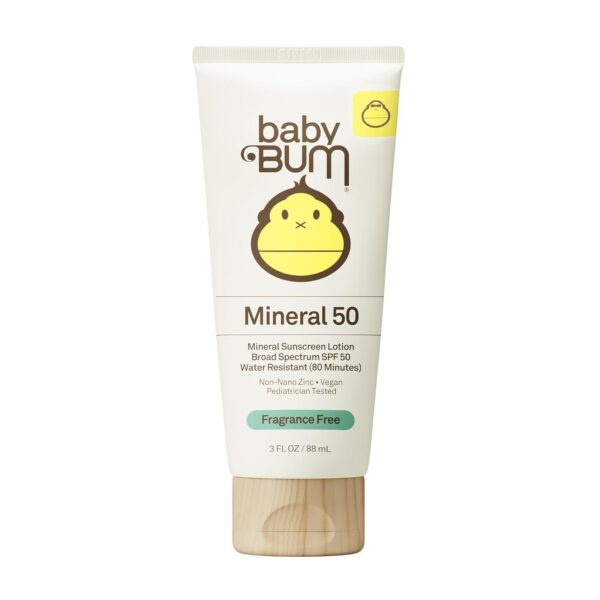
Baby Bum SPF 50 Sunscreen Lotion - Mineral UVA/UVB Face and Body Protection for Sensitive Skin
When Can Babies Start Wearing Sunscreen?
Once your baby reaches 6 months of age, sunscreen becomes an important tool for sun protection.
At this age, babies are often more active. They may spend time at the park, beach, playground, or backyard. Sunscreen can help protect exposed skin when shade and clothing are not enough.
Even after 6 months, sunscreen should not be your only form of protection. It works best when combined with hats, sunglasses, protective clothing, and shade.
Think of sunscreen as one layer of protection, not the entire plan.
What Type of Sunscreen Is Best for Babies?
Not all sunscreens are the same. For babies and young children, many pediatricians recommend mineral sunscreens.
Mineral sunscreens usually contain ingredients such as zinc oxide or titanium dioxide. These ingredients sit on the surface of the skin and help block UV rays.
Parents often prefer mineral sunscreens because they are:
- Gentle on sensitive skin
- Less likely to cause irritation
- Effective against both UVA and UVB rays
Choose a sunscreen that is:
- Broad-spectrum
- SPF 30 or higher
- Water-resistant if your child will be around water
- Fragrance-free when possible
Always check the product label before using it on your child.
How Much Sunscreen Should You Apply?
Many parents do not use enough sunscreen. Applying too little can reduce its effectiveness.
Cover all exposed skin, including:
- Face
- Ears
- Neck
- Arms
- Legs
- Tops of feet
Apply sunscreen about 15 to 30 minutes before going outdoors if the product directions recommend it.
Reapply every two hours. If your child is swimming, sweating heavily, or being towel-dried, reapply sooner according to the product instructions.
Do not forget easy-to-miss spots such as the ears and back of the neck.
What If My Baby Has Sensitive Skin?
Babies with eczema or sensitive skin may react differently to certain products.
Before using a new sunscreen, try a small amount on a small patch of skin. Watch for redness, itching, or irritation over the next day.
If your baby develops a reaction, stop using the product and speak with your healthcare provider.
Mineral sunscreens are often a good option for babies with sensitive skin because they contain fewer ingredients that may cause irritation.
Other Ways to Protect Babies From the Sun
Sunscreen is helpful, but it should not be your only strategy.
A complete sun safety plan includes several steps.
Try these simple tips:
- Stay in the shade whenever possible.
- Use a wide-brimmed hat.
- Dress babies in lightweight protective clothing.
- Use UV-protective swimwear.
- Avoid outdoor activities between 10 a.m. and 4 p.m. when sunlight is strongest.
- Offer fluids regularly to older babies and toddlers.
- Watch for signs of overheating.
Combining these methods provides better protection than sunscreen alone.
Signs of Sunburn in Babies
Even careful parents may sometimes miss the early signs of sunburn.
Watch for:
- Red or pink skin
- Warm skin
- Fussiness or discomfort
- Swelling
- Blisters in severe cases
Move your baby out of the sun immediately if you notice these symptoms.
Offer fluids if age-appropriate and contact your healthcare provider if the sunburn is severe, covers a large area, or is accompanied by fever.
Common Sunscreen Mistakes Parents Make
Many families accidentally make small mistakes that reduce protection.
Some common examples include:
- Applying sunscreen only once per day
- Forgetting to reapply after swimming
- Missing areas like ears and feet
- Using expired sunscreen
- Depending only on sunscreen without shade or clothing
Avoiding these mistakes can greatly improve your baby's sun safety.
FAQ
Can a 3-month-old baby wear sunscreen?
Experts generally recommend keeping babies under 6 months out of direct sunlight and using shade, clothing, and hats as the main protection methods. Talk with your pediatrician if sunscreen may be needed.
What SPF is best for babies?
Most experts recommend broad-spectrum SPF 30 or higher for babies over 6 months old.
Is mineral sunscreen better for babies?
Mineral sunscreen is often preferred because it is gentle on sensitive skin and provides effective protection against UV rays.
How often should I reapply sunscreen on my baby?
Reapply at least every two hours and after swimming, sweating, or towel drying, following the product directions.
Can babies get sunburned on cloudy days?
Yes. UV rays can pass through clouds. Babies can still get sunburned even when the weather looks cloudy.
Do babies need sunscreen in winter?
Yes. UV rays are present throughout the year. Snow can even reflect sunlight and increase exposure.
Final Thoughts
Can babies wear sunscreen? Yes, but age matters. Babies younger than 6 months should be protected mainly through shade, clothing, and avoiding direct sunlight. Once babies reach 6 months old, sunscreen can become part of a complete sun safety routine.
Remember that sunscreen works best when combined with hats, protective clothing, and smart outdoor habits. A few simple precautions can help keep your baby comfortable, safe, and protected while enjoying time outside.