Summer is one of the happiest times of the year for children. School is out, the weather is warm, and families spend more time outdoors. Kids can swim, travel, play sports, go to camps, and enjoy long sunny days.
But summer also brings health challenges. Hot weather, strong sun, dehydration, bug bites, and summer illnesses can affect children quickly if parents are not careful. Kids are more sensitive to heat and may forget simple things like drinking water or resting in the shade.
The good news is that most summer health problems can be prevented with easy daily habits. This guide will help parents keep children healthy, active, and safe throughout Summer 2026.
Keep Kids Hydrated Every Day
One of the biggest summer health risks is dehydration. Children sweat more during hot weather and outdoor activities, but they often forget to drink enough water.
Signs of dehydration include:
- Dry lips
- Headache
- Dizziness
- Tiredness
- Dark yellow urine
Parents should encourage children to drink water regularly, even before they feel thirsty.
Helpful hydration tips:
- Pack a water bottle when going outside
- Offer water during play breaks
- Serve fruits with high water content like watermelon
- Limit soda and sugary drinks
Water is the best drink during summer activities.
Protect Kids from Sunburn
Summer sun can damage children’s skin quickly. Too much sun exposure can lead to painful sunburn and increase skin damage later in life.
Parents should:
- Use sunscreen SPF 30 or higher
- Reapply sunscreen every 2 hours
- Use hats and sunglasses
- Avoid strong midday sun
Children with fair or sensitive skin may burn even faster.
Lightweight clothing with long sleeves can also help protect skin while keeping children cool.
Prevent Heat Exhaustion and Heat Stroke
Kids love running and playing outdoors, but too much heat can become dangerous.
Heat exhaustion happens when the body gets too hot and loses too much water.
Warning signs include:
- Heavy sweating
- Weakness
- Nausea
- Headache
- Fast heartbeat
If symptoms appear:
- Move the child to shade
- Give cool water
- Let them rest immediately
Never leave children alone in a parked car, even for a short time. Car temperatures rise very fast during summer.
Water Safety Is Essential
Swimming pools, lakes, and beaches are popular summer activities. But water safety must always come first.
Important safety rules:
- Never leave kids alone near water
- Always supervise swimmers closely
- Use life jackets if needed
- Teach children basic swimming skills
- Avoid rough or unsafe water areas
Even children who know how to swim still need adult supervision.
Young children should always stay within arm’s reach near water.
Healthy Summer Eating for Kids
Summer often includes snacks, ice cream, vacations, and fast food. While treats are okay sometimes, children still need balanced nutrition.
Healthy summer foods include:
- Fresh fruits
- Vegetables
- Yogurt
- Lean proteins
- Whole grains
Cold healthy snacks can also help kids stay hydrated and energized.
Good options:
- Fruit smoothies
- Frozen yogurt
- Watermelon slices
- Homemade popsicles
Parents should also make sure food is stored safely during picnics and outdoor trips to prevent food poisoning.
Summer Sleep Still Matters
Many kids stay up later during summer vacation. While flexible schedules are fine, children still need enough sleep for growth and health.
Lack of sleep may cause:
- Mood changes
- Poor focus
- Low energy
- More screen time
Helpful sleep tips:
- Keep a regular bedtime
- Reduce screens before sleep
- Make bedrooms cool and quiet
Even during vacation, healthy sleep habits help children feel better physically and emotionally.
Balance Screen Time with Outdoor Play
Summer break can sometimes turn into “all-day screen time.” Tablets, video games, and phones may replace outdoor activity if limits are not set.
Too much screen time can affect:
- Sleep
- Attention
- Physical activity
- Social interaction
Parents can encourage balance by:
- Planning outdoor activities
- Creating screen time limits
- Encouraging sports or hobbies
- Spending time together as a family
Summer is a great chance for kids to reconnect with nature and physical play.
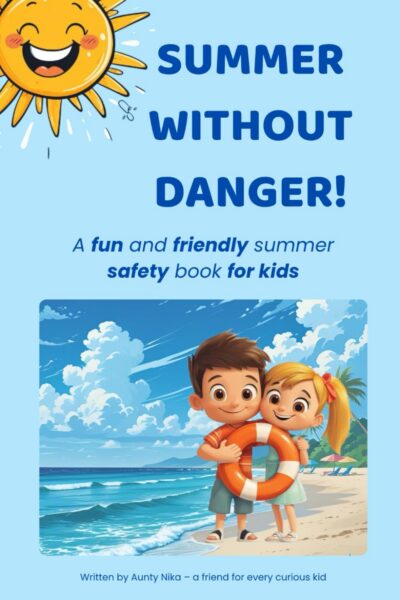
Summer Without Dangers!: A fun and friendly summer safety book for kids
Watch for Common Summer Illnesses
Some illnesses are more common during summer months.
These include:
- Hand, foot, and mouth disease (HFMD)
- Stomach viruses
- Swimmer’s ear
- Food poisoning
- Insect bites
Simple hygiene habits help reduce risk:
- Wash hands often
- Avoid sharing drinks
- Dry ears after swimming
- Keep cuts clean
Parents should also watch for fever, rash, vomiting, or unusual tiredness.
Bug Bite and Tick Protection
Mosquitoes, bees, and ticks are more active during warm weather.
Protection tips:
- Use child-safe insect repellent
- Wear long sleeves in grassy areas
- Check skin after hiking or camping
- Avoid scratching bites
Tick bites should be checked carefully because some ticks can spread disease.
Summer Sports and Outdoor Safety
Summer sports and outdoor games are healthy and fun, but safety is important.
Children should:
- Wear helmets for biking
- Use protective sports gear
- Take breaks in hot weather
- Stretch before activities
Parents should also check playground equipment for hot surfaces during sunny days.
Emotional Health During Summer
Summer can be exciting, but some children may feel lonely, bored, or anxious without school routines.
Parents can support emotional health by:
- Keeping a simple daily routine
- Planning family activities
- Encouraging friendships
- Talking about feelings openly
Mental health is just as important as physical health during summer vacation.
Build a Simple Summer Routine
Children do best when there is some structure, even during holidays.
A healthy summer routine may include:
- Outdoor play
- Reading time
- Healthy meals
- Limited screen time
- Family activities
- Good sleep habits
Small routines help children stay balanced and healthy.
Conclusion
Summer 2026 can be full of fun, learning, and happy memories for children. But staying healthy during hot weather requires some planning and daily care.
Simple habits like drinking water, using sunscreen, getting enough sleep, staying active, and practicing good hygiene can make a huge difference.
Parents do not need perfect schedules or expensive activities. The goal is simply to help children stay safe, healthy, and happy all summer long.
FAQ
1. How can kids stay healthy during summer?
Children stay healthy by drinking water, eating balanced meals, getting enough sleep, and staying active safely outdoors.
2. How much water should kids drink in summer?
Kids should drink water regularly throughout the day, especially during outdoor activities and hot weather.
3. What is the best sunscreen for children?
Most experts recommend sunscreen with SPF 30 or higher that protects against both UVA and UVB rays.
4. How do I prevent heat exhaustion in kids?
Encourage water breaks, avoid extreme heat, use lightweight clothing, and allow rest in shaded areas.
5. How much screen time is healthy during summer break?
Balanced screen time with outdoor play, exercise, and social activities is healthiest for children.
6. What summer illnesses are common in children?
Common summer illnesses include HFMD, stomach viruses, swimmer’s ear, dehydration, and food poisoning.
7. Are bug bites dangerous for children?
Most bug bites are mild, but some can cause allergic reactions or infections if scratched excessively.
8. Why is sleep important during summer vacation?
Good sleep supports growth, mood, focus, and overall physical and mental health.