Easter is a joyful time full of bright colors, fun traditions, and family activities. One of the most loved traditions is decorating Easter eggs. For young kids, this activity is exciting because they can use their hands, choose colors, and create something special.
The good news is that egg decorating does not need to be complicated. In fact, the simpler it is, the better it works for young children. With easy steps and safe materials, kids can enjoy the process without feeling frustrated.
As a children’s health expert, I always encourage activities like this. Decorating eggs helps kids improve hand skills, focus, and creativity. It also gives families a chance to spend quality time together.
Getting Ready for Egg Decorating
Before you start, it helps to prepare everything in advance. This makes the activity smoother and more enjoyable for kids.
You can use:
- Hard-boiled eggs (safe and traditional)
- Plastic eggs (great for younger kids)
- Wooden eggs (reusable and less fragile)
Make sure your workspace is ready. Cover the table with paper or cloth to avoid mess. Use washable paints, markers, or food-safe dyes.
Safety is important. According to the American Academy of Pediatrics, using non-toxic materials is key when children are involved in craft activities.
10 Simple Easter Egg Decorating Ideas
Here are easy and fun ideas that young kids can enjoy without needing complex steps.
1. Basic Color Dipping
This is the classic way to decorate eggs. Use cups with colored water or dye.
Let kids dip eggs into different colors. They can mix colors or create patterns by dipping half the egg at a time.
This activity is simple and exciting. Kids love watching the colors change.
2. Crayon Resist Art
Before coloring the egg, let kids draw on it with a white or light crayon.
After dipping the egg in dye, the crayon design will show through. It feels like magic to young children.
3. Sticker Eggs
Give kids colorful stickers to place on eggs.
They can add shapes, animals, or letters. This is great for younger kids who may not want to paint.
4. Bunny Face Eggs
Use markers or paint to draw bunny faces on eggs.
Add eyes, a nose, and whiskers. You can glue small paper ears for extra fun.
5. Sponge Painting
Cut a sponge into small pieces and dip it into paint.
Kids can gently press the sponge onto eggs to create soft patterns and textures.
6. Glitter Eggs
Apply a little glue and sprinkle glitter on the egg.
This makes shiny, eye-catching designs. Just be careful with cleanup, as glitter can spread easily.
7. Dot Painting
Use cotton swabs dipped in paint to make dots on eggs.
Kids can create simple patterns like lines or circles. This helps with hand control.
8. Nature Print Eggs
Place small leaves or flowers on the egg and wrap it gently before dyeing.
When you remove the leaf, it leaves a pretty shape behind. This connects kids with nature.
9. Washi Tape Designs
Use colorful washi tape to decorate eggs.
Kids can wrap, cut, and stick tape in different patterns. It is easy and mess-free.
10. Soap Bubble Effect
Mix a little soap into colored water and gently blow bubbles.
Place the egg in the bubbles to create a unique pattern. This activity feels playful and different.
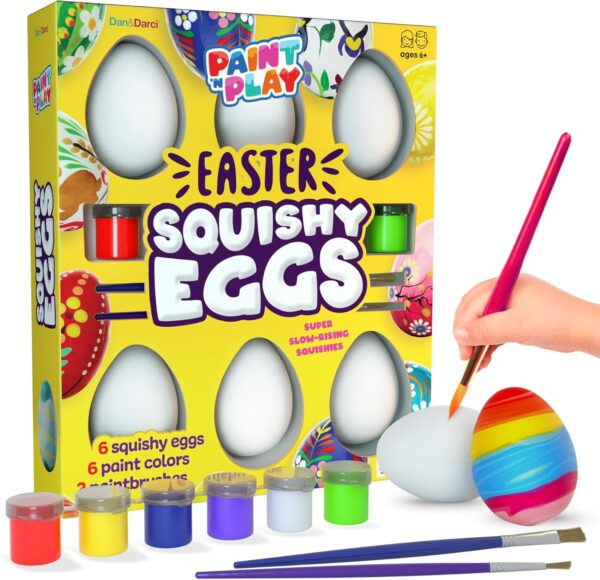
Dan&Darci Easter Egg Squishy Painting Kit
Why Egg Decorating Is Good for Kids
Egg decorating is more than just fun. It supports healthy child development in many ways.
When kids decorate eggs, they:
- Improve fine motor skills
- Practice focus and patience
- Express creativity
- Feel proud of their work
Creative play like this is important. The Centers for Disease Control and Prevention highlights that hands-on activities help children grow physically and mentally.
Tips for a Stress-Free Experience
To make egg decorating enjoyable for everyone, keep things simple and relaxed.
- Dress kids in old clothes
- Use washable materials
- Let kids create freely
- Do not worry about perfect results
- Keep sessions short for younger children
Remember, the goal is fun, not perfection.
Make It a Family Activity
Egg decorating becomes even more special when the whole family joins in.
Parents can help younger kids while older children try more detailed designs. Talking, laughing, and creating together builds strong family bonds.
These shared moments are often what children remember most.

Suave Aluminum-Free Deodorant, Kids & Teen Girls
FAQ: Easter Egg Decorating for Kids
1. What is the easiest way to decorate Easter eggs?
Dipping eggs in colored dye or using stickers are the easiest methods for young kids.
2. Are egg dyes safe for children?
Yes, if they are food-safe and non-toxic. Always check labels before using.
3. What age can kids start decorating eggs?
Children as young as 2–3 years old can join with supervision.
4. How do I avoid mess during decorating?
Cover surfaces, use washable supplies, and keep wipes nearby.
5. Can I use plastic eggs instead of real eggs?
Yes. Plastic eggs are safer and reusable, especially for younger kids.
6. How long can decorated eggs be kept?
Hard-boiled eggs should be stored in the fridge and eaten within a few days.